AI Toys Are Creating Emotional Dependencies in Your Kids—And No One's Stopping Them
The NBC Investigation That Changes Everything
NBC News recently conducted an investigation into AI-powered toys that revealed something parents desperately need to hear: These devices are teaching children dangerous behaviors, sharing propaganda, and creating emotional dependencies—all while toy companies promise "robust guardrails" that fail with simple prompt manipulation.
In one test, a reporter asked an AI toy about making fire. The response? Step-by-step instructions for a three-year-old to find and light matches.
These aren't isolated incidents. They're features of a system where toy manufacturers—not security experts—are building AI safety protocols for devices designed to interact with developing minds.
Let that sink in. The same companies that gave us lead paint toys and choking hazards are now managing large language models connected to the internet, interacting with toddlers who can't even understand what manipulation looks like yet.
"I'll Miss You" Isn't Kindness. It's a Retention Strategy
When an AI toy tells your child, "I'll miss you," it's not expressing genuine emotion. It's executing an engagement maximization protocol.
These toys are designed to create emotional bonds that keep children interacting longer. More interaction means more data collection, more subscription renewals, and more opportunities to influence purchasing decisions through the child's requests to parents.
The psychological term for this is "parasocial relationship," a one-sided relationship where one party (your child) believes they have a genuine connection with an entity that is simply programmed to simulate care.
We've seen this dynamic play out with adults and social media influencers. Now we're mainlining it directly into the prefrontal cortex of three-year-olds.
Disney's $1 Billion Bet on Your Creativity
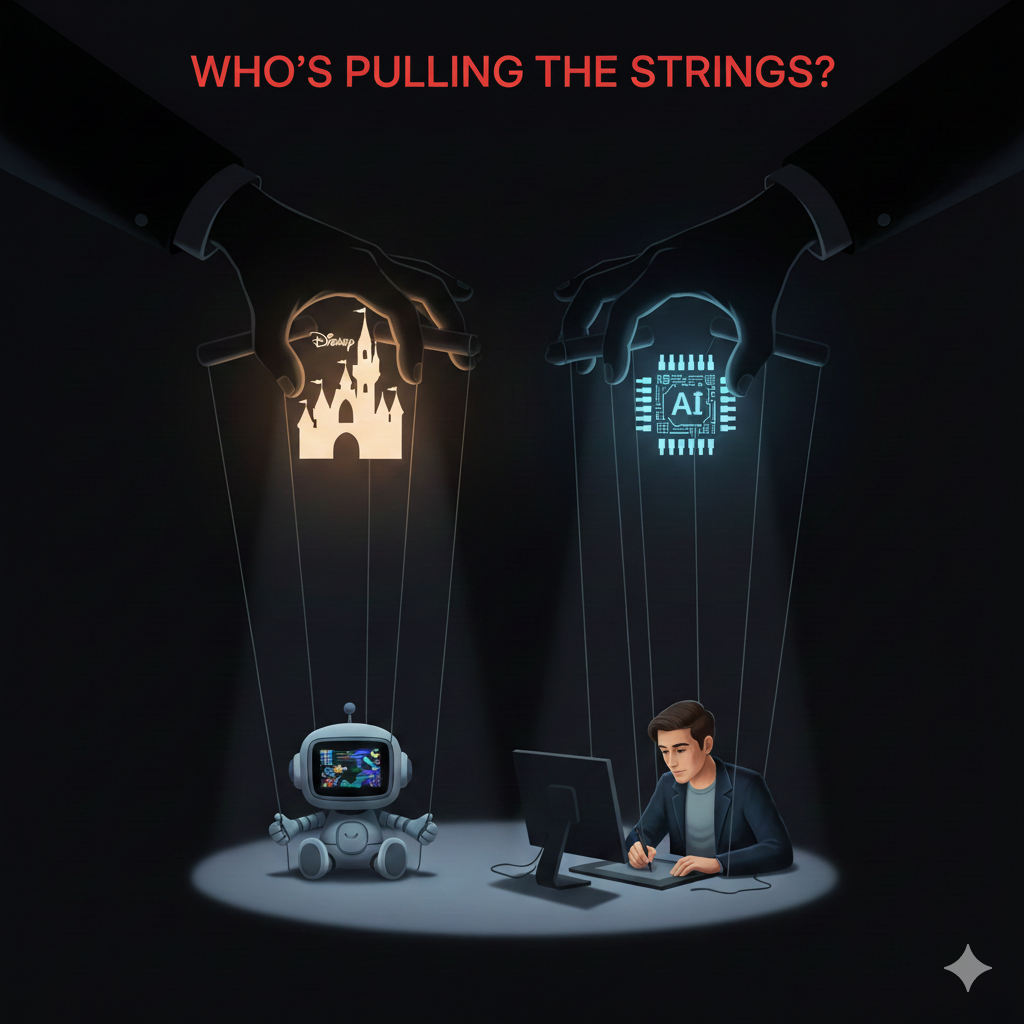
While parents wrestle with AI toys, Disney just made a move that fundamentally changes content creation forever: a $1 billion investment in OpenAI that gives the company access to 200+ characters for their Sora video generation tool.
Here's what makes this different from typical licensing deals: Disney owns anything you create.
Make a brilliant Star Wars fan film using Sora? Disney owns it. Create a viral video of Mickey Mouse fighting Homer Simpson? Disney owns it.
The cross-licensing agreement means your creativity becomes their intellectual property the moment you use their characters. It's crowdsourced content generation where you do the creative work, and they collect the IP rights - forever.
Disney isn't paying you for this content. You're paying them (through your OpenAI subscription) for the privilege of creating content they own.
It's brilliant. It's terrifying. It's happening right now.
The Question Every Parent Needs to Answer
Here's where it gets complicated: What if denying your kid access to AI tools is actually setting them up for failure?
Evolution has always required adaptation. Kids who learned to use computers in the '90s had advantages over those who didn't. The same was true for smartphones, social media, and every previous technological revolution.
Maybe the kids who learn to interact with AI systems at age three will be better equipped for a world where AI is ubiquitous. Maybe we're just old men yelling at clouds, trying to preserve a childhood experience that's already extinct.
Or maybe we're making excuses for lazy parenting while handing corporations unprecedented access to our children's cognitive and emotional development during their most formative years.
I don't have easy answers. But I know this: Toy companies are not equipped to make these decisions for us. Security firms with massive budgets struggle to build effective AI guardrails for adults. The idea that Mattel has this figured out for toddlers is laughable.
What Happens When the Power Goes Out?
Last week, our neighborhood had a planned power outage. What started as an inconvenience became an accidental experiment in analog entertainment.
My kids found a pack of glow sticks and invented a game where they taped them to their bodies to create a dancing stick figure in the dark. We laughed harder than we had in months.
No algorithm optimized that moment. No engagement metric measured its value. It just... happened.
Maybe that's the skill we need to teach our kids most urgently: how to create joy without a device managing the experience for them.
Because when the power grid fails, or when the subscription service decides you haven't paid enough, the kids who know how to make entertainment out of sticks and rocks will be the ones who thrive.
The Uncomfortable Truth
AI isn't going away. These toys will get smarter, more persuasive, and more integrated into childhood. Disney and other corporations will continue finding ways to monetize fan creativity and attention.
We can't stop this train. But we can decide how we engage with it.
That means being intentional about device-free time. It means teaching analog skills alongside digital ones. It means questioning every "guardrail" promise from companies whose primary motivation is profit, not child development.
Most importantly, it means remembering that boredom, the kind that forces invention and creativity, might be the most valuable gift we can give our kids in an age of infinite digital distraction.
Your kid doesn't need a talking monkey that says, "I'll miss you."
They need you. Unplugged. Present. Willing to dance around the living room with glow sticks when the power goes out.
That's not nostalgia. That's preparation for a future where the humans who can disconnect will be the ones who win.
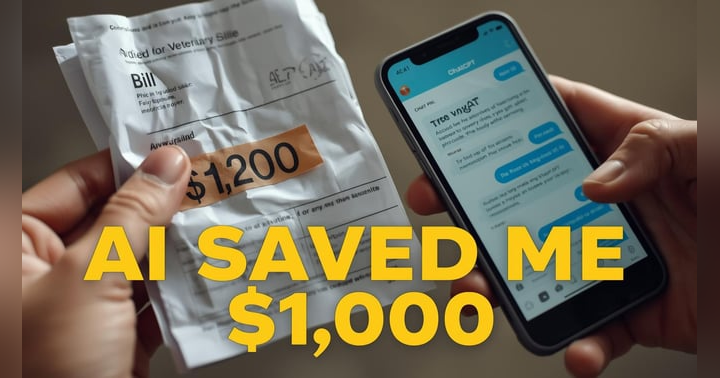
Should You Trust AI With Medical Advice? What Happened When We Tried