How AI Can See Heart Disease Coming Before It Kills You


Heart disease kills one person every 40 seconds. That number hasn’t changed in 30 years. Dr. John Osborne, a preventive cardiologist with two doctorates and 29 years in practice, has spent his career on a single question: why do we screen for cancers that kill a few percent of us and do nothing for the disease that kills 40%? In this episode, Jeremy and Jason sit down with Dr. Osborne to get the real story on cardiac CT with AI — the imaging technology that can detect, quantify, and track arterial plaque at sub-millimeter resolution, years before symptoms appear. If you track your bloodwork, wear a fitness device, or consider yourself health-forward — this is the conversation that fills the gap nobody warned you about.
Guest Link:
https://clearcardio.com/
Key Moments:
- 00:00 — Dr. Osborne’s case for preventive cardiology: why heart disease is the most under-screened killer
- 02:43 — How cardiac CT evolved from "iPhone 0.5" to the 2026-era AI-powered tool he uses today
- 05:35 — Why he gave up stress tests and heart caths in 2005 and never looked back
- 08:16 — What AI actually adds: seeing and quantifying plaque invisible to the human eye, down to 0.1 cubic millimeters
- 10:13 — When insurance pays for cardiac CT — and when it doesn’t (the preventive gray zone)
- 14:50 — The “cardiac colonoscopy” concept: the case for screening before symptoms, not after
- 18:11 — Coronary artery calcium score: the accessible $100 starting point, and what it can and can’t tell you
- 31:54 — Lifestyle essentials: the 50% of risk that’s modifiable regardless of genetics
- 35:00 — Family history decoded: why your sibling’s heart history matters more than your parents’
- 36:12 — Nicotine myth-busting: Dr. Osborne on the "health guru" nicotine fad and why he thinks it’s dangerous
- 38:05 — Supplements under scrutiny: natokinase, fish oil, red yeast rice — what the actual RCT data says
John Osborne, MD, PhD: today John.
Jason Haworth: today we John Osborne with us. we are to talk about some interesting when it comes to AI and understanding your health in the proper context. So â Dr. John, you want to give us a bit of an intro about yourself?
John Osborne, MD, PhD: Yeah, sure. So, â John Osborne, I like to say, trained in cardiology, but, but really my passion is preventative cardiology, which is really what I've been doing for, â this would be 29 years in cardiology practice. â so almost three decades worth of that. â and really started out from the very, very beginning. â I,
Jeremy Grater: Heart disease kills one person every 40 seconds. That number hasn't changed in 30 years. Dr. John Osborne, a preventative cardiologist with two doctorates and 29 years in practice, has spent his entire career on a single question. Why do we screen for cancers that kill a small percentage of us
John Osborne, MD, PhD: got my MD, got a PhD in cardiovascular physiology. So I'm quite the dweeb, the nerd, â then did all the rest of my training up at Harvard at Brigham and women's hospital. â and, there, I really got, â very excited, â about how do we identify people who have heart disease literally years before they get in trouble years before they have symptoms, flunk a stress test before they need stents or balloons or bypass surgery.
Jeremy Grater: and do little to detect the disease that kills 40 % of us. In this episode, we talk with Dr. Osborne about the imaging technology that can detect early signs of heart disease years before symptoms appear. If you track your blood work, wear a fitness device, or consider yourself relatively healthy, this conversation will fill the gap nobody warned you about. This is BroBots, the podcast that tries to help you be a better human.
John Osborne, MD, PhD: If you think about it and a really pretty good analogy is why we do colonoscopy, right? You ask anybody why you do colonoscopy. No one likes it. It's expensive. It's tedious. You got the nasty prep, et cetera. And yet we all should because we want to find the polyps that can over time without any symptoms turned into colon cancer. And we don't want that to happen. And we do that. We do that routinely. â more people need to do their colonoscopies by the way out there. but
Jeremy Grater: by being smarter about how you use technology.
John Osborne, MD, PhD: â The goal is that we help to reduce and I would argue hopefully, â eliminate colon cancer. Let's find the early stuff, you take care of it, bad things don't happen. And for some really weird reason, and by the way, colon cancer kills two to 3 % of us in the US, okay? Which is two to 3 % too high. Heart disease kills about 40 % of us, strokes and heart attacks. And what do we do?
Jeremy Grater: All right, our thanks to Dr. John Osborne, a fascinating conversation, I know that I'm definitely going to be following up and getting my heart checked and doing everything I can â to prevent the disease that kills such a large percentage of without ever being detected early. our thanks again to him. And if you would like to learn more about him, â the work that he does or get yourself scanned, you can find links to do so in the episode description for this episode on our website or your favorite podcast player.
John Osborne, MD, PhD: to identify the disease early when it's very, treatable and preventable and reversible before you need stents or balloons or bypass surgery or have a heart attack or stroke, or like many people do, simply keel over dead, nothing.
Jeremy Grater: and our website and that podcast player or we'll find another episode from us on Monday morning. Thanks so much for listening. We'll talk to you soon.
Jason Haworth: you
Jeremy Grater: So one of the things that's fascinated me about this and reading and studying about you is how you're integrating technology and to making this faster, making it more efficient to be able to save more lives. If you don't mind, sort of lay the groundwork there of like how you're using AI, how has technology helped you to literally save lives?
Jason Haworth: Thanks
John Osborne, MD, PhD: Sure. So when I started out 30 years ago in training cardiology, where you learn how to read KGs, do stress tests, heart catheterizations, all those things. â And I'll argue, and hopefully I'll make this point as we talk about the technology we use today, that most of those technologies â are irrelevant. They're 20th century technologies, I like to say. Right? Well, yeah, yeah, exactly. Right. â I agree. â But again, and yet.
Jason Haworth: Or maybe 19th century technologies with EKGs.
Jeremy Grater: Hahaha!
John Osborne, MD, PhD: If you go to most cardiologists right now, that's what you're going to get EKG stress tests, heart, cast, maybe, et cetera. â so I've always been very, very interested in how do we use identify and how do we use technology, â that allows us to take better care of patients, to understand what's happening with them, â in a much more precise way. â so in the nineties, I learned kind of the typical cardiology tools came out and â About, well, about three years later or so, â I caught wind of this really nascent technology â called Cardiac CT. â I basically said, okay, I need to learn that. So I did on the job training. â The early technology, I will say using Cardiac CT was extremely crude, low resolution, software just wasn't there. It was a bear to do and read. â And it was hard. But I did that for about four years or so. And I began to see there's incredible promise here. But I really was using what I like to call nowadays the iPhone point five, right? This wasn't even a release iPhone. But I began to see, I did several hundred cases with this cardiac CT technology. And I realized this may be, we may be on to finding the cardiac colonoscopy, right? Find the early stuff long before you get in trouble, take it, prevent it, et cetera. 2005, big, big year. In 2005, certain devices became commercially available called 64-slice machines. I'll call that the iPhone 1. And that's where the rubber began to meet the road. We did have better hardware, better resolution. There was now some software available. And in fact, it was even so good 21 years ago that before 2005, If you had problems, we did stress tests and I did heart cats, but the early, very early cardiac CT, again, this is a decade and a half before AI began to become so good that I could get better data, more accurate data to understand people's heart, find the early, I call it baby plaque, uh, be able to get even better data than a, than a gold standard heart cath or an angiogram or cardiac catheterization and do it without the risk.
Jason Haworth: you
John Osborne, MD, PhD: without the risk of complications and do it for about 5 % of the cost of an invasive heart cath. So 2005, big, big year in my life, because that's when I gave up. I like to call it the nasty habit of stress tests and doing heart caths. Completely switched over to cardiac CT, even at the iPhone 1.0 level. That's how good it was. Fast forward now to 2026. We now have the iPhone 17 version.
Jason Haworth: That's pretty amazing.
John Osborne, MD, PhD: of cardiac CT, unbelievable pictures, beautiful resolution, about two magnitudes of order, that's a hundred times less radiation than we started out 20 years ago. â And stress tests, heart casts, all that, those legacy tools, all that equipment should be in a museum. And we look at it and read a little eight by 10 on this is stuff we used to use to figure out if people had heart disease.
Jason Haworth: So along those lines, mean, there's definitely training protocols and people have been using those old tools for a long time and the manual has been around forever. They're well documented. They've definitely shown some avenues of success in detecting some of these pieces, but clearly, I mean, I've been on the receiving end where the tools gave me false positives and all kinds of lifestyle changes had to occur for no good reason. â And the Cardiac CT in terms of the training, I mean, the technology itself, I'm...
John Osborne, MD, PhD: Mm-mm.
Jason Haworth: I know is much better, but in terms of the training accessibility where it's at, how to get to it, whether or not the FDA â fully funds it and approves it, whether insurance companies fully funds and approves it, I think those are things that people probably have questions about because the technology itself, I see the value and the benefit of it. But can you speak a bit to the fact that this is, for lack of a better term, more of a nascent technology in the medical space and the training isn't quite as broad? And if people really want to go into this. Are there specialists they have to seek out and how do they navigate the healthcare system in the US to get to those kinds of specialists?
John Osborne, MD, PhD: Yes, well, multi layers to question. I will warn, no, no, that's okay. But I will warn you remember, I'm a cardiologist, we have very small brains. So I'll try to tease that apart.
Jason Haworth: I do that, sorry.
Jeremy Grater: Ha ha ha ha.
John Osborne, MD, PhD: 25 years ago, I began to do cardiac CT technologies. Got amazing AI really kicked in five years ago, took it to a whole nother level. I call it cardiac CT 2.0. â and here's what the AI does, right? It allows me to literally see, I can look at these images now with my, I call it my special AI glasses on, â and I can see stuff detail. plaque that we cannot see with our eyes. So that's one major advantage. We can also now quantify that plaque extremely accurately down to a resolution of 0.1 cubic millimeters. So to give you an idea what that is, think of a period at the end of a sentence, turn that into a three-dimensional sphere. That's about one cubic millimeter. We have resolution down to a tenth of that volume to see plaque and identify plaque. And then because we can now quantify plaque, which was impossible to do, right? I could see blockages. I could look at plaque and go, yeah, there's some plaque there. I could not quantify it. Now we can quantify the plaque, put it into different categories, because there are different kinds of plaque. We could maybe talk about that later. And we can now track that plaque over time. So it's not just eating right, exercising, taking medication, blood pressure, cholesterol, whatever might be appropriate and personalized and bespoke. for that patient to treat and stop the, and by the way, reverse the plaque, which we can. But now we can literally show, I had my scan last year or two years or three years ago. We did what we needed to do or on my advice, hopefully. And we put you back in the machine and we can literally track not just are my numbers better, my blood pressure is better, my cholesterol is better, whatever. But we can literally track and say, yes, your plaque is better. And that was impossible.
Jason Haworth: Thank you.
John Osborne, MD, PhD: until we had the AI. As far as paying for it, in October of 21, remember I started this 25 years ago, in October of 21, our organizations, the American Heart Association, American College of Cardiology, another small organization that made, that main focus is cardiac CT called the Society for Cardiac CT and several others came out with guidelines for chest pain, Chest pain, could be heart, heart attack, whatever. They said in 2021, October 21,
Jason Haworth: Yeah. â
John Osborne, MD, PhD: about 21 years after I started my journey, they finally said that cardiac CT is what we call a class 1A indication. I'll translate what that means. It means that is standard of care. It's not just a good idea. It's not an option. You could try this. It is now the standard of care for patients where we are concerned when they have symptoms to suggest they have heart disease like chest pain, angina, maybe new onset, shortness of breath, or something to suggest they have heart disease, which then means
Jason Haworth: Yeah.
John Osborne, MD, PhD: Insurance pays for it. CMS pays for it. Commercial insurance pays for it. â The challenge though is for early detection, again, using that concept of this technology as the cardiac colonoscopy to find the polyps long before we have blockages, long before we have symptoms or flunk of stress test, unfortunately, that is not yet paid for. Now we can get it. We do it all the time. But unfortunately, do not expect insurance is going to pay for it.
Jason Haworth: Yeah.
John Osborne, MD, PhD: just for you to know and understand, do I have plaque or not before you die? Okay, or have heart attack or need sensor balloons or surgery. â And that's really, we take care of people across the spectrum of heart disease, people who just wanna know, people out of a family history, people that might have risk factors or dry plaque or not, all the way to people who've had heart attacks, stents, bypass surgeries, et cetera. So it's unbelievable technology to really understand
Jason Haworth: right. â
John Osborne, MD, PhD: Is there plaque? How much plaque? Where's that plaque? What kinds of plaque? Quantifying plaque, detecting plaque, and tracking plaque, all the stuff that we literally could not do until we had both cardiac CT now coupled with AI. I hope I covered some of the questions that you asked. That was a brilliant set of questions, but I hope I did justice to them.
Jason Haworth: Yeah. No, you you did great. No, you did great. And realistically speaking, mean, I'm just Googling right now, where can I get a cardiac CT? And I'm going through it. And I'm like, how can I do this? I'm looking at the different places I have. I'm in Everett, Washington. So I've got â three different clinics that have, yeah, I've got.
John Osborne, MD, PhD: Hahaha â yeah, great place. Phenomenal â airplane museum there. Amazing. Yeah, yeah, I love it. I'm an aviation foamer, they call me. Yeah, it's like having rabies, but for airplanes. So, yeah.
Jason Haworth: Yeah, really, really. I actually live right by the airplane museum, so I live right across from it. Oh, perfect. Yeah, no. Exactly. Yes. But no. So, I mean, I'm looking at it and I'm seeing five places that do this and I'm looking at it from the perspective of preventative care. And they all say, like on these last pages on the websites, preventative care is a good thing, but your insurance probably doesn't cover it. So it's not a cheap test. And.
John Osborne, MD, PhD: Right. Right.
Jason Haworth: I do DEXA scans all the time for kind of the same reason, right? I want to go through and I want to understand my body composition over time, see what changes I'm making are the effective. I do blood work the same way. So I track my blood work over time. I see what supplements I take, what different patterns and exercise routines I have, what my sleep schedule looks like, and mark that and track that over time. It makes sense that the body's plumbing system should probably be part of my routine and my scan to go through these pieces, which, you know, I'm...
John Osborne, MD, PhD: Yeah, sure.
Jason Haworth: fortunate enough that I can afford to go out and spend, it looks like these tests are somewhere between $1200 to $2500 for one to go take one for a series. So I can afford that. Most people can't. But that being said, are there smart things if somebody can go through and they can do like one or two of these tests, they actually find plaques that are built up. What are the treatment protocols that you start looking at in terms of being able to go through and take these different plaques out? And I know that all the different types and sizes of plaques and going through and
John Osborne, MD, PhD: Mm-hmm. Mm-hmm. Sure, absolutely.
Jason Haworth: measuring those pieces over time and trying to look at different lipid profiles to understand how those things kind of get alarmed on. What is the general information that you give when somebody pops up and they say, you oh, you've got plaque in your arteries, your mid 30s, mid 40s, and we'd like to do these things more preventatively. Are there certain protocols that you recommend just in general that we're not doing well today? And do you have general protocols that are recommended for sedentary Americans who sit around on their computer all day in their mid 50s?
John Osborne, MD, PhD: Mm-hmm.
Jeremy Grater: I've never heard of such a thing. What are you talking about?
John Osborne, MD, PhD: Right. Who does that? Who does that? So it's a theoretical question. OK, yeah. So let me tell you something I think is out there right now. We've been doing it for 40 years. It is very mature, very accessible. Takes just a few minutes, no prep, no IV, no fasting. You literally show up and â is very, affordable, right? So I will say.
Jason Haworth: I'm just saying. Yes, in theory, in theory.
Jeremy Grater: That's right. Asking for a friend.
John Osborne, MD, PhD: Consider this the mammogram for the heart. By the way, and again, I want to be careful for you and the audience out there. I don't want anyone to say, well, geez, Dr. Osborne's saying heart disease is more important than any other disease. I'm pretty much anti-disease, okay? But heart disease is what I do and specialize in. And it is interesting, since I did mention mammogram, more women, to give you an idea of the terrible burden of heart disease that's out there, more women who are diagnosed with breast cancer will die of heart disease than the breast cancer. In fact, 10 times more women every year, year in year out, will die of heart disease, strokes and heart attacks lumped together. It's really quite similar really. And the strategies to prevent them are almost identical. More women will die of strokes and heart attacks of cardiovascular disease. 10 times more of women will die of cardiovascular disease, strokes and heart attacks, which is detectable, predictable. preventable than breast cancer.
Jeremy Grater: And this is just because of lack of testing. They're not. Yeah.
John Osborne, MD, PhD: Yeah, right. Again, the unlike oncology where we do colonoscopies, pap smears, mammograms, know, all those tools to detect disease early and it completely makes sense and all that. And we do it across the entire population for mammograms for women. And we now do interestingly low dose CAT scans for people who had a history of smoking or who smoke for lung cancer, where there's a mortality benefit if you find it early. And of course, colonoscopies and pap smears. But What's fascinating, each of those knocks off a few percent of us. Heart disease kills about 40 % of us. And what do we do to find it early? Nothing. Frick, it's yeah. However, yeah, nothing.
Jason Haworth: Almost nothing. Yeah.
Jeremy Grater: That I was gonna say, I feel like we mostly just rely on blood work, right? If the blood work looks good, then everybody's healthy and they're gonna live a long life.
John Osborne, MD, PhD: Right. And here's the problem. I will argue there is no blood work right now. And I don't even see it coming out in the near term where I can say you have plaque in a binary zero one way. You have plaque, how much plaque, where it's located. Is it risky plaque? Is it non risky plaque? I do not see that coming in the next several years. Maybe further, you know, science is amazing, but I don't think we're going to learn it from a blood test. because we're simply sampling your blood, tells me nothing about is that cholesterol sticking and getting into your vessel wall. Right now, and I think for the foreseeable future, the only way we're going to do that is with imaging. We need to literally image the vessel, just like colonoscopy. Yes, there's coli guard. You send in a stool sample. There's a new test you may have heard about just came out, which is a blood test for colon cancer. That's great. However, you're still not looking directly at the colon. You could miss polyps. You can still miss colon cancers.
Jason Haworth: Yeah, I mean...
John Osborne, MD, PhD: because you're looking at indirect measures. I would argue we need to directly look at the blood vessels to see if you have the disease, just like we directly look at your colon to see if you have polyps or cancer. But I was gonna say, there is a phenomenal tool we've been using for 40 years, cheap, easy, accessible in most all communities, not just in the US, but really worldwide, which is a coronary artery calcium score, okay? â Not as...
Jason Haworth: Right.
John Osborne, MD, PhD: sophisticated, not as amazing as cardiac CT with AI, but it's a great place to start. I always think of that as sort of the mammogram of heart disease. Takes a few minutes. We do it with a CAT scanner, by the way, not an MRI. just to differentiate, sometimes people confuse those. The MRI is the coffin or the tube. They stuff you in there. CT is just the big donut. We call it the donut of destiny. So you get in the donut, takes a few minutes, no prep, no IV, no contrast. You literally show up. takes a couple minutes to do it. Some places will actually give you the results right then, hot off the press. And what you're looking for is a zero score. So this is the case where everybody wants to be a zero. Okay? If you're zero, phenomenal. If you're not zero, that is we see calcifications building up in the vessels of the heart, that means you have black, 100%. Buck stops here. probably yes, that 12 pack.
Jeremy Grater: Probably because of all the donuts of destiny that they ate to got them into that position.
John Osborne, MD, PhD: the dozen that they just had that morning. And but it is very accessible. I'll say generally about 100 bucks plus or minus. I've seen as cheap as 43 bucks. And I think that's a great place to start. Now, it's not a perfect test. You do have false negatives. You can have people that have what we call soft plaque or lipid rich plaque that does not have calcium in it that can still get you a zero score. That's between 10 to 50 percent. OK, 10 to 50. â but a zero prognostically is very good over the next few years. â the other thing is once it's not zero, yes, you have plaque, but you have no idea. You've now seen the tip of the iceberg. How much is calcified and visible on a calcium score? Cause it's a calcium score, by the way, not a blood test, by the way, it's done with a cat scanner. And how much is the lipid rich soft or cholesterol rich plaque? That's really the active plaque. Okay. I called the hard plaque, the calcified plaque.
Jason Haworth: Yeah.
John Osborne, MD, PhD: That is the volcano. That is the cinder cone, right? You know there was an eruption. There was lava. But you have no idea about the lava aspect, how much lipid-rich soft plaque that would be invisible. When we do cardiac CT, much higher resolution, we use AI for that. We can see the whole cardiovascular enchilada and probably the enchilada you just had â showing up in your blood vessels. But there we see hard plaque, soft plaque, blockages, narrow wings. plus lots and lots of other free data. In fact, I'll tell you, you mentioned DEXA. We now have software that just got approved â in December where we can take your cardiac CT study, that same data, send it up to the cloud and do your DEXA scan off that and come up with your Z-scores and T-scores and all that. So no additional scanning. The data is already there. We just extract it. We can also extract a huge amount of other values from that scan, liver fat, lung,
Jason Haworth: Yeah. Yeah.
John Osborne, MD, PhD: lung abnormalities, lung nodules, â all kinds of crazy stuff we can now extract from that same scan so that we leave no data behind.
Jeremy Grater: So let me ask you about access to this testing. I live in Canada now, so I could literally go into my doctor's office and tell him, can I do this? And he'll go, yeah, here's, go do the thing and you'll be fine. I imagine when I lived in the States that it would have been a bigger hill to climb to be like, blood works clean, can I get this test anyways? There would probably be some pushback and like, well, why would we do that? Like there's no red flags here, why do it? Can literally anyone just say, I'm concerned about this and want this test?
John Osborne, MD, PhD: Yo, okay.
Jason Haworth: Yeah.
John Osborne, MD, PhD: So I am not an expert on the Canadian medical system. I know it's a little more â rigid, but â yeah, in the US, yeah, mean, absolutely. â You might have to pay cash if you have no symptoms, â but relative to the information you gain, â 40 % of the deaths are due to plaque. I think it's a pretty good investment, right? â So yeah, absolutely. Now, if you have no, yeah.
Jeremy Grater: no i'm i'm more concerned about the u.s. the where where i imagine it would be harder yet So, I'm all, I was just say, I'm also curious about the AI part of this, right? Like, we're all on board, this sounds good, but I can just hear the skeptic out there that's like, ah, that thing gets it wrong half the time. How much can we trust that the AI is getting this imaging right and giving us the right information?
John Osborne, MD, PhD: Yeah. So yeah, to get in the weeds, the AI has been calibrated and validated across multiple different ways of measuring and looking at plaque. We've used something called intravascular ultrasound, where we literally do a heart cath, put a tiny little wire down your vessel, put an â ultrasound transducer over that. So it's very expensive, very tedious, very invasive, and then measure the plaque.
Jason Haworth: Thank
John Osborne, MD, PhD: useful over the last few 20 years or so to allow us to test drugs to see does a drug in a hundred people not 10,000 people but a hundred people does that drug over time shrink the plaque. The problem is very expensive tedious and about not surprisingly you can imagine because it's invasive heart cath putting wires down your heart all that stuff about a third of the people in these drug studies to see does this drug help to stop reverse plaque. A third of the people going through it once would not show up the second time because they're going, I'm not going to have you put a catheter in my heart, in my groin, in my heart, blah, blah. Screw this, right? We can now, the cardiac CT and AI has been validated against that. So we've calibrated and validated against IVAS, another tool called optical coherence tomography, another extremely high resolution way of looking at plaque, again, an invasive test. We can now do it non-invasively.
Jason Haworth: Thank you.
John Osborne, MD, PhD: Also something called infrared spectroscopy, where we can really measure and detect the lipid cholesterol plaque. Again, it's been validated against that. It's also been validated against what we call quantitative coronary angiography, that is actually taking micrometers to your angiography and measuring changes in plaque. So it's been validated against all of those different ways to be accurate. And I find, again, I've been doing this for 25 years. When I look at the studies, having read 25,000 of them and then look at the report that the AI generates, I have to say it's really, really good. It's very on target. I won't say it's better than me, but it's really good.
Jeremy Grater: Hahaha! â
Jason Haworth: Well, but it's going to be really good at taking large macro sets of information. And if you give it enough clue information, it's to be able to go through and give you a pattern. And that pattern, if you're accustomed to it, it can say, look deeper here and trust human eyes to go in to dive into these levels. I mean, human beings, tend to look for yellow flags, or sorry, red flags and green flags. the AI, can go through and be more discerning to that and say, here is a bunch of yellows that maybe you just skipped over because your brain is looking for the reds.
John Osborne, MD, PhD: Exactly. Exactly. Exactly. Yeah, true.
Jason Haworth: I work in tech and I do this all the time and I'm either debugging code or looking at packet traces. Like this happens all the time and human nature is to kind of scan over those pieces and the AI provides that extra level of oversight and really assurance that you've actually covered those bases. And from my perspective, you guys have been doing this a long time. The training needed to do this is probably relatively simple because the composition of human bodies has it's.
John Osborne, MD, PhD: Mm-hmm.
Jason Haworth: It's not unlimited, but it's very wide. But when you get down to actually going through and focusing on something that gets down to the size of a period, the amount of pixel information you can actually extract into that to understand it is pretty distinct. So telling you these things are hard and soft and how they're layered in is probably a technique that the AI has kind of perfectly designed for, to be honest. â Yeah.
John Osborne, MD, PhD: Mm-hmm. Mm-hmm. and I think too, what the AI does, you I would argue probably, you probably have to do and look at and correlate with Cath, as I did when I first started 20 years ago, at least a thousand to 2000 scans till you start getting good, right? What AI does is democratize it. Because you can take someone who's not done 2000 scans, You send it up the cloud, does the processing. It's very accurate to look at blockages and narrows, because people worry about that, or stenosis as we call it. And then more importantly, though, is actually plaque volume, hard plaque, soft plaque. It is really, really accurate. And I can vouch for that. So it really democratizes the scan and the scan data, where you can have somebody who's a primary care doctor, order it, get the report back, which is very important and very actionable. without having to be a CT expert, which is great. So yeah.
Jason Haworth: Yeah, comparatively, I I'm looking online at cardio, at clearcardio.com, and I'm looking at scheduling my appointment and everything else and the cost value associated with it. It's substantially cheaper. I mean, it's like the cost of four of my DEXA scans, which if I get a DEXA scan for free, that's fantastic. Yeah.
John Osborne, MD, PhD: So I'm going to tell you guys something and your audience. This is a little secret. I've never told it outside of our organization, but we I think you'll appreciate this. And I hope it's not bad taste. But one day we're sitting around, you know, eating and drinking and having a great wine. And we go, you know, here's what we charge for our stuff, which is not just the scan, not just the AI, but it really is also the plan. customized to you to stop you from having heart attacks, right? So it's really all of that together, right? It's not, we're not a scanning operation. We're a disease detection, prevention and treatment organization. We do all of that, right? But we're going, okay, here's the price we charge, which we do try to keep, I think reasonable for what we offer. â I think our value proposition is high, but we said, you know what?
Jason Haworth: of care.
John Osborne, MD, PhD: about the same cost as our whole experience. So you get the scan, you get the AI, â six months to 12 months of my tweaking things and discussing and blah, blah, blah. â it's about the same cost as a casket. So cardiac CT or casket at the same price. You make the call. â yeah. â yeah. Exactly. Yeah. Yeah. And you know, nice memories. Yeah.
Jason Haworth: It's it's also cheaper that it's also cheaper than dinner at French Laundry. So once in a lifetime culinary once in a lifetime culinary experience or once in a lifetime cardio experience, make your decision.
Jeremy Grater: You hahahaha
John Osborne, MD, PhD: Right, right, right. And you know, we really do try to make it as accessible as possible for everybody. Because my ultimate goal along the way, know, save lives, make sure you guys don't have heart attacks, strokes, preventable stuff, right? But really my goal is to eliminate heart disease. And I think we have really great proven tools in our toolbox to treat and stop and reverse plaque that generally has been used on people with extensive extreme plaque after a heart attack, after a stent. after bypass surgery, know it works and you do these things and it means less strokes, less heart attacks, less balloon stents, bypass surgery. Our major failure in cardiology is we've never had that screening program like your colonoscopy or here like your cardiac colonoscopy. So we're missing massive numbers of people to prevent their heart attacks, their strokes, their balloon stents or bypass surgery, but also in half of men and two thirds of women, the first symptom of heart disease, the first time you know it, you die from it.
Jason Haworth: Right.
John Osborne, MD, PhD: We make the diagnosis from your toe tag and we go, oh yeah, there was a heart attack. Wish we'd known that a year before, five years before, 10 years before, when we had very, effective tools to literally stop and reverse it.
Jeremy Grater: Yeah.
Jason Haworth: Yeah, I mean all dead people have one thing in common, their hearts have stopped. I mean it's a hundred percent of dead people have hearts that stopped. Not a hundred percent of people's hearts stopped have cancer.
John Osborne, MD, PhD: Yeah, cemeteries. Well, absolutely. And I will say, â you know, heart disease kills one person every 40 seconds. And unfortunately, when I started 30 years ago, one person died every 40 seconds of heart disease. 30 years later, one person dies of heart disease every 40 seconds. We've not budged that number. and one of my favorite surgeons years ago, a cardiac surgeon said, you know what? Cemetery's are full of people not having birthdays to, to, to echo what you just said. So.
Jeremy Grater: I wanted to touch on what you mentioned a minute ago, the plan that comes out of all the scanning and investigating and finding the answers. Are there common threads that for anybody scan or not, right? I'm 40, 50 year old man. There's probably some things I could be doing better scan or not to make sure that my heart is healthier or doing better. What are the common threads that you see that are the most effective for most people? Generally speaking.
John Osborne, MD, PhD: Sure. And I wouldn't be, this is very positive. I mean, I love preventive cardiology. 50 % of your risk. So if you take people at very high genetic risk, right? They chose the wrong ancestors, I like to say, but they do very, you know, good lifestyle stuff, right? Mediterranean diet, eat right, exercise, do all that good stuff. Don't smoke, probably minimize or even eliminate alcohol, blah, blah, blah. You do all that stuff. 50 % of your risk, even with high risk patients who are at high risk because simply they chose the wrong ancestors, they chose, you know, they had bad genes, 50 % of that risk could be modified with lifestyle. So Yahoo, it's tremendously effective. Now, the problem is the other 50%, you chose the wrong ancestors, but we can fix that. We have really effective tools and I've got a very large toolbox I like to say.
Jason Haworth: Yeah.
John Osborne, MD, PhD: and I'm talking about tools that we can use that have been proven to stop and reverse plaque. The problem again is we always use it 20 to 30 years after the disease started because it has a really long asymptomatic phase, right? So yeah, to your point, it's not complicated. Move every day, get your heart rate up, get hot and sweaty. I think people get really involved with what kind of exercise, treadmill, elliptical, â cycling, right, running, biking, aerobics, resistance, whatever. All that's great. But keep it simple so you can do it. So it's sustainable because you're going to be doing this for decades. In fact, the more you do it, the more decades you'll have â that that you can do fit in your lifestyle, â fit into your physiology. People as they get older, get knee problems and all that stuff that you can do most days of the week, hopefully every day of the week, but most days of week â that you like to do. Or as I like to say, least to test, right? What you do is not really so much important. It's just moving. Now, if you really want to get into the weeds of it and resistance training and how many reps and all that, sure. But I think many times that sort of really causes most people are, you know, that aren't used to exercising. go, well, yeah, you got to the right equipment. You got to do it just right. I need perfect form. Blah, blah, blah. And I can't do it.
Jason Haworth: for extra lab and information.
John Osborne, MD, PhD: and it stops. So I would say just move, get hot and sweaty, do it for half an hour a day or 10 minutes three times a day. It's the same thing that you can do it most days of week. So I would start with that for everybody.
Jason Haworth: Thank and I am very grateful to be on this I love so much what you are doing. Like, I want to you for my everything that I see you in every way you do.
Jeremy Grater: What about those that maybe it's more the the the bad the bad ancestors that they've chosen. Just looking at my own example, my my dad has not lived the healthiest lifestyle, but he's 80 years old. My mom is in her 70s, very healthy. Her dad died very young from heart disease. â How concerned should I be that I have this one sort of red flag in my relatively immediately background? Is that something that is cause for concern that I should take this a little more seriously?
John Osborne, MD, PhD: Yeah.
Jason Haworth: And then I want to be like, I'm gonna send a message.
John Osborne, MD, PhD: Yeah, family history is really, really critical. â And sometimes though it can jump generations, Grandfather died early, mom's 80, right? â And also, you know, there are clearly differences between men and female and sexes and things like that. â But family history and understand that is really, really important. And I'll give you an interesting little â genetics nugget. So you can imagine if you have mom or dad, hopefully not both, but it happens.
Jason Haworth: you
Jeremy Grater: Yeah.
John Osborne, MD, PhD: Mom or dad have heart disease, again, stents, balloons, bypass surgery, heart attack, strokes, whatever, all those manifestations of vascular disease. And you can understand that having mom or dad, having that particularly the earlier they have it, the greater risk that you have genetically. However, the greatest genetic risk factor for heart disease is not mom or dad, it's a sibling. So if you have a sibling that had a heart attack or a stroke,
Jeremy Grater: Really.
John Osborne, MD, PhD: or balloons or stents or bypass surgery or any manifestation of atherosclerosis or plaque. And that's all really at the late, late stages of it. â Definitely make sure you get checked out because the reason I say that is you're only half like mom, half like dad, but genetically you are more identical genetically than anyone else in the world to your siblings. So if your sibling has a heart problem, please hide the to somebody who can, you know, do this.
Jeremy Grater: Mm-hmm.
John Osborne, MD, PhD: preventative stuff â or at least hopefully reassure you you're fine. Another factor to family history, obviously smoking plays a big role. whenever someone says, grandpa, mom, dad, whatever, I always ask, did they use tobacco? In fact, not just smoking. I don't care whether you smoke it, snort it, chew it, inject it, rub it on your skin, vape it, use it as a colonic, tobacco, nicotine is really, really toxic. So I don't care how you get in your body because it will get in your bloodstream. We literally have nicotine receptors on the inner lining of our vessels. And when they get stimulated, they turn your vessels from Teflon as it should be into nasty sticky Velcro. So don't do it. So.
Jeremy Grater: That's so interesting, because I see like health gurus in this space that like rave about nicotine.
John Osborne, MD, PhD: Oh gosh, I know I've just seen that. I mean, this seems to be one of the latest fads. Oh, nicotine patches, they're harmless, they're great. No, I think that's my humble but accurate opinion, completely against any science that I've learned over the last 30 years. I've got two doctorates, seven boards, been doing it for 30 years. Absolutely 100%. I'm collaborative, I work with people, I'll listen, right? Earth flat, I don't think so. Let's have a discussion, right?
Jeremy Grater: Yeah, yeah. Right. Right.
John Osborne, MD, PhD: But I will say there's the red line limit. Nicotine in no way has any health benefits. It is addictive. It is a nasty chemical. There is no, well, there is one good thing about nicotine. I will say here's the one good thing about nicotine. So lean in and listen clearly. Nicotine is great because it makes for nice, young, thin corpses.
Jeremy Grater: Smaller coffins, which are cheaper from what I understand.
John Osborne, MD, PhD: And smaller coffins, exactly. So, â No, I've heard that just recently, the whole nicotine thing and blah, blah. I just think that's so, so dangerous is my opinion. Again, humble but accurate opinion. Yeah.
Jason Haworth: What about things like syrup pep taste and all the supplement routes that people offer? Do those have any real benefit?
John Osborne, MD, PhD: Yeah, yeah, yeah. â Let me put it this way. I'm a hardcore scientist, right? I want to know is this approach exercise, diet, drug, natto, kinase, whatever, vitamin E, whatever, is it safe and is it effective? 10,000 people half get it, half don't, double blinded, randomized, placebo controlled trial, followed over seven years. That's the level of evidence that will say, hey, this is what I'm going to do or recommend. I understand the benefit. I also understand the risks. very rarely in the vitamin supplement world has any of that work been done. Most of it is we gave it to five mice, two of the mice said, hey, I feel good. There we go. Right. So that's basically natokinase. And interestingly, there was one study with natokinase, a double blinded randomized trial, three years long, fairly small, just a few hundred people have gotten natokinase half did not. They were looking at plaque in the carotid. So not events, but
Jason Haworth: â
John Osborne, MD, PhD: plaque, which is fine. I it's a surrogate marker, but to see if that plaque changed over time, â no change in plaque, no change in blood pressure, no change in metabolism, no change in diabetes, no change in cholesterol. It was a perfect placebo. So absolutely no difference between placebo and natto kinase. That is the only double-blinded randomized placebo control trial on natto kinase specifically. The other thing too, okay, here's a little factor when people talk about natto kinase specifically, and I hate to, I hate to, you know, pop people's bubbles but nato kinase is a large protein right the idea that this helps to break up clots and things like that that's great but nato kinase being a large protein you eat it it goes in your stomach it gets chewed up in seconds by your stomach acid and all the enzymes we have to chew up proteins we do not absorb proteins whole we break them down into their constituent amino acids there is no nato kinase in your bloodstream It can't get in your bloodstream. It can't get out of the stomach. So that whole thing. And in fact, there was some recent studies in the last few years where they looked at, and again, I don't want to get the whole statin thing, but just as far as cholesterol lowering benefit, OK, we gave people a low dose of commonly used statin or suvastatin, five milligrams, 28 days. It lowered LDL by 39 percent. OK, did what it did. No problem. But we compared that to placebo, garlic,
Jason Haworth: Red yeast rice, something like that. Yeah. Yep.
John Osborne, MD, PhD: fish oil, red yeast rice, right? The usual sort of supplements. â Basically, some of those actually raised cholesterol, a tiny smidgen bit, not clinically significant. The only one that actually did lower it by about 5 % was red yeast rice, by 5%. All the others, no different from placebo. So again, I'm gonna go with the science and the data. I don't wanna get into the whole statin things, you know? And in fact, I would argue, people say all the time, well, are you gonna use statins or whatever? Let's first of all understand, do you have the disease? Once I know you have the disease, then we're going to talk about a bespoke, customized, personalized program for you to make sure you never suffer the consequences of that disease called strokes and heart attacks and all of that other stuff. And I think people get too much into, well, statins and then, but I got a really big toolbox of tools that are proven tools that have been tested in double-blinded randomized placebo control trials. where we really do understand the proven benefit. You can literally say, here is the benefit. And all drugs have potential harm downsides. And I can say, here's the benefit, here's the things to look out for, not every drug is perfect for everybody. But again, we have so many tools and proven tools that work at multiple different levels, multiple different mechanisms of action that â I would argue if we did a better job in early detection, and that's really the imaging part, heart disease as we know it, we could eradicate it. within easily within a generation easily.
Jason Haworth: So, â
Jeremy Grater: This seems like a perfect place to ask then. â If somebody does want to work with you and the many tools that you have in the toolbox, how can we find you? How can we learn more about your work?
John Osborne, MD, PhD: Sure. Yeah. So John Osborne, Clear Cardio is our organization. â C-L-E-A-R, cardio, C-A-R-D-I-O, clearcardio.com. â I'm sure you'll have it on your website. And so people can click on that. â Also too, for educational purposes, we do have a Power â is Prevention â Clear Cardio â YouTube channel. So lots of cool stuff and educational stuff. If you want to dive deeper into all of this, lots of cool topics we explore and we have lots of cool.
Jeremy Grater: Absolutely.
John Osborne, MD, PhD: Patient interviews to talk about their journey, which are quite interesting as well. So â YouTube clear cardio or clear cardio comm if you're interested in more
Jeremy Grater: And yeah, all of that is in the show notes here. Anything we did not touch on that you want to get to, Jason, didn't mean to interrupt you there either.
John Osborne, MD, PhD: No, I think you guys are brilliant interviewers. Thank you for doing your research. I think the big topic, the big point is heart disease can be detected early. We have the technology. â I would argue, you know, down the road, hopefully not too far longer, cardiac colonoscopy, as I call it, or cardiac CT with AI. And by the way, â sometimes people say, who gets AI, who doesn't? Well, everybody gets AI, right?
Jason Haworth: Marketing wise, don't call it a colonoscopy.
Jeremy Grater: Hahaha!
John Osborne, MD, PhD: Well, I know, I know, but only because people get and understand that, right? And again, colon cancer, we could do this complicated invasive test, 0.1 % chance of proofreading of colon, not pleasant, except the profile is nice with the anesthesia. That's pretty nice. But except for that, the PrEP kills 2 to 3 % of us. Heart disease kills 40 % of us. What do we do to find it early? We don't. So I think we definitely need to catch up in the world of heart disease.
Jeremy Grater: You Yeah, we don't.
John Osborne, MD, PhD: It's early detection. Cardiac CT is really the exquisite tool. Calcum scoring is good, right? So if you get a calcium score, it's a great place to start. But if you really 100 % want to know, like that old FedEx ad, if it absolutely 100 % definitely has to be there tomorrow, cardiac CT with AI, that's now one word, not two words, right? Or three words. It's cardiac CT with AI. But also to make sure that it's integrated, not just the data and the imaging, but someone who understands that and then can translate that into a personalized program to stop and eradicate your plaque.
Jason Haworth: I get my teeth x-rayed twice a year and it costs 250 bucks every time. So you may as well do my ticker while you're at it.
John Osborne, MD, PhD: Yeah. Right, right. Exactly. â You know, I think we've seen since we put this together, I've been doing it 30 years, clear cardio has been around two years, â where really our goal is to get this out to everybody. â I use the cancer analogy, we want to be widely metastatic and locally invasive. Okay, so we want to be everywhere and we will, we start in Dallas, we're already in Manhattan, we're in Chicago, we'll be starting here shortly in â
Jeremy Grater: Exactly.
John Osborne, MD, PhD: â Miami and Tampa. And by the end of the year, we'll be in, in, into the, to the west coast. So we're, coming. â but I think imaging is absolutely critical. If you get sent to your cardiologist, cause they're worried you might have heart disease because of symptoms, risk factors, family history or whatever cholesterol. Okay. If they say, well, we're to start out with an EKG, a stress test, maybe you might get a heart cath. I would just say, look at other options. That's all. I don't want to diss at my colleagues, but â that kind of stuff I gave up 20 years ago, â kind of irrelevant when you have this high-tech imaging and AI.
Jeremy Grater: Yeah.
Jason Haworth: Yeah.
Jeremy Grater: You've made talking about heart disease a lot of fun. Thank you so much for your time. I really appreciate it.
John Osborne, MD, PhD: You know, I will tell you, you guys will be the first year. My next career, because I'm going to keep doing what I do until my staff gets tired of changing my diapers and pushing my wheelchair. So it'll be a while. â But my next career after that is stand up cardiology. Okay. It's a little tiny niche, stand up and cardiology. So be ready. I appreciate it. All right. â
Jeremy Grater: Ha ha ha ha ha! â there you go. That's right. You've got the market cornered on that one. Yeah, absolutely. Thank Dr. Osborne. Thanks so much for your time. Really appreciate talking to you.
Jason Haworth: I'm excited for your sizzle reel.
John Osborne, MD, PhD: â gosh, no, my pleasure. Thanks so much for having me on. And again, I would thank you guys for helping me to eliminate heart disease. I can't do it alone. There are very, very few preventative cardiologists that are doing what we do. I want to get the message out. Thank you for getting the message out. And if you follow that logic far enough, right? want to, my ultimate goal, prevent heart disease along the way, save lives, prevent strokes and heart attacks, but it's really to prevent cardiovascular disease and eliminate it. And if you follow that logic long enough, really what I'm asking both of you, Jeremy and Jason, to do is please put me out of business. And then I can do stand-up cardiology. OK? So I appreciate your help. All right. Thank you, guys.
Jason Haworth: We'll try. Yeah. Yeah.
Jeremy Grater: Well, we'll do our best. We'll do our best. Thanks so much.
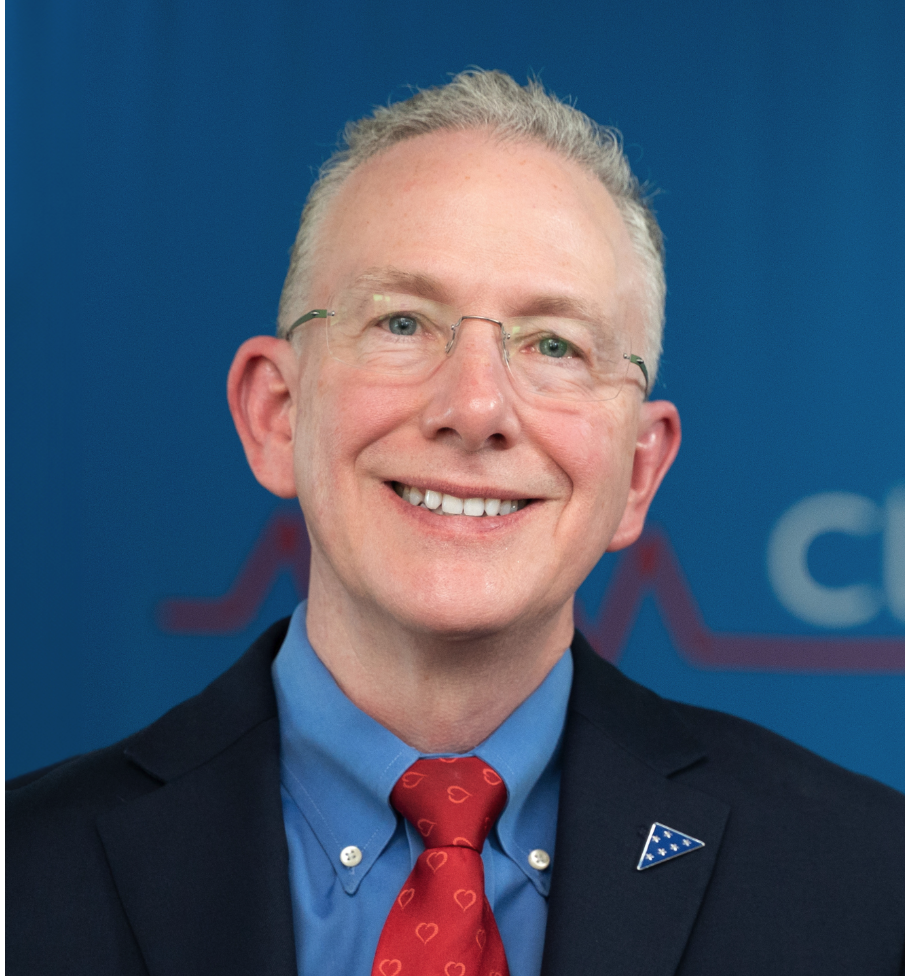
Preventive Cardiologist, Heart Disease Expert
Dr. John Osborne is a Harvard-trained, triple board-certified preventive cardiologist specializing in early heart disease detection and prevention through advanced imaging technologies. With over 30 years of experience and over 25,000 heart scans interpreted, Dr. Osborne is pioneering new methods to identify and prevent heart disease before symptoms occur. He is the co-founder of ClearCardio™️, a program that combines AI and advanced imaging to help patients take proactive steps in managing their heart health.