How Doctors Are Using AI To Help Reverse Chronic Illness

 Apple Podcasts

 YouTube

 Spotify

 Goodpods

 Overcast

 RSS Feed
Healthcare is catastrophically broken. We're spending $100K on preventable hospital visits while doctors get 12 minutes with patients, never read charts, and wonder why people don't "just take their meds." Type 2 diabetes patients sit at 10% control rates while the system shrugs.
Dr. John Oberg took 50 patients with dangerously high A1Cs and got 49 into control in 12 weeks. Then he did it again with 79 patients, dropping them into healthy ranges and taking 30% off insulin entirely. His secret? Reading the chart. Treating humans like humans. Changing ice cream flavors instead of lecturing about willpower.
This episode reveals how combining radical empathy, AI tools, and actual common sense is revolutionizing chronic disease care—and why the same principles work whether you're managing diabetes, depression, or just trying to unfuck your life one decision at a time.
Learn "implementation medicine"—Dr. Oberg's approach that treats patients as partners, not problems. We cover AI co-pilots, peer counseling, the loneliness epidemic, and why calling your doctor by their first name might actually save your life.
Key Topics:
- 98% success rates through radically small changes
- AI in healthcare: when it helps vs. when it kills
- The loneliness crisis: men now have fewer than 3 close friends
- Why the food pyramid was corporate propaganda
- White coat syndrome and first-name medicine
- Using tech without losing your humanity
----
GUEST WEBSITE:
----
MORE FROM BROBOTS:
Connect with us on Threads, Twitter, Instagram, Facebook, and Tiktok
Subscribe to BROBOTS on Youtube
Join our community in the BROBOTS Facebook group
----
LINKS TO OUR PARTNERS:
-
Explore the many benefits of cold therapy for your body with Nurecover
-
Muse's Brain Sensing Headbands Improve Your Meditation Practice.
-
Get a Free One Year Supply of AG1 Vitamin D3+K2, 5 Travel Packs
-
You Need a Budget helps you quickly get out of debt, and save money faster!
0:00 Imagine ending up in the hospital with uncontrolled diabetes and with that a $100,000 bill that could have been prevented with a little well-timed insulin. Our guest today is Dr. John Oberg. That happened to his mother-in-law. As a result, he got pissed, got his doctorate, and helped 49 out of 50 patients who had failed for years. get their condition under control in just 12 weeks. How? Not willpower, not keto, tiny changes. One patient could only eat ice cream, so they changed the flavor to less sugar and their blood sugar dropped. can look like when someone actually gives a shit.
0:40 Today we're talking about implementation medicine, groundbreaking AI health tools, and why loneliness might be killing you faster than your blood sugar. Hey, folks, this is robots, the podcast that talks about AI technology and your health and your wellness and how they all combine sometimes into a big clusterfuck of a mess. And that big clusterfuck is something that I've complained about. You've complained about it. We've complained about it here on the show plenty. So there's no shortage of complaints. We can all do that. But when it comes to the mess of what the US healthcare system is, we found somebody who's actually trying to do something about it. We were lucky enough to convince him to hang out with us for a little bit and talk about the work that he is doing about how a lot of it is built on the backbone of AI and advanced technologies are helping him scale his business, which in effect means helping more sick people get better faster.
1:29 So our guest today is Dr. John Oberg from Prasena Health. He is an expert. in reversing type two diabetes. And so we asked him to start by sharing the story that inspired his mission to take on this incredibly massive challenge. working with or trying to resolve the problems that many people face with type 2 diabetes is what sort of set you on this path tell us more about that what is it that sparked that curiosity and put you on this road Yeah, so I worked with organizations doing change management for a long time and then started a healthcare company in 2014 that was doing something called medical cost sharing where it's like insurance, but it's not insurance. so people bear one another's burdens. And we saw lots of people that dealt with, you know, chronic disease, cancer, but it hit home, you know, years later when we, my wife and I went to visit her mom and her mom had type two diabetes and hadn't checked her blood sugar in a few days.
2:21 And the blood sugar was so bad that she ended up in the hospital and it was a totally avoidable hospital visit. you know, my guess is the hospital visit cost $100,000. It was paid for by Medicare. So the U.S. paid the bill and you have $100,000 bill that could have been solved with, you know, a couple of shots of insulin well-timed. And I got really angry. And so I went back to get my doctorate and I told people at USC that I wanted to solve type two diabetes. And they told me that was cute that we've been working on that globally for like 60 years and we couldn't do it. They didn't say couldn't, they said it'd be That's a big challenge. And we took 50 patients and they were all really sick. know, a one C's of 9.6 and so 6.5 is diabetes and they'd all been uncontrolled for years.
3:04 And 12 weeks later we had 49 out of 50 patients in control and kept them controlled for the next two years. And these are like low income. Yeah. Yeah. Like I think if you have more than one comorbidity, you get like 10 % control, 50 something percent. If you have. you know, a single disease state. yeah, we've just been in our latest study hasn't been released yet. We just are now collected data for it. We're about to send it off for peer review, but we took 79 patients with an average A1C of 11.06 and dropped them into the sevens in 12 weeks. And we took 30 % of those patients off of insulin at six months. So we're doing things radically differently and we're getting radically different results and the patients love it.
3:46 Our providers love it. And we're saving the system a ton of money. And so we think we're on the right path. So what's the mechanism? What's the trick you're using? yeah, yeah, yeah. I wish it was a thing, right? I wish it was like one thing we could give people and just solve the problem, but it's, you know, it's a thousand little things. And so we take all of everything that we know about medicine today, clinically, and all of the devices that are available. And we take everything we know about mental health, primarily looking at anxiety, depression, and stress that are caused by disease states like diabetes. And then we evaluate everything. and we look at severity scores for what's the most important thing to be treating for a patient.
4:26 And then we measure the patient's readiness for change to find out what they want to change. And then we give them a radically incremental program. Like how small a change can you make? Like, can you just get them on the right medicine, taking their medicine at the right time? Can you get them to change their coffee creamer? Like the littlest of things. And we talk to them all the time. heard you talking about this in another interview. Just the small because it is like a lot of times you hear, oh they didn't take their medicine. They don't do the things. But you are giving these great examples about people like literally changing the flavor of ice cream because the person could only eat ice. That was the only way they would get calories was ice cream. You said, well, let's change the flavor. And that helped drop their blood sugar. Yeah, it's crazy. mean, but that's what we do. And I had one person who was so excited by their visit with the physician that they wanted to go walk a mile.
5:11 And we said, hey, let's just try to get to the mailbox. Like, let's just make it smaller. Like, just tone it down. And so really small changes that people can get their arms around. But then we have to talk to them more regularly. Like, you can't wait two weeks or three months to talk to the patient again. So we interact with them as often as they need to make sure they keep making these small changes and they build momentum. They change the inertia, build the momentum. And guess what? works. I want to get to some of the technology that you're using to help with this in a minute, but I also want to start there because I think that is the thing, whether it's trying to lose weight, trying to get my finances under control, trying to fix whatever is broken. There's that hurdle. There's that degree of being stuck.
5:52 I don't know, are you getting closer to figuring out what that is and how to help people get out of it? Yeah, we look at lots of things, right? So we look at someone's skillset and if they don't have the right skillset, we have to give them some form of training. We look at their mindset, like what's their belief system. know, the type 2 diabetes health belief systems are really important, but there are other belief systems as well. We look at how they're prioritizing different parts of the problem to see if we can help with that. And then we try to figure out what's the smallest unit of work we can kind of engage with them to make it as easy as possible to have success. But that means that our providers have to be, you know, a lot more than what they were trained to do in school. They have to take on new training and we train our providers every week.
6:35 Like they have to go through weekly training with me where we're talking about psychology. We're talking about empathy. We're talking about skills training, all these things we have to be good enough at. And then we help our patients re-engage in the system. Like we're not going to try to be a nutritionist. There's nutritionists in the system. We can get people back to nutritionists when the time is right or certified diabetic, you know, education people that that have all this great training, but they're frustrated too because patients aren't doing what they're being asked to do. And so we try to tee up all those people for success, nurses, hotlines and care coordination teams. We don't try to take the place of any of those people. We just want to have the patient show up ready to do what that next one step is. So is the mechanism to basically go through and apply kind of a minimum effective dose for a change and then go through and create home homeostasis and then do another small change in your chain homeostasis again and eventually get a trend where they're actually doing the right things.
7:28 would say homeostasis is probably a little bit of a strong term because sometimes we move before homeostasis is kind of achieved scientifically. let's use metformin as a great example. a really safe drug. We use it all the time. But there are people that self-medicate off of the drug because it can cause diarrhea, right? And it's really uncomfortable, right? But we talk people through that. We can't stop the diarrhea. We can get them on Metformin Extended Release instead of regular release. We can have them taking it twice a day instead of once a day, which is a little bit less difficult. So there's things we can do to make it a little bit more palatable for people.
8:12 But then as soon as they're kind of ready for the next change, we want to make the next change. We might not be all the way to homeostasis necessarily, but we do want to keep them moving. I think your idea is the right idea. and then from an overall measurement perspective I'm guessing you guys do have a metabolic panel up front and then you get continuous monitors like CGM sitting on them but maybe another wearable that tracks record activity functions, sleep, all those different pieces. And you try to correlate that data into some type of time series graph chart and create trend sets around that to try to understand what things are happening. And then you can make small incremental changes to strive to see if you can move those markers. All of all of that. Now, what I would say is that, you know, CGMs are probably one of the most misunderstood devices in our practice for our practice.
8:52 uh We prefer to have people using blood sticks for their fingers because it's so much more accurate when you're using insulin in particular. But CGMs are really great for like the person who wants the data for behavioral reasons. This is one of the big conversations we have with between the medical doctors and the behavioral people in our practice. It's like, hey, a CGM may not be clinically indicated for medicine. But it's really great because it can give somebody some data about their behavior and make the behavior change so much easier and therefore has a really big clinical impact medically. And so we have to look at things through kind some different lenses sometimes. And so the data is really important for some people and for other people it's stressful. So are you tracking that stuff in real time or is that something that they sort of monitor and report to you?
9:37 Well, mean, first of all, would say a CGM data isn't real time data in the sense that it's interstitial fluid. It's not blood, but, but no, our, patients track it. And then they want, we do some cases monitor the CGM data directly. In most cases, we want them entering that into an app so that they're processing it in their brain. So they actually know what's happening versus just having the number reported out and being having their brain kind of out of the loop with the provider. So we, try to get them engaged in that, but we try to get engaged in just a few numbers, right? Because you could measure everything. And that isn't for most people helpful. Now I'm a little weird. I want to track more data. You know, would say there's people in my family that want to track lots of data. Yeah, totally. And for those people, what we do is we try to meet everyone where they are.
10:20 So for people that don't want to track a lot of data, we track a little data. We might collect a lot, but we only pay attention to a little. And then for some people, they want to track every now, by the way, there are also people that want to track too many things. Like there are patients are like, I have this number it's out of band. It's like, yeah, but when that one number is out of band, it's okay. Unless it's out of band with six other things. And so like it's really, and then what it does is it causes a different type of treatment burden, which is anxiety based on not getting an A plus on your paper, which is it's, it's yeah, it's all yeah. You got it. Yeah. So we really try to help people understand like, when is it not important to track a number? can be as important as when it's important to track.
11:01 Yeah, because that high signal-to-noise ratio definitely throws people off, and whether you're a provider or a person looking at it, any extra noise makes it that hard. Yeah. I, medical practice came to us the other day and said they track like 25,000 different things in their panel. And we're like, wow, if you want that great, but not great for most people. Well, and so what you're talking about here is a very individualized approach to health care that we do not typically see in a doctor's office. Yes. I mean, typically you're walking in, you're giving a list of symptoms and you're getting whatever drug the doctor thinks is going to attack most of them. How? medicine. mean, there are services like this for multiple different treatment sets that are available and they're financially inaccessible for the vast majority of people because they're very expensive.
11:48 That's right. you approach that? mean, for us, we, so in my doctorate, we did all the medicine and all the, you know, the mental health work, but we also ripped apart the entire mechanism for the administrative practice of medical office and all the financial practices and rebuilt the entire practice so that it could fit work for the, you know, the most, I wouldn't say, you know, people who have, um who are homeless, for example, are very difficult to treat for our practice right now because insulin's a refrigerated drug and You to work in that environment and to be successful financially, not just clinically.
12:36 So a big part of what we discuss typically is AI and how AI interacts and works with these different pieces. And AI has lots of different inference functions. And you're talking about tracking a lot of data, trying to organize it and using multiple different LLMs to try to make these things make sense. mean, Amazon has 15 different LLMs you can choose from, Bedrock just on medical devices. And then everybody has their own different pieces. Are you guys using AI in this way to try to actually help people with their information? And are you encouraging people to use AI to ask for help? Are you discouraging them to ask for AI for help when it comes to treating themselves medically?
13:18 Great question. We're giving them AI to help. So we use AI on the backend to help with all of our administration for our providers, of course. Like there are things that are table stakes like ambient scribing and getting information into and out of medical charts that are online. that's all happening, of course, inside of our medical practice. so, and we're doing more and more and more of that as time goes on. Right now, what we're really excited about, we're releasing a co-pilot for our patients that can actually talk to their medical chart and talk to their provider. And it can help the patient learn what questions they should be asking about with their provider. But it also tells providers what to be looking out for. So if something exotic is happening, it can call that out and say, hey, you might need to consider a consult with this other specialist. Talk to tech tour medical director.
13:59 And the medical director's all over that. So we're constantly looking for what are the threads that humans wouldn't normally be able to see because they're not specialists in every area. And then the medical director can then. know, pull the chart and say, we think we need this specialist involved and here's why. And then we have this really beautiful continuation of care note that we can give to that specialist and say, hey, here's what's relevant to what's going on. Here's what's less relevant, but important to understand. We have an entire chart available. If you need to see labs, images, whatever, let us know, we'll get it over to you. And so we can, we, we do have joking with someone the other day. We do crazy stuff. We ingest like all of their medical charts for a patient before they come see us for the first time.
14:40 and then our providers do this crazy thing, we read the chart before we see the patient. I mean, crazy stuff, right? And now we don't have to read all of it. We just read the parts. The AI is kind of flagged appropriately and it goes in and it characterizes like, you must read this, should read this, probably don't need this, it's archived, but here's the summary of. So it kind of gives you a heat map. of other actual medical information and says, look here first. That's actually very interesting. That's a great use case. uh The next kind of question I have along the same area is that Western medicine, typically speaking, or at least when this in the US is very much symptomatic treatment, and we don't tend to spend a lot of time working on uh actual root cause analysis of why people are actually sick.
15:23 And a lot of people have turned to naturopaths and naturopathic medicine because naturopaths tend to stay more involved. And, and I guess Um, more frequent with their updates and their approach. Like I see my naturopath and my appointment is an hour, like legitimately an hour. If I go see somebody like one of my LGPs, I might get 12 minutes with them, maybe 15 at the most. are you plugging a fundamental gap that we have with our existing medical infrastructure today? Is that where you see this problem at? Because I'm guessing the techniques are trainable and you could teach other people how to do this. And we could do this at scale. for everybody out there at the medical practice itself and actually change that require massive changes in insurance providers and how we actually treat medicine and treat people.
16:10 Do you see yourself as making doing this and what are the prospects for the future given where our medical system is today? We think we may have found a new, entirely new school of medicine, know, inside of the internal medicine kind of, you know, realm. Right now, you know, it's based on chronic metabolic disease, but it really is implementation medicine. And how we implement these things is really important. So we think there's a whole new set of protocols that providers need to learn to do this very specific thing for these very sick people. Yeah.
16:51 and pulmonologists. so, we think it's, know, infinitely scalable. uh We're building technology to be infinitely scalable. We think that's true. And uh we spend a lot of time with patients really. mean, our first visit could be an hour if it needs to be. Patients don't generally need to spend that long with us. don't feel like they want to, but we spend, we put that much time aside inside of our practice. And then again, we talk to them regularly. Like if they get, you know, their AI and they're interacting with their chart, and like I have a question for one of your providers, you know, the AI can say, well, do you want to schedule an appointment or do you just want somebody to call you between appointments? And a lot of times like, Hey, can you just give me a quick call? And it's not having to go through the front desk and it's like the provider just calls and says, Hey, what's going on?
17:35 I saw you were talking about, you know, Yeah, it sounds like you're patients where they're at, which is great because a lot of patients have a lot of nervousness about talking to doctors. I white coat syndrome is a real thing. Like I have it. I go in and I see my doctor, my blood pressure spikes every single time. You know, I'm suddenly, you know, in the one thirties over nineties and they're like, you should be on blood pressure medication. I'm like, you put me on it three times and I've crashed. Like you're going to kill me if we try to do this again, because I'm normal.
18:21 Yeah, that's that's that's kind of it. And I mean, being able to have a conversation with something that's not human, I guess, or maybe something that you're not worried about being judged by. I think it's huge. Yeah. well in some circumstances, but we've got to be careful too. Like the human interaction is really where it's at for us. You know, all of our providers are on a first name basis with our patients. uh know, people, you know, I often get Dr. Oberg, it's like, man, if you see me in the hospital or in my classroom, that's cool. But if you're a patient or a friend or a colleague like John, like that's just a much better way that we're going to interact together. And there's some early evidence that like for some parts of cognitive behavioral therapy, that people are interacting with it and getting better results than talking to a human.
19:04 So I think that we're going to find that there are some, you know, places where anonymity makes a ton of sense. But I want to be super cautious about that because I mean, with all the hallucination and thing, the AI has got limitations as well. And we're bought in like we're, we're converts. Yeah. So, so we don't, we, we have some, we have some ways of putting expert systems along AI so that we can actually make sure we don't have hallucinations. in any kind of environment. And then we have the obviously human in the loop systems that work really closely with the patients. And so we're very careful we have fully autonomous systems. We would never use a fully autonomous system where something's going to have anything clinical at all like that just would not be appropriate for us.
19:47 plugs that gap of being able to have that constant contact. If I'm somebody that's having an anxiety problem and I can't get ahold of my doctor, my physician, and I can talk to a robot and kind of feel better. Yeah. Yeah. Vet this out for me. Right. then we, we have guardrails in our system are like, yeah, no, that's not actually true. And it's popular science and it's unfortunate because, and you know, for us, we talk, we have this kind of gradient for people. like, here's what the science knows for sure. Here's what the evidence is telling doctors to do. And they do in the practice here's stuff that we just don't know. It's probably not going to hurt you, but like, If you want to give it a shot, just be informed that we don't think it works. Maybe it works.
20:28 Try it on, see if it fits. Maybe it's placebo, maybe it's great. And then there's stuff that does harm. And so as long as we're telling patients, like they're getting full like information about where all of that is, and then patients need to be agents and make their own choices based on what the science says. Enabling people to actually make their own decisions. That's an interesting concept. is huge for us, yeah. I mean, because we're all we're taught very young to not do that. Like your doctor said to do this is the thing that you have to do. you know, get X amount servings of dairy a day, get X amount servings of meat. And there's just some people that don't do right with that. Yeah. go read the book Fiat food.
21:08 It was startling. It was scary. was the food pyramid is not a thing for anyone listening. It's just not a thing. Whole food. talk, you know, eat more whole food, move to the right. Meaning from the left hand side, processed food, right hand side, whole food, move to the right. And then for exercise, move more. Like we can talk to our optimization and there are experts in optimization, which I would say that our practice is not an expert in like Yeah. Well, and it's tricky, mean, without the risk of getting political here. I mean, even the idea of eating whole food, right?
21:48 If you stick to the outer rim of the grocery store, it sure looks like whole food, but it was not raised that way for the most part. I mean, it's very hard. Yeah, exactly. You got to read your read the labels and know you know, no, and we talked to we actually read labels with patients that ice cream story was us reading labels with patients, right? So we'll read labels with them. And so, you know, as me meal planning easier, it's great. Yeah, I wanted to ask you about your take on mental health because so many people are using AI for a mental health surrogate, whether it's in place of an actual therapist or in conjunction with. I do it myself, very guarded and very carefully.
22:30 And there's a lot of things that used to be thought spirals in my head that would spin there and keep me stuck that I can now go to that judgment free zone. dump them out and get some organization to my thoughts and start to come up with an action plan. So for me, it's been wildly beneficial. For other people, it's been deadly. So I'm curious your take on it and where you see the future of mental health with regard to AI. Yeah, I'm pretty cautious here. think, you know, my, my first coaching experience ever in my life, I was getting coached by a kind of a coach early in their career. And they took me into kind of the therapy zone and did some pretty therapeutic damage that it was undone by a doctor later on who had the right credentials and the right therapeutic background.
23:10 so I think, um, here's a great analogy when I'm using AI, which I use every single day, I'm exceptional at using it in my domain of expertise. It really speeds me up. But I don't code software. And so I work with our chief technology officer who does that. And when I watch him use AI for coding, it's like a different language. Like he can use AI in his domain of expertise and it gets sped up, you know, 10 to a hundred times. can use uh it. Yeah. But, but if you, think if you're working in your domain of expertise, you can be exceptional at it. If you're not in your domain of expertise, it can turn into an echo chamber and lead to disastrous results.
23:51 So if someone's interested in using AI for mental health and they're trying to understand like, do I engage with my professional? How do I engage with people that are uh in a future looking environment? I think those things are less dangerous. I think taking AI into a therapeutic environment where the AI hasn't been built for that specifically has a lot of danger to it. And I would recommend not doing that. uh Look, I think talking to an AI versus not talking to anybody, you know, gosh, I believe we can lower the cost of mental health care by 90 or 95 % using AI.
24:31 Here's the way I think we should do it. I think we should train people to be peer counselors, to engage in subclinical settings, and then have an AI listen in with the AI flagging a therapist when a therapist needs to get involved. That's the way that we see it working inside of our practices. Like, let's get people comfortable enough with the AI. listening in as a peer to the peer counselor and the peer counselor who's trained in handling subclinical issues. And then when you get into something as therapeutically indicated, let's bring an expert in. That'll let the expert kind of get a much broader uh scope of what people they can help, right? And they can really be involved in work at the top of their license. And we can get people, peer counselors, uh modeling empathy again, like great listening.
25:40 Well, that's weird because I think A lot of us used to have friends and we used to go to bars and hang out and chat and. We don't really do that like like, I mean, I can go back like to the early 2000s be like, yeah, OK, I used to meet people at the bar. We hang out, we chit chat, we socialize. And it happened much more frequently, and I just feel like people are much more insulated and much more insular and much more protected and kind of what they say, and they don't tend to have real deep conversations. It can be very superficial, and I think we've drifted into that kind of as a society because we've created these Facebook monikers where everything's looked, watched, monitored, and we're looked at all the time. uh full disclosure, I own a medical startup.
26:22 I take wearable data from Dexcoms and Fitbits and Garmin and put those things into time series chart graphs and overlay them with other data sets to make sense of it. And then we were way ahead of the market when you put it out there. So it's not gone anywhere. A thousand other companies come in since and made changes. That being said, um we collect too much data. And even in our platform, it can be used in interesting ways. And we have all kinds of safeguards that lock those pieces down. And we have a sharing system and it requires multifactor authentication. And you only, have limited access with your key tokens to be able to get to things. How do you get people over this fear? Like you're using AI, you're using biometric data, you're collecting all this information, you're pulling it back in.
27:07 One, actually the real question is do your patients even. worry about it or are they in the state where they're like, I got to do something. Or is it that, you know, this is another signal that creates another layer of anxiety that you have to worry about in your practice? Yeah. Yeah. Yeah. these are the things that we really lean into and that, em and when people ask, like you guys did, you know, what's the thing? It is messy, muddy.
27:51 Yeah. Yeah. know, I think it was the fifties or the sixties, there was some study done that I can't find. I went back and looked for it, but my recollection was like, men could talk to like 12 other men about anything. And then a more recent study was like less than three. And I heard somewhere recently less. I can't find those studies by the way. I keep looking for the numbers. Yep. would tend to believe that. We need to solve this. And so one of the things that we do is we really connect with people.
28:34 I know it's a crazy idea, but... tell a story of a colleague who came to you and said, how do you convince the patient that you care about them? And you said, you actually care about them. right? Yeah, I mean so many of us think that nobody gives a shit and One it's probably not true. I mean there probably are people that do but we don't know how to handle those signals and we don't know how to we don't know how to take empathy and friendship because we're not used to it. Like I really think that's the case with I look at my kids and how they interact and behave and it's a whole different level and they're way more open and honest than I've ever been. But as a Gen Xer, like we're just taught to swallow so much and not say anything.
29:16 And yeah. um a hundred year cycle we go through. The way I had heard it described to me early in my life was that they said that bad times make strong people make good times, make weak people make, right? So it's the hard times. Yeah. So you go through this cycle and so, you know, And then we have people that are, know, the kids grow up, right? It takes until you're 25, 26, 27 years old, your brain's fully formed depending on lots of factors. so, well, and empathy is a practice skill, right?
30:01 Like you have to, like, I didn't make really good lifelong friends until I was in my early thirties after I started that, going to that therapist I told you about. And that wasn't because my parents did anything wrong. had a, you know, something happened, my dad died when I was really young and It had an impact on me that no one really helped me through. And had I not for lack of trying, I just never really processed it until I got into my early thirties. And once I did, I was able to make lifelong friends. And now I've got, you know, lifelong friends that feel like family, but I'm really fortunate. But it was a very deliberate process for me. Like I went out in my early thirties. Like I don't have this. I want this. And you can't just walk out to somebody like, Hey man, best friends. Like that's weird.
30:41 Right? So you've got to learn about the layers of friendship and how that develops over time. you know. And I'm kind of the opposite way where like I hate small talk and I hate the ramping up to the real connection. So I want to be the guy that just goes up to the randos like, hey, can we just be friends? Like, can we skip all the like, how's the weather? What are you doing this weekend? Right. those that doesn't hold up, right? I've tried that before and I've had those relationships where it gets super intense, super fast with male friendships. And it's like, but they, you know, it doesn't, doesn't generally last. so, yeah. was going to ask you something along the lines of, what are some ways that people can use technology to, you know, to better their lives? But it sounds like you guys are doing a lot of the technology on the back end. So I'll open it to you, like for the listener who's out there who read the description that had something to do with like dealing with health issues and how technology can help them.
31:26 What are some things that people can take away from what you see every day that are simple places to change that ice cream or whatever it is that they need to do to get on the right path? You I'll try and get down into a minute. Like I want people to get involved with an expert so that they're making the plan with the expert, right? So because the expert has to say, yes, this is a good plan. And the person has to say, yes, I'll do that plan. Right. But if, but if a person comes in and is like, I'm going to kick diabetes, I'm going to do it by I'm going to cut out sugar. I'm only going to eat like, you know, Captain Crunch and it's like, that's a hold on time out.
32:07 Like that's sugar too. Like that, you know, okay, I won't eat Captain Crunch. I'll just eat rice. We'll call the home. Like we got to get like, so, there has to be an expert and there has to be a person who says, here's what I'm willing to do. And they've to put that expert plan together. And usually it starts with getting people on the right medicine. So the medicine is tolerable. And then it's move at least 30 minutes a day, five days a week and at least 10 minute chunks. Just. and constant movement. You don't have to break a sweat. Just get out and walk, right? And then eat more whole food, like just a little more. We tell people, if you're going to the steakhouse, get the steak. Like, that's fine. But make the right choice when you're not at the steakhouse, right? get the thing that's more whole food and just do a little more each day.
32:52 Like wherever you are, just do a little better. Yeah, yeah. Constant persistent consistent refinement. That's it. Just, yeah, just a little better each day. A little better. Awesome. This has been great. John, Dr. Oberg, whichever you prefer. Thank you so much for your time. uh Anything important that we did not get to that you want to make sure we mentioned. Yeah, I mean, for me, I'd say, you know, our life's work is at pristine and health, which is the medical practice. But we try to tell these stories of hope at our little podcast called tales of abundance.com, where we talk about things like AI and you know, the stress of economics and but it's, it's, it's hopefully mostly stories of hope, like stories of redemption. And so if you want to come check out and just feel good for a minute, come check out tales of abundance.com.
33:35 And uh yeah, just reach out if you want to be part of the movement in whatever way you want to part of it, reach out and let us know how you want to join. We're definitely gonna come check that out because our mantra is to try to be positive and put positive spins on things and we often wind up doing saying during all of our AI chats. So I think we might listen in for some advice. Exactly, exactly. Cool. Links links to all the above in the show notes for this episode. John, Dr. Oberg, thanks so much for your time. Really good conversation. Appreciate your time. Let's do it again. All right, that again is Dr. John Oberg. Our thanks again to him for being on the show with us here today. You can find all the links and necessary resources that we talked about in that conversation at our website, that is brobots.me.
34:17 That's also where you will find us again in about a week with another new episode. Hit subscribe if you have not, leave a rating and or a review if you would, and of course share this with anybody who might be struggling with these same issues in the same way you are to help them get the results they need. Thanks so much for listening. will see you again in about a week at ProBots.me.
CEO
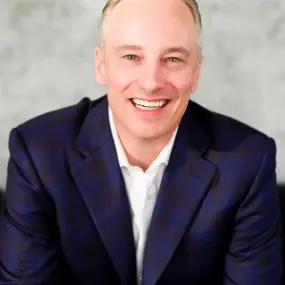
John Oberg is a Founder, CEO, Board Director, Advisor, Professor, and Investor trusted by organizations to navigate growth, conflict, and change. He founded Precina Health with Dr. Dustyn Williams and have developed the key to solving Type 2 Diabetes.
Previously, John founded another Austin-based healthcare innovator, Sedera, a community-based medical cost-sharing organization (#193 on Inc 500). John serves on the board of directors of OnlineMedEd (which writes curricula for Medical and Physician’s Assistant schools globally) and Health Admins (Healthcare Business Process Outsourcing). Through John Oberg Advisory, John advises large institutions, healthcare industry leaders, professional services firms, and nonprofits. John received his doctorate from the University of Southern California (Social Work) and his MBA from the University of New Mexico (Policy & Planning and Management of Technology). He is currently an adjunct professor at USC. He has authored patents, started companies, and managed teams larger than 1,000 people. Over the last three decades, he has studied the behavior of individuals, communities, and systems.
John was born and raised in Los Angeles, California. He currently lives with his family in Austin, where he engages in many outdoor activities. When traveling, he also enjoys SCUBA diving and golf and has recently taken to hunting and fishing. He holds a second-degree black belt in orthodox karate.