How to Face Your Fears with Nick Bracks

Nick Bracks, son of a well-known politician, opens up about his struggles with mental health and the pressure of living in the shadow of his father's success. He shares how his shyness and underlying mental health conditions were brought to the...

 Apple Podcasts

 YouTube

 Spotify

 Goodpods

 Overcast

 RSS Feed
Nick Bracks, son of a well-known politician, opens up about his struggles with mental health and the pressure of living in the shadow of his father's success. He shares how his shyness and underlying mental health conditions were brought to the surface after a car crash that nearly killed him. Nick emphasizes the importance of vulnerability and opening up about one's struggles, especially for men. He also discusses the need to overcome the stories and voices that tell us we're not good enough. Nick's journey of self-discovery and growth serves as an inspiration for others facing similar challenges.
Topics Discussed:
- Undiagnosed mental health issues during childhood and adolescence
- Impact of growing up in a politically prominent family
- The life-changing car accident and its aftermath
- The importance of taking small steps towards progress
- Overcoming fears and self-doubt through exposure therapy
- The role of vulnerability and seeking professional help
- Differentiating self-worth from external achievements
- Building mental resilience by facing challenges
- Shedding the stigma of mental health struggles for men
- Embracing vulnerability and opening up about personal battles
Chapters
00:00 Opening: Introducing Mental Health Discussion
05:44 The Impact of Privilege and Comparison
09:30 The Power of Small Steps and Seeking Help
12:08 Importance of Vulnerability and Open Dialogue
23:13 Supporting Mental Health Through Podcasting
----
GUEST WEBSITE:
https://nickbracks.com/
----
MORE FROM THE FIT MESS:
Connect with us on Threads, Twitter, Instagram, Facebook, and Tiktok
Subscribe to The Fit Mess on Youtube
Join our community in the Fit Mess Facebook group
----
LINKS TO OUR PARTNERS:
-
Explore the many benefits of cold therapy for your body with Nurecover
-
Muse's Brain Sensing Headbands Improve Your Meditation Practice.
-
Get a Free One Year Supply of AG1 Vitamin D3+K2, 5 Travel Packs
-
You Need a Budget helps you quickly get out of debt, and save money faster!
0:01 would people describe you as someone with privilege? Would they look at you and think to themselves, What does that guy have to be depressed or anxious about? I know I've been perceived that way by friends and even some of my own family members. When I shared with them that I suffered from and was treated for depression with different medications and different strategies, they were shocked. They had no idea because from the outside looking in, They saw someone who seemed to have it all going for him. It's a common misconception that is shared by a lot of men around the world. of them is my guest today. His name is Nick Bracks. Growing up, Nick was a shy kid and a pretty standard working class family upbringing. That is until his dad was elected as a powerful politician in Australia. living in that shadow and under that spotlight. brought to the surface a lot of underlying mental health conditions that Nick was dealing with and didn't even know about.
0:47 struggling to cope with all that. developed an obsessive relationship with athletic competition and eventually alcohol abuse. That alcohol abuse led to Nick's rock bottom, which was a car crash that nearly killed him and his lifelong friend. That terrifying incident was the catalyst for a lot of change in Nick's life. leading him to become a successful actor. public speaker, contestant on Dancing with the Stars, and now a leading mental health advocate. helping people all over the world try to find better coping mechanisms to deal with their mental health struggles than the ones they're currently using. some time with Nick the other day to hear more about his story and what he's doing now to help people like you and me to overcome the obstacles that we face every day.
1:53 I don't normally start with people's stories because I think that a lot of listeners are coming for solutions and less about stories, but I think yours is particularly impactful. I know that. Millions of people around the world have probably heard it, but for those in our audience that have not, I do want to find out a little bit more about your background, particularly your upbringing, because I know when you were young, you're the son of a well -known family, which I'll let you explain, but there was a lot of shyness and sort of hiding as a kid. So tell us a little bit about that, about growing up in the environment you did and kind of the kid that you were. Yeah, sure, sure, sure. And it's a, it is a pretty long story. So I'll try and like give a bit of an abbreviated version of it. But I grew up, like you're saying, in a family where my dad became the premier of Victoria.
2:38 So I'm presuming most of your listeners are in the US. So that would be the equivalent of say, having your dad be the governor of California. So he was, you know, everyone knew who our family was. He got in when I was 12 years old, I was the eldest. Our family was then in the spotlight. very much so, you know, one of the most known people in the state that we lived in. And I, leading up to that, but especially from then onwards, had, you know, pretty severe undiagnosed mental health issues. I always was very obsessive and compulsive and that manifested in sport. All I wanted to do for my whole sort of adolescence was play, be a professional athlete.
3:20 And it became a compulsion where I'd be training for, you know, six hours a day as a 11, 12 year old. And that went on for about five years. And, you know, it had a whole lot of impacts where it stunted my physical development. I didn't actually hit puberty till I was 16, almost 17. It delayed that whole process. I was isolating myself. I felt shame, embarrassment, and didn't know what was going on. I didn't know who to talk to about it. And that was coupled with and, you know, amplified from the fact my... family were known in that way and I was known as the son of this person and it was when I finished at high school that the problems really went out of control, out of control, which I can tell you about if you'd like to hear about that.
4:04 Yeah, well, I want to get there. I'm curious. I know you said when you were a kid, you were shy and kind of tried to sort of stay out of the spotlight, which is ironic being in a family that is sort of in the spotlight. How much do you think that or I guess where do you think that came from? Is that maybe a learned behavior? Yeah, I think it was low self -esteem was the main thing. Because it's kind of interesting that when I was really young, I was actually, you know, the real version of me is quite out there. And I would say still I'm an introverted person, but also the kind of person that is actually wanting to be in situations where I'm, you know, the center of attention, whether that and that that's actually what when I eventually worked through all this stuff.
4:50 where my life ended up going where I've, you know, public speaker, actor, all of these different things that I now do. But the big chunk in between was when I think the self -esteem was so low, the mental health issues took over, isolated myself. And the biggest thing of my life to this day, I'm much better with, but it's still there has been identity issues where, you know, you grow up from 12 until my early twenties being referred to as your. the son of Steve Bracks, your dad this, your dad that. And it made me think, well, hang on, what about Nick Bracks? You know, do you wanna know who he is? And I felt like I had to do something bigger than my father to prove that I was worthy.
5:34 And you know, that urge is still inside me. I've learned how to deal with that in a more healthy way, but it's still there, but it's really formed a huge part of my life. And so I'm curious, coming from a family of privilege, I assume it was a pretty wealthy situation growing up like that, were a lot of things done for you? Because I know for myself, a lot of the mental health stuff that I have just in the last decade been able to deal with, I've overcome through facing hard things and doing them, overcoming those fears and those challenges. And so as I'm learning about you, I'm trying to figure out like, Were you in a situation where so much was done for you that you were never really tested and never really had to face anything hard until later in life?
6:19 Did that, was that a factor at all for you? to a degree there was a part, like I mean, I was very sheltered. I grew up in a family where I wouldn't say there was privilege, there was perceived privilege, but you know, I definitely had... things from the sense of privilege of being, you know, we got to go to all these different events and having your dad in that position. But, you know, my parents are very much from a working class background and they raised us in that way. But, you know, there's also a lot of shame where I bottled things up and I had great parents, but they weren't emotionally open. And I didn't know how to be emotionally open. And I felt shame and embarrassment if I had even the thought of talking about something.
7:03 personal and I felt that like that might be mean I get judged or I'm complaining too much or whatever it was so things got bottled up and that that got amplified as well because you're in this weird situation where your parents by product of being in the position of my dad being that politician the this paranoia about you can't say this you can't behave publicly like this you can't do that you can't do this This is drummed into us from these developmental years, like I was saying from when I was 12 till my 20s. So you feel shame on that amplified level on top of having these quite severe mental health issues. And that created a really big problem until it hit a life and death situation essentially where I had to make a change.
7:50 It really was that breaking point. Yeah, let's talk about that. I imagine you're talking about the car crash. Yeah, so basically what happened was I had all of the problems I'm talking about, wanted to be this athlete, was competing at a very high level, body broke down at the end of high school, hadn't developed socially, had all of these issues and then I just fell apart. I sort of like went overseas for a bit, came back, dropped out of university, discovered alcohol, abused alcohol, was getting in life -threatening situations, you know, every week, blacking, black out drunk. Looking back I... you know, really do feel like it's a miracle I actually survive that whole thing when I think about how many of these situations I was in.
8:33 And it did, but it came to a head when I had a car crash, had my best friend that I'd grown up with, my oldest friend in the back seat of the car, and I was going along a main road, hit a traffic island as I tried to turn and span out of control, got crushed in half. He should have probably been killed had he not like lifted his head up. had a reflex action. He still had to get surgery. It was became the biggest story in the country for about a week. I couldn't leave the house. I developed notoriety became famous myself through that, which eventually led to, you know, being on television shows and a whole lot of other things in my career.
9:14 And yeah, it was sort of that wasn't the that was a catalyst for starting to change. It wasn't actually the. I didn't change overnight, but that onwards led to really assessing this and looking at, okay, I've got to do something. So what did you do? Because that's The thing that I think a lot of people come to shows like yours and shows like ours for is, you know, looking for normalizing their situation, the pain they're in, their lack of ability to cope in ways that are effective, trying to find what's the nugget. And I heard you say something in your TED talk about, you know, the things you talk about are not, it's not groundbreaking. It's not brand new information, right? It's stuff that's been around forever. But I know in my case, and a lot of our listeners, They just need to hear the right thing at the right time.
9:58 They might've heard it a hundred times before, but when they hear it this time, for whatever reason, it sinks in. So what was that process for you of kind of clawing your way out of that? yeah, it's, and it's kind of interesting that, yeah, like you're saying there, it's not rocket science, but it is like, I think really if you boil it down, it's like just taking, taking the first step. And that could be literally anything. There's no right or wrong step. It's actually just getting things in motion and developing momentum. and I've always said when it comes to mental health, there's only one thing that you should not do. And that's nothing. So just literally anything, like talking to someone. And for me, it was that car crash happened.
10:41 I said that I was gonna make changes. I tried to, but I wasn't really admitting how bad I was. And it got to a point where I was almost catatonic and my mum had to drag me to see a psychologist. And through that, I found out how severely depressed I was and started taking steps. But really, if I look back on all of it and how things slowly improved. I had no idea what I was doing. I was listening to all the advice I was getting from the psych and from everything else and just took tiny steps and I still wasn't happy in those steps but one step led to another thing, led to going back to university. Still wasn't what I wanted to do but that led to having to do public speaking when I was afraid of my own shadow, you know, vomiting, talking in front of five people and then having to do it so many times that I got over this fear of speaking and started to build self -esteem, met a group of friends, started to...
11:28 develop more confidence, started to actually open my eyes up to where I could go, started to find a passion for helping in mental health and then, you know, a public speaking career, then taking a chance of doing acting that I wanted to do. But it was all a chain of events because of just taking a step forward, a step forward, a step forward, a step forward. So it doesn't, it could be the completely wrong steps. It doesn't really matter. And I think that's in life in general. As long as you're moving forward, that's going to eventually lead somewhere if you have that mindset. So I'd say just do. absolutely anything, you know, go on Google free mental health helpline, call them, talk to a friend, talk to like whatever you feel comfortable with, just do anything. What I love about your series of events is that it started with an act of vulnerability, which sounds like it was forced vulnerability.
12:16 Like your mom had to drag you to the therapist to make it happen. But as soon as you shared what was going on, there was somebody on the other end of that who received that, who helped steer you to the next thing. Talk about the importance of being vulnerable and opening up and sharing, especially for guys, right? Like that's what we're talking about here is like guys struggling to... cope and do this, live this life in a slightly healthier way. So much of it I've found comes from just being open about the struggle and not worrying so much about what the world sees from the outside. Yeah, exactly. It's critical. I mean, I think it is it's the biggest thing and you know, I've been public speaking for close to 15 years 13 years I think it is or 14 years and I still do the same core thing now which is just go up on the in front of people and tell my story and then try and make it relatable listen to theirs and I think there's nothing more powerful because like you're saying Especially as men we shame ourselves we don't we often can't talk to our friends about it, because they haven't dealt with this stuff as well.
13:21 So as soon as we can hear someone else telling us a story that we can relate to, we think, hang on, maybe I'm not broken. Maybe this is actually something other people go through. And so being vulnerable and being able to open yourself up to talking, admitting that you've got a problem and talking or seeking help, it very quickly makes you realise that, that, hey, this isn't even that big of a deal. I'm... I'm a human, everyone goes through versions of this and yeah, I think it's the most important step of it. We see so often that when you do put it out there to the universe, the friend, the therapist, that the solution that you're looking for, that you're overthinking your way away from, presents itself because they have experience.
14:07 If you believe in a mystical universe of some sort, it hears and provides what you're needing in that moment. So I couldn't agree more. I know part of your struggle was overcoming some of those voices, those stories that you tell yourself about not being worthy, not being good enough. Is that something you still struggle with? And I know it's gotten better, but is that something you still still deal with? Yeah, absolutely, still deal with that. I've gotten better with it. But yeah, there is that voice on so many different levels saying, you know, the main thing for me is projecting into the future and getting overwhelmed thinking, you know, is this going to happen? What about this? What about that? Should I be doing this? But I've gotten much better. It used to be debilitating and it used to be, I guess the main example I use was when I got into the, when I was in university having to do these talks, my voice in my head at that point was so severe.
14:58 when I'd try and just do a talk in front of five people that it was, you know, Nick, you're not good enough, you've got nothing good to say, no one wants to hear from you, et cetera, to the point where you're actually vomiting. So getting through that and then the next thing after that that wasn't too long after was Being on Dancing with the Stars and then having to do something that I was even more fearful for, which was dancing in front of people. And I thought, this is a joke, I can't do this. And, same. it. even dance if I'm like, my girlfriend got angry at me at my sister's wedding. I don't drink now, so maybe if I was drunk I would have done it, but at my sister's wedding, yeah, last year at my sister's wedding, she's trying to dance and I just was refusing to go and do it, because I hate it, I just can't stand it.
15:42 But, yeah. that is one of those fears that as much as I preach, you know, the obstacle is the way I face your fears, overcome things that and roller coasters. I'm just I'm just out. I'm not doing. Well, you know what, like on the topic of vulnerability, you sharing that piece of vulnerability with me makes me feel better because I fucking like can't get over that fear of dancing as well. So I'm glad. I feel a bit better about the fact that I can't get past that one. right. That's right. We're here to support each other. That's how this works. Exactly, and even going on the dancing with the stars, it still didn't help me get over that fear, but I got it. that's the thing for me. Like so often I find, and sorry, we're sidetracking now, but like so often I find that like whatever the thing is that I'm afraid of, the more that I do it, the more I face it and overcome it, suddenly it's not a big, I used to hate flying, flying terrified me.
16:33 Now it's like I have a little ritual where I put my hand on the plane and once I do that, I'm good. I can sit on the plane and everything's fine. I would think dancing on TV every week in front of millions of people, you'd be like, I can dance anywhere. That's wild to me that that didn't. to help you overcome that issue. Well, I totally agree with what you're saying though. I think immersion, you know, therapy for me has been the biggest thing, just doing things that are so uncomfortable and eventually you get fine with them. I guess like the dancing thing is just so unnatural to me that it's not something I really, you know, if I had to do it, sure. But what it did actually help with was I did something that I was just so uncomfortable doing that I thought, you know what, whatever comes up in life, you know, that's uncomfortable.
17:15 If I just think back to how... terrified I felt on that first episode dancing in front of live audience, live television. It can't be as bad as that. And that helped me to really just continually go out of the comfort zone and just remind yourself what's the worst that can happen here. It's like never that bad. I think that's so important. That's you know, I talk a lot about cold therapy. I love going in cold rivers, cold lakes, you know, whatever I can do because it creates that situation in your head where whatever awful thing you have to do, you're like, if I can do that, I can do that. Like, I think there's a lot to be said. And I think that's kind of what I was getting at earlier with with the idea that I think a lot of kids, myself included, are raised with not having to face tough challenge.
17:58 I was the youngest of three boys. My mom, you know, said yes to every request. request I had, and I think it kind of made me a little soft. And so I've had to kind of undo a lot of that my whole life. And so I think that the more that you can intentionally expose yourself to something difficult, challenging, whatever, that's in a safe space, it allows you to face those big challenges when they come at you and they're unexpected and they feel dangerous. You're more prepared because you've done the training to build the mental resilience to overcome. 100 % totally relate to what you're saying there, you know, like having, and I've, you know, again, got a great family, but having the comfort zone of that really held me back from doing things that were difficult from making the hard decision.
18:41 I always knew that, you know, I could get away with making the easier decision. So it wasn't until I made that concerted effort to really go and take initiative myself to make those changes that more growth started to happen. So it's a, it's a. It's a tough thing, you know, it's really hard and I think if you're not forced into that kind of situation, you really do have to make that concerted effort to be honest with yourself, try and get people around you, mentors or friends that are going to hold you accountable that will not just appease you. And I had too many of these kinds of people that were just telling me how great I was and it's okay. And if I complained about something, I get it, you know, that's fine.
19:21 That's normal. When it wasn't, you know, I was like just saying what I wanted to hear rather than. having someone say, no Nick, you're bullshitting yourself, you're talking out of your ass right now, this is what you need to do. If you don't do that, then I don't wanna talk to you anymore because, you know, it's a cop out. Like you need to be accountable. Yeah, absolutely. I think people that know you now know you for that vulnerability and know you for your struggles and how you've overcome them. The old you, they might have thought, what does this guy have to be? He's on Dancing with the Stars. He comes from a political family. It's the stereotypical, what do you have to complain about? What do you have to be depressed about?
20:01 I think that that... really gets in the way of a lot of deeper connection for people because they can't accept that somebody in a position of perceived privilege can struggle. So what's been your experience with that sort of being now on both sides of it where you were seen as one way and now you're probably seen another way? What's that experience been for you? Yeah, I think the core of it is that, you know, anyone can, like mental health doesn't, you know, it can affect anyone. It's not about whether you're in a certain position. So it doesn't discriminate, you know. So I think just my experience through that was feeling an extra level of shame that, hang on, I'm meant to be from privilege.
20:44 I must be even weaker that I'm struggling. And I feel embarrassed to complain about this. and I feel like people are judging me so then I was even more scared of being myself to other people so it was difficult but at the end of the day I think what people need to understand is everything's relevant so it's not about comparison someone might be going you know someone might be on the street and have lost their family and be a drug addict and you know that's incredibly unfortunate and they need help and someone you know might have a billion dollars but be wanting to kill themselves and that's also relevant.
21:25 They need severe help as well. So it's just not about any comparison. It's that if people are suffering, they deserve to be able to talk about it and get help. And I think people need to understand that. I think that's something that I, to bring it back to guys, I think that is something that guys do particularly struggle with is that we are supposed to have this perceived privilege and things are supposed to come easy to us because we're the, you know, in a patriarchy and all of the things, but there is still struggle underneath that. That's really hard to talk about without feeling like you're, you know, making it, you know, a poor me. Like I have, I have, you know, the world is mine to control, but I still struggle. Like I think that is at the heart of a lot of struggle for guys.
22:08 100 % you know I think it's just an innate feeling and we feel like we have to do all of these different things we have to achieve and you know even if we're not suffering specifically from a severe mental health issue there's so much pressure and we're telling in this modern world we think we have to be this and we have to be that even if things are going well we need more we need more money more status more social media followers whatever the hell it is it's just it's so unhealthy it's such a it's like a drug you can't You can't win in that game. Absolutely. Nick, you're doing important work. Tell folks where we can learn more about your podcast and all the things you have to offer. Appreciate it mate. So they can go to my website which is just nickbracks .com podcast nickbracks .com slash podcast My Instagram if you want to check that out is at nickbracks and you'll find all the other social media links on the website So yeah, love it.
23:02 If if anyone listening can check that out And we'll link that in the show notes for this episode. Nick, thanks so much for your time. This has been a great conversation and keep up the good work. Thank you so much, and I'd love chatting to you. All right, my thanks to Nick Brax. Appreciate him being on the show. If you'd like to learn more about him and his fantastic podcast, you can find the links to all of that in the show notes for this episode at thefitmass .com. That's also where you can leave a review for this show or better yet share this episode with someone who might benefit from the conversation. and feel a little bit less alone in their struggle against their mental health issues. But that's going to do it for this week. I thank you so much for your time and for listening to this episode. We will be back next week at thefitmass .com with a brand new episode. Thanks so much for listening.
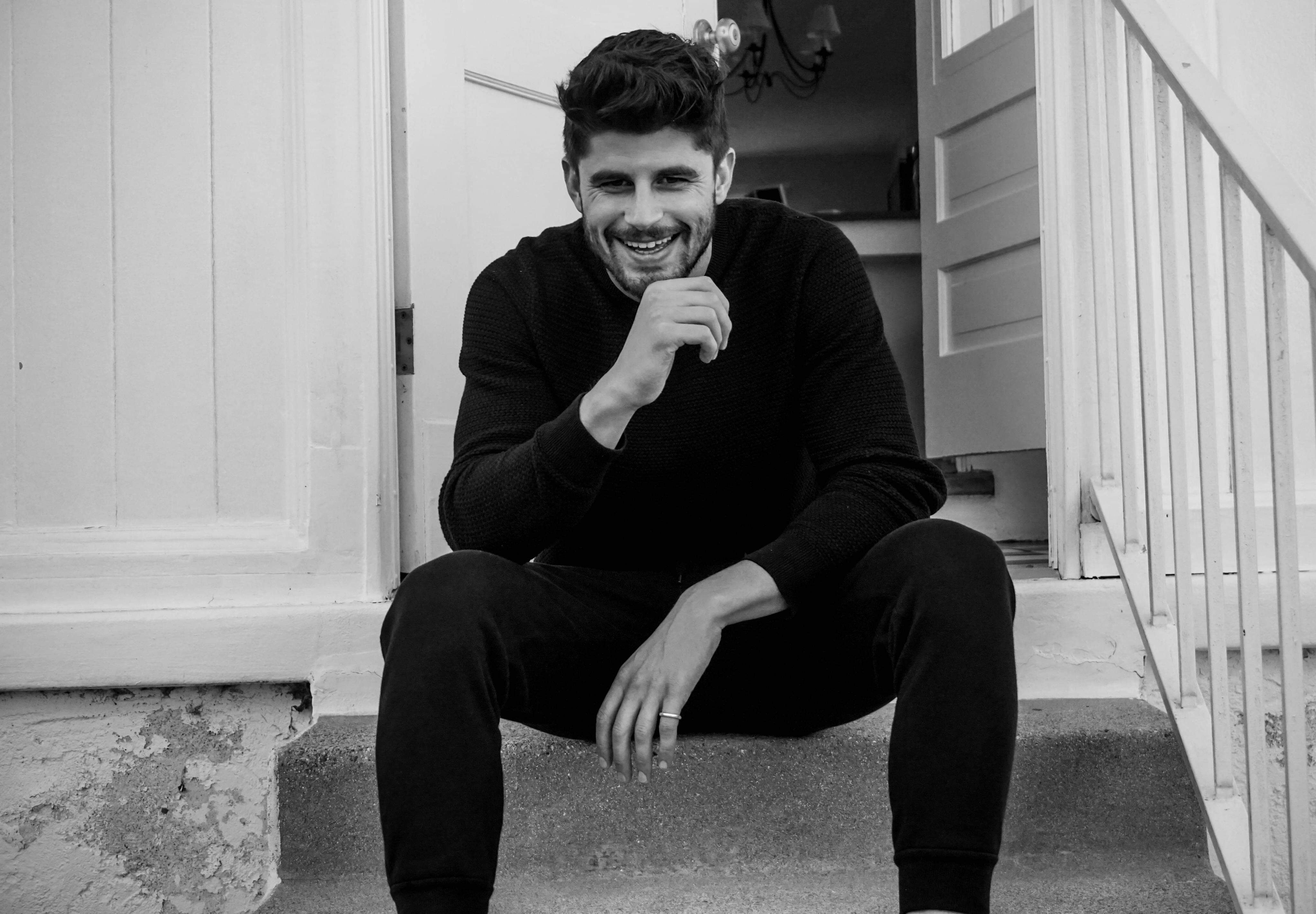
Actor / Mental Health Advocate
Nick Bracks has dedicated his entire adult life to de-stigmatising mental illness through storytelling.
Growing up in one of the most famous political families in Australia, Nick was exposed to life in the public eye since he was 12 years old. Struggling to cope with depression and anxiety through substance abuse, Nick first gained his own notoriety in his early 20s through a publicly documented car crash that nearly killed himself and his best friend.
The drunk driving incident became a catalyst for Nick to turn his life around, exposing his mental health issues and allowing him to get the help he desperately needed. The media attention he gained after the crash led to a modelling career and an invitation to participate as a contestant on “Dancing With The Stars”. While on Dancing With The Stars, Nick took the opportunity to speak publicly about his battle with depression and anxiety, becoming a pioneer in mental health advocacy.
Since then, Nick has developed a successful public speaking career on the topic, conducting over 1,000 talks at organisations around the world, including several TED talks. The “Neighbours” actor is also a successful entrepreneur, founding Move Your Mind Pty Ltd – a corporate wellness software for employees in construction and similar industries. Nick released his first book with publisher Wiley in 2021 and currently runs a podcast under the same name – Move Your Mind.
Today, Nick is focusing on growing his business, while hosting DAB+ radio show “Soul Trader” on Disrupt Radio, his public speaking, and working towar… Read More