How to Support Your Child's Mental Health Before It's Too Late

Summary In this episode, Jeremy is joined by Sally Raymond, who discusses the challenges of modern parenting, the importance of emotional intelligence, and the impact of social media on youth. She also shares her journey following the tragic loss of...

 Apple Podcasts

 YouTube

 Spotify

 Goodpods

 Overcast

 RSS Feed
Summary
In this episode, Jeremy is joined by Sally Raymond, who discusses the challenges of modern parenting, the importance of emotional intelligence, and the impact of social media on youth. She also shares her journey following the tragic loss of her son and emphasizes the need for better communication and connection between parents and children. They explore the emotional disconnect often experienced by boys and the role of education in fostering social skills. The conversation concludes with practical advice for parents on how to create a nurturing environment for their children.
Topics Discussed:
- We need to connect more with others in real life.
- Children are not being taught essential life skills.
- The loss of a child is an unimaginable stressor.
- Boys often lack emotional communication skills.
- Social media can create divisiveness among youth.
- Education systems are failing to teach critical social skills.
- Parents must model vulnerability for their children.
- Storytelling can strengthen family bonds.
- Vulnerability is a source of power and connection.
- Every child's story can provide valuable lessons.
----
GUEST WEBSITE:
https://sallyaraymond.com/
BOOK:
The Son I Knew Too Late: A Guide to Help You Survive and Thrive
----
MORE FROM THE FIT MESS:
Connect with us on Threads, Twitter, Instagram, Facebook, and Tiktok
Subscribe to The Fit Mess on Youtube
Join our community in the Fit Mess Facebook group
----
LINKS TO OUR PARTNERS:
-
Explore the many benefits of cold therapy for your body with Nurecover
-
Muse's Brain Sensing Headbands Improve Your Meditation Practice.
-
Get a Free One Year Supply of AG1 Vitamin D3+K2, 5 Travel Packs
-
You Need a Budget helps you quickly get out of debt, and save money faster!
0:19 Hello there, this is the fit mess and I am Jeremy. I'm one of the hosts of the show. Thanks so much for being there and spending a few minutes with us today. while you're doing whatever it is you're doing. What am I doing? I'm glad you asked. I am sitting in my kid's school parking lot right now, waiting for my youngest daughter to finish her dance class. You know why? Because I'm a good dad. It's the kind of thing you do when you're a good dad. Is there something else I'd rather be doing for last hour or so? Sure, there's a million things. But when you're a dad and you're a good one, you put your kids first and you make sacrifices to make sure they have the things that they need. But seriously, mean, you know, being a parent, you don't need me to tell you. It's a tough job. It's a really hard thing to do. It is full of sacrifice. It is full of a lot of tears.
1:01 It is full of a lot of joy and a lot of big emotions. And I'm not even talking about theirs. I'm talking about mine. But of course you've got to help them deal with theirs as well. And that can be tough. know, mental health, that's what we're all about here. That's what we talk about on the show all the time. And so much of it is about managing our own struggles with our own mental health issues. But you know, we're also as parents, I think on the lookout for our kids' mental health issues. I don't know about you, I know we're essentially on the other side of COVID now, but that three years of isolation has not been easy to recover from for little kids who were ripped out of classrooms and stuck online to do school for a couple of years.
1:42 certainly didn't help any social development skills. And when you add to that, that so much of our world is becoming increasingly isolated because we are looking at screens, whether it's because we're, you know, at work staring at screens or escaping life by doom scrolling staring at screens, we just don't, I don't think we connect enough with other people in real life. Yes, I'm talking about myself as well. I struggle with this. It's hard for me to get up the energy to go out and hang out with people in real life. am naturally kind of an introvert. And it takes a lot for me to make the effort to go out and hang out with other people. But I know it's important.
2:22 We're social animals and it's something that we need more of. But why am I talking to you about this? I'm talking to you about this because my guest today, her name is Sally Raymond and she has written a book. The book is called The Sun I Knew Too Late, a guide to help you survive and thrive. That book is just one piece of a mission that Sally has been on for many, years. after what happened with her own son, who she describes as a rocket ship, just blasting through life, excelling at everything, brilliant, just genius kid, who turned out to burn out too soon by taking his own life. And when that happened, she did what I think so many of us would do. She started just clawing, digging through everything she could to find answers, to try to make sense of the senseless, to try to understand what would cause her son to make such a terrible decision.
3:09 And while she did find some answers, she found a larger purpose and it has been now to help other kids to learn the skills they need to make the connections they need and to help prevent more tragedies like the one she experienced with her own son. I met Sally a few months ago at an event and I was just gripped by her story and I thought that she had just incredible lessons to share with you. If you are like I am and you know, concerned about your kids and wanting the best for them and wanting to help them manage their mental health, their social health, their social skills. And I just, know Sally has a lot to offer. So I brought her on the show to help share those, those skills and those stories with you. And so this is my conversation with Sally Raymond and I started by asking her to really just paint that picture for us.
3:53 What was life like with her son John before he took his own life and what the rest of her life has looked like since then. Okay, that Jeremy that's such a powerful question and I you know, I had this little baby boy, he was my first son, and he did nothing that Dr. Spock's baby book said he was supposed to. At one year old, he was the terrible twos at one. At two, I was passing a gas station with him in the back seat, and I heard him go, t-a-x-a-co.
4:35 Whoa. Dr. Spock had never said that two-year-olds read. Right. and I was a C student in high school before that. I couldn't deal with a brilliant kid. I didn't want a brilliant kid. And all I thought was, that's it. No more Sesame Street for you. You didn't teach you to read and at seven he was giving me 45 minute debates on why he didn't need to make his bed and he was winning and I'm like I'm in deep trouble I had to go back to school just to try and keep up with him yes and then I couldn't get a B but that's another story You should have asked him for help.
5:25 I went, he was crucifying me. I mean, I got one B and that was the only one. I was like, never again. Are you ever going to do this to me again? But in the meantime, at 14, he was at the university in calculus with 250 regular university students, STEM students. And he got the top grade each of three quarters and was inventing new proofs. Wow. At 15, he was teaching calculus. And at 16, he was invited into Carnegie Mellon in theoretical math in a by-invitation only accelerated program of study.
6:10 He was one of 33 entrants, hand-picked. And at the end, four years later, he was the only one left. All the rest had lost their way and fallen. I don't even know what happened to them. But he was the only one to graduate and he graduated with both his bachelor's and master's in theoretical math in four years. And a year later he killed himself. And I was just being licensed as a psychotherapist when that happened. And I couldn't bear not knowing what I did wrong.
6:51 What did I miss? And now I had tools I'd never had as a mom. And I couldn't live with myself. I couldn't be a psychotherapist if I didn't go back and do an anthropological dig and find. the stories I must have missed that took a superstar to suicide. And with the tools, I did find the stories over time and each one destroyed me first. And then I'd have to write it up and basically run away for months to try and calm down. But the horrible thing to me was none of his stories died with him. They're all happening right now to young people.
7:35 so often when there is a horrible tragedy like this, we try to make sense of the senseless and try to understand something that you cannot comprehend, no matter what the warning signs are. However, the parent in me as the father of two young girls, and every parent listening to this, this is one of a handful of worst, worst nightmares, and you live it every day. What did you learn? What did you find that someone out here who's worried, who has questions about their own kids and their mental state, what red flags did you find after the fact that you wish you'd seen sooner? Okay, well what I now know is that as I was watching a superstar fly to the stars, I didn't see that he was hollowing out all the way.
8:23 And I absolutely didn't see that. But now I see that he was going through some horrific things and he didn't have the tools. And most kids... say hollowing out, what do mean by hollowing out? strength, the power, it was all a show. It was like the outside of a rocket, and the fuel's being spent, and it's going to be completely empty at some point, and then the rocket is going to fall to the ground. That's exactly what happened to John. And so what I had to learn the hardest way possible is what we don't know.
9:06 And we don't know what's going on internally with our children as they grow. So as he grew, he was being hollowed out inside as he, but he was trying his best to prove himself. So what was he missing? What was it that was not being replenished as he spent all that fuel? What was missing was he didn't have the tools and most kids are not being given the tools in school to achieve a sustainable life and growth. We are not teaching our children. how to get along, how to get along with their own feelings, how to get along with other people, how to succeed in interpersonal relationships and with their own personal growth.
10:00 We don't teach children how to learn. Why aren't we teaching children how to learn? You need to learn that. Otherwise, too many kids are going to fall. And it's just because of a failure in our own system that isn't teaching them the ways to be able to succeed. And so I believe because John was such a young person going so very fast that he was missing a lot of maturity and he was also missing the skills. They could have been taught. They could have been given to him. He could have built on everything, but I didn't see it.
10:40 And he was he didn't know about it either. He was doing the best he could. He never did a single thing wrong except to do too well. And that makes him a very, very powerful experiment because it wasn't corrupted. so right now I've been teaching social emotional skills. to young people by his teacher invitation every year for the last 21 years in the high schools. And I walk in, Jeremy, and I see a sea of dead eyes, bored, dead eyes. And eight weeks later, you cannot believe the light in those eyes, and you can't believe that every hand is raising all the time. And it's just, we're watching a miracle happen.
11:23 And the kids are learning that they matter. that they're using skills they didn't know they had, that that's inside of them all the time. And it's the most incredible thing and it also bonds the entire class together in ways that just don't happen anymore. And it creates a civil society just by doing the work of teaching these skills. So tell me about these skills. What are some of the things you teach these kids that they're otherwise not getting until you show up? Okay, I teach them how to listen with their whole body, with their eyes, with their ears, with their heart, and with their mind.
12:03 And if you really use your whole, all the senses to listen, you get so much information and it really makes, it really embeds inside of you and you don't forget it. So what does that look like? How does someone listen with all of those various parts of their body? Well, you want to look at people, they're moving. Are they moving in consonance with what they're saying? Does their face reflect the emotional reality they're talking about or not? Because you're going to believe the face over the words. There's so many little skills that you just don't realize have such a powerful effect.
12:44 And if you use them in synchrony, you have no idea how far you can go. and the kids just get it. And they're so excited and they realize that they matter, that they can succeed and they can make a difference wherever they are with their parents, with their friends, with their girlfriend, their boyfriend, with getting a job, doing anything. It works globally and it works forever and all you can do is get better at it. You've been teaching these skills for a while and we are now thankfully on the other side of a pandemic that affected a lot of kids, particularly social development skills.
13:27 Did you see and do you still see a disruption there that is hindering kids' ability to connect socially? Yes, I really believe that that whole generation took a tremendous hit. I think everybody did. I think it hit everybody. But at the same time, we're learning animals. We learn and we become. And our problems are really the gold that if you work through them, will create more you, more power, more ability, more wherewithal, more resilience. It isn't when everything's good. When everything's good, eh, so what?
14:09 It's not a learning experience. You're not growing. You're just enjoying. And so when the pandemic strikes, it's an opportunity in a really ugly, horrible, unwanted package. But we can turn anything around. And that's what made me write my book. about my son, the suicide of a son is the worst possible stressor a human being can have for a child. And yet I saw him as nothing but a superstar, so I couldn't believe he was a tragedy. And it was my job, it was left to me to turn his life into a gift to others.
14:49 And that way he's not a tragedy anymore and he can never be. what you described is common, maybe not common, maybe that's not the right word. Maybe it's more common than we want to believe that the people that on the outside, the mask you see is the happy, everything's fine, thriving, perfect world scenario. And like you said, they're hollow on the inside, they're empty, they're purposeless, drifting, whatever it might be. You know this being a show where we talk about men's mental health This is definitely something we hear from a lot of the guys that we talked to it's some of the conversations We have about our own journeys. Do you see any distinction between? the men and the women or the young men and young women you work with that Sets one apart that maybe there's different red flags in one case than in another Well, I really believe I grew up as a tomboy and all my friends were boys and stuff and so I could I could hang with the guys which was really cool and I really appreciated that my mother had been on tomboy before me and she told me when I was five years old she said go with the guys they have more fun and she was absolutely right you know but did things you know boys do things girls talk about them Interesting.
16:00 And the girls get the social-emotional, the connectivity and all that, but we do these things. We do guy things and stuff, and it's just really cool. But we aren't really tending to the internals. We aren't really tending to our feelings. And I think boys are really bankrupt in a lot of ways in terms of their ability to communicate and feel and allow. We do, men do. They accomplish, they go out, they... face their fears, they do all these things, but internally there's a whole lot missing. And when you're working, you know, interpersonally with people and trying to make a difference, I think that that's where the gold is, you know, and I think that men are trained from birth on to miss that.
16:50 Yeah, there's a there's a I hope this is shifting. It seems to be but the the lack of education around vulnerability, particularly for for guys is a powerful one that delays, I think the ability for them to accept that they have feelings and to seek out ways to process them. But yeah, mean, for guys, what do think it is that makes it hard for them to be vulnerable and open up and show their feelings? I think men are trained and expected from birth on to be the leader, the protector, all these powerful things. When they're really just little kids, they're just feeling beings and they have all these things, but they're being marshaled all the time to look tough, look real, go out, be instrumental, succeed, blah, blah, blah.
17:42 And that really, they have to shut. down a lot of feelings to do that. And I think that's a mistake. I really... do you combat that? How do you work with those boys that you see now when you're teaching these lessons to them now? How do you overcome that? what I want to do is what I do often is work with their feelings and teach them, give them a vocabulary for feelings and really talk about when did you feel this? When did you feel that? And what did it look like? Give me the face that shows that look, that feeling, because they really need to identify what it looks like.
18:27 how it feels, how it sounds, and what it does for you inside. Does it grow you? Does it shrink you? Does it support life? Is it useful in terms of talking to other people? Does it work? And we're not doing that. so anyway, that's what I work with people on. But learning how to manage your own feelings. is really important, emotional self-regulation. We're not teaching that. We're not teaching people how to say critical things in ways people can go, thank you, I didn't know that. That really helps.
19:07 most of it's thrown on Twitter at each other in very negative ways. Right, and so we're not, there's a way to say things that people can really accept. But if you don't know how to do it, you're going to create an enemy instead of a friend. How much do you think our cultural shift toward this basically tribalism where, know, pick a side and defend that side to the death no matter how wrong you know it might be. How much does that play into the way kids are talking to each other? Well, that's exactly what is being modeled at the high levels. And the kids are monkey see, monkey do. They're going to try it out. They're going to experiment with it.
19:48 And they're going to create a more and more divisiveness. I don't see the percentage. We're not teaching civics. We're not teaching people how to get along with each other. We can't see the blessings and the beauty of diversity. I mean, every tree is different. I don't see it's wrong. Everything works together to create life and all the colors matter, all the people matter, everything matters. Of course I'm living in California. But I really believe this is true and I think we're missing the entire point. We sort of mentioned social media there briefly, but how much of a barrier is that to kids developing these social skills and having a better sense of self and their feelings?
20:33 The problem with social media is the same problem as the Romans had back in the Colosseum of Rome. Because the elites put the Colosseum together to fascinate the populace and get them so riveted to the drama and gore and all that going on inside the Colosseum that they'd never ever look up and question the leadership. The same thing is true with the social media. Because it shows drama, it shows stuff that creates our own adrenaline, which is an addictive substance. We don't have to take anything.
21:15 All we have to do is watch something with drama on the screen and our bodies can't tell the difference. And even though you don't notice it because you're used to it, that doesn't mean it's not happening. And it rivets us just like the Colosseum did. for the same purpose to flatline the people so they will never ever ever have the wherewithal or even the consciousness to do anything about something wrong at a higher level. So where is the solution then? Because I hear your critique of the education system sort of falling down on the job here to some degree. But there's also the parents aspect of this. it's hard to blame one or the other.
21:56 In most households, both parents are working at least a full-time job, if not more. So they're busy. The kids are home. They're either at school or they're at home on their screens and disconnect. There's just not a lot of family connection either. Where does the solution begin to shift? Where does it come from for the parents that are listening to this wanting to make that difference? Well, the whole problem started really back in the Industrial Revolution. That is when schools stopped teaching how to, you know, communication skills. They stopped teaching rhetoric. parents haven't been taught how to get along either.
22:36 And so we have to start somewhere. And I'll tell you, of the, one I have at-risk classes and also gifted classes and one of the at-risk classes I walked into, the teacher looked at me and he introduced me and he said, These kids will be lucky to get a job at McDonald's. And I thought, what a terrible teacher. And I was like, and these kids look dead, brain dead. Eight weeks later, like I said, their their eyes were on fire. They were so excited. They had to go compete against 120 schools nationwide. And this is an at risk class. And it was a virtual enterprise class.
23:18 And we taught them how to talk, we taught them how to make a difference, and they walked in and they swept five of the seven awards. And when they came back, the teacher said, this is impossible. And I said, no, this is a failure of your educational system. I said, if I can do this in eight weeks, you have no excuse. as we start to wrap things up here, what are a couple of things that people can start doing at home to start making that shift and making the impact that you're making for these kids in the classroom? Well, I would start with reading or watching Brene Brown's TED Talk.
24:00 It is pretty brilliant. It's hard to argue with you there. No, that's absolutely fantastic because she's talking about vulnerability as power. And you find out that if you become really transparent and vulnerable, nobody can get to you. And you have incredible power as a result. And you'll make such an incredible difference. But you don't know that till you do it. And so anyway, I would start there. And then I have all these things I could teach and do it, I can't wait to do it. But I think parents should be working with their children. And I think that they could start in-house over the dinner table, talking about vulnerable topics and learning skills, talking about what works, what doesn't work.
24:50 That felt good. That felt like you could do better. We could all practice this at home and start renewing the connection. one-to-one, face-to-face, parents to children, everybody learning from everybody. I don't see any way why we couldn't do that. Well, and like you alluded to, monkey see, monkey do, right? The more that parents can be modeling that openness, that vulnerability, and sharing their feelings, the more that the kids will go, this isn't weird to feel this way. I start to understand a little more. Yeah. stories about their lives. mean, my mom, when I was a kid, we had twin beds, and at night she'd tell me stories about her growing up.
25:35 And they were just fabulous stories. And I was like, wow, all this really cool stuff. And I'd tell her about what I was doing and stuff. And she'd key off something that I was going through or something, and then add, tell me her side of that. And it was really, really good. fabulous and it really bonded us together forever. Yeah, the powers that stories have are kind of immeasurable. Speaking of stories and lessons, you have plenty in your book. Where can we learn more about the book? Well, the book is on all platforms. It's on Amazon. It's called The Sun I Knew Too Late, a guide to help you survive and thrive. And it really will. I mean, it's my son's to help people see their own selves in them or their friends or anyone else, and then know what to do throughout life from birth on.
26:28 Because this is his story from birth on. And at every level, something happened. that needed to be addressed in a certain way. And what happened to him is a cautionary tale that we can use to not end up in a tragedy. And that was my whole purpose of writing the book. It takes a ton of courage and guts to get through what you went through to now have turned this into a lifelong mission. So I can tell you're making a huge impact on a lot of kids and therefore the world. So keep up the great work and thank you so much for your time today. thank you, Jeremy. It's a pleasure.
27:09 Lovely talking to you. That was Sally Raymond. She's a psychotherapist, inspirational speaker and high school communication and leadership coach. She's also the author of The Sun I Knew Too Late, a guide to help you survive and thrive. You can find links to her and that book in the show notes for this episode at thefitmass.com. And again, you if I'm going to focus on one takeaway from that conversation and from my own experience, it is that we all need a better sense of connection. We need, we need to find our people. We need to be a part of a community, not an online community, not a Facebook group, but an actual community with real people that you meet with in real life to really just help you have a sense of belonging and people to count on when, you know, when it does get dark and when things do get hard.
27:58 It's just so important. It's something I know I neglect. It's something that I know I need to work on. And this interview has been a good reminder of that for me. So I hope it has been for you as well. My thanks again to Sally for being on the show. And if you would like to find out more about her and to get a copy of her book, again, the link is in the show notes at the fit mass.com. And that's where we'll be back in just a few days with another episode. Thanks so much for listening. See you then.
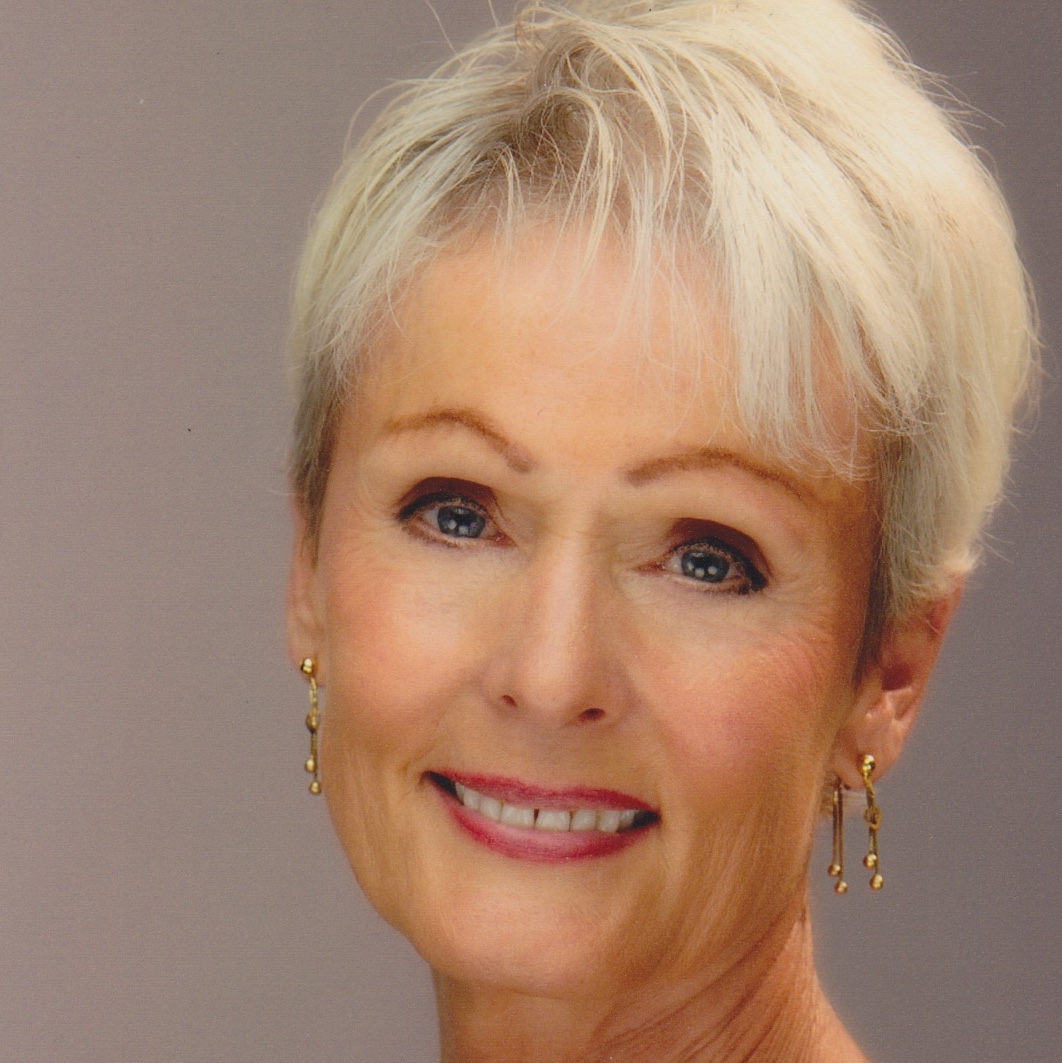
Mom, Psychotherapist, Author & Speaker
Sally Raymond is at 81 still a fulltime psychotherapist after 33 years and over 28K sessions. Her son Jon's suicide as she was being licensed forced her out to find all she obviously missed that took her superstar to suicide. Her book, "The son I Knew Too Late: A Guide to Help You Survive and Thrive," frames the stories she learned far too late so that you and yours will know how to, age by age, keep every life worth the living. But for Sally, that was just for starters...