How To Fall Asleep Faster And Wake Up Feeling Better

Transform your mornings with Loftie: Get a game-changing, phone-free alarm clock and save 20% on orders over $100 with promo code FiTMESS20 at WWW.BYLOFTIE.COM. --- Are you constantly losing sleep to mindless phone scrolling and soul-crushing...

 Apple Podcasts

 YouTube

 Spotify

 Goodpods

 Overcast

 RSS Feed
Transform your mornings with Loftie: Get a game-changing, phone-free alarm clock and save 20% on orders over $100 with promo code FITMESS20 at WWW.BYLOFTIE.COM.
---
Are you constantly losing sleep to mindless phone scrolling and soul-crushing alarm sounds?
In this episode, you'll learn how digital addiction disrupts our most critical health ritual: sleep. By sharing his personal journey from tech entrepreneur to sleep advocate, Matt Hassett from Lofty demonstrates how innovative design can transform our relationship with rest.
You will learn cutting-edge strategies for creating phone-free bedtime routines, understanding the science behind gentle wake-up techniques, and reclaiming control over their sleep experience.
Discover how a single, thoughtful product can help you break free from digital distractions and wake up truly refreshed.
Key Moments:
- Matt's personal crisis fainting at a longevity talk due to poor sleep
- The revelation about the nine-minute snooze standard's arbitrary origins
- Collaboration with Beach Fossils musicians for alarm sound design
- Development of the two-phase wake-up system
- Implementation of the "bed signal" concept from Matthew Walker's research
- Creating physical buttons for reliability after studying competitor products
- Evolution from a tech-balance company to a sleep-focused enterprise
- Discovery of sleep inertia's impact on morning cognitive function
- Integration of wind-down routines with physical light cues
- Balancing app functionality with digital wellness goals
----
GUEST WEBSITE:
https://byloftie.com/ - PROMO CODE FITMESS20
----
MORE FROM THE FIT MESS:
Connect with us on Threads, Twitter, Instagram, Facebook, and Tiktok
Subscribe to The Fit Mess on Youtube
Join our community in the Fit Mess Facebook group
----
0:00 What if your mornings didn't start with an annoying jolt, but with a calm focus and energy? If improving your sleep routine is a top priority for 2025, meet the Lofty Clock, a bedside essential engineered by sleep experts to transform both your bedtime and your mornings. Here's why I find the Lofty Clock to be a game changer. It mimics your body's natural rhythm. wakes you up gently with a two-phase alarm. first a soft wake up sound to ease you into consciousness, followed by a more energizing get up sound to help you start the day. Lofty is not just an alarm clock. It's your all-in-one bedside sound machine. over a hundred options, including white noise, nature sounds, meditations, and even bedtime stories to help you relax and unwind.
0:40 So get that phone out of your bedroom. Let's face it, grabbing your phone to set an alarm or listen to an audio book often leads to an hour or more of mindless scrolling. Join over 100,000 blissful sleepers who have upgraded their rest and mornings with Lofty. Go to buylofty.com and use the code fitmas20 for 20 % off orders over $100. That's b-y-l-o-f-t-i-e dot com the promo code Fit Mass 20.
1:29 How sick are you of this being the first thing you hear in the morning? I hate that alarm and I'm so sick of it and I'm so relieved that I never have to hear it again. Not only am I glad that I never have to hear that sound again, but I'm also relieved that I don't ever have to have my phone in my room anymore. I mean, most of us know that phone addiction is bad and we struggle to create real boundaries between our digital and physical worlds. I know I'm as guilty as you are. Yes, you I'm looking at you and talking about you. You sit there in bed at night looking at your phone scrolling through, I don't know, TikTok, Instagram, Facebook, the horrible news of the world, whatever headline is scaring you into your nightmares.
2:12 Not only is consuming all of that content and that dopamine rush terrible for your brain right when you're trying to go to sleep, but so is the blue light that you're staring at as it glares at your face well past when you should already be asleep. And listen, I have enough trouble sleeping as it is. I deal with chronic pain every day of my life that every night keeps me up in one way or another. So the last thing I need to worry about is being terrified by either what I'm looking at as I go to sleep or the horrible sound that's about to wake me up when I get up in the we're going to talk about a device that I've been experimenting with for the last couple of weeks, and I cannot tell you how much it has improved my mornings. And not only that, but it's helping me get to sleep faster and better than ever before. that's why today we're going to talk to Matt Hassett.
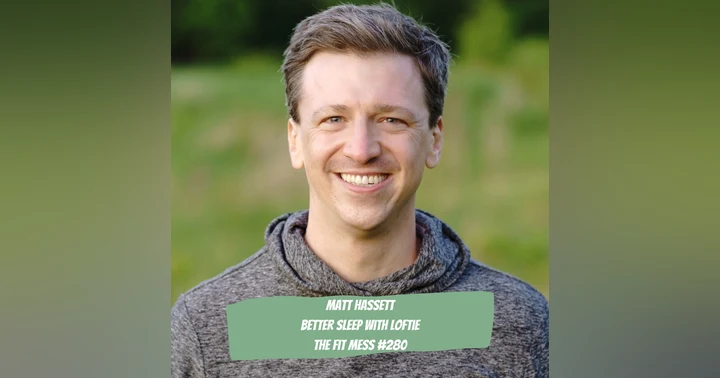
2:53 He's the founder of Lofty. It's a sleep company making devices to help make sleep easier for you. Not only easier, but better. Matt's story is incredible. He found himself at a longevity talk where he was so overworked and so over exhausted. and not listening to his body, he ends up passing out, busting his head. and waking up with the realization that something had to change. So through his own health crisis, his own observations of widespread sleep struggles, Matt transformed from a tech entrepreneur into a sleep advocate. His journey led to creating a gentler way to wake up, crafting peaceful alarm sounds and implementing a two-phase wake up system based on sleep science. His experience taught him that sleep isn't just another wellness metric, it's the foundation that makes all other healthy changes possible.
3:35 leading to the development of a product that helps others create better sleep habits through thoughtful design. This lofty alarm clock, I'm not kidding you, has completely changed the way I start my day every day. Something as simple as the sound that is used to wake you up and the physical feel of pushing actual buttons. helps me start the day without my heart jumping out of my chest, scaring the crap out of me because of some horrible alarm sound that we think we need to be jolted out of bed by. this thing, I knew I had to talk to Matt to learn more about what went into the creation of it and how it can also help you get better sleep. So we're gonna start my conversation now with Matt Hassett and we start with one of the simple sleep hacks you've probably heard over and over again for years and still haven't acted on.
4:18 know, we hear about this all the time when it comes to trying to improve your sleep, different hacks that we can do to make the most of that time. One of the things we hear all the time, get the phone out of your room. How can lofty help with that? That is very much why we started the company. Why I started the company was to help people get a better balance between their phone and tech and the rest of their lives. And it actually started there and only a little bit later became a sleep company. just because I think that we all recognize and we see all the studies and the, we know that it's bad for our kids to be exposed to them in early. We all know this. It's not like we have to convince someone that it's a bad thing, but it's really bad.
5:00 for sleep and it can, you know, there's a little, the results of the kind of blue light, anti blue light craze are a little mixed and it's getting a little murky, but I think the biggest peril is just our attention and the kind of, over and above stimulus that is the exact opposite than what you need to fall asleep for sleeping. need to clear your mind of all the worries about the day. So you can just get back to, know, I'm just. a human being and I need to rest. And it's so hard when this little thing, you bring it into your bedroom thinking, I'll use it to listen to the fit mess podcast or I'll listen to a calm story, you know, or whatever it is.
5:41 then you get a text from your boss and you get a tweet and you're on Twitter or what X or you're on. Tick tock for all these apps I'm naming are Possibly not going to exist when this podcast airs, but we'll see but whatever the podcast or whatever the app is like It's you know, they're designed to keep us engaged and to sell us stuff forever and ever and that is the goal I think Reed Hastings from Netflix talked about how and he's probably walked this back But at one point he said that Netflix's biggest competitor is sleep and they're just trying to keep people on the platform as long as possible and that's why that autoplay next is so powerful, but like we really need equally powerful tech to set up a bulwark against all those products trying to keep us consuming and keep our attention for so long.
6:33 It's, really amazing how even, you know, removing the, the, the notifications, right? So even if you're like, I just need it for my alarm clock and my background noise. I'm just going to set it here. There's still this poll to it where you're laying there and you're like, I can't get to sleep. It's been three minutes. I better look at my phone. That'll make me tired. And it's completely the opposite, right? Like that blue light, according to everything I've seen, and it sounds like it's maybe getting more controversial, but just wakes you up. keeps you more alert, more engaged. All of these apps like Netflix are designed to keep you staring at that screen a little bit longer. So I mean, you really do kind of need the physical barrier of get the thing literally out of your room where it's out of reach and way more inconvenient to use than it is when it's sitting right next to you.
7:16 Yeah, I think as long as it's nearby, um, some people will say, well, I have to have it because I'm a X and insert, you know, why you need it. And, some of them are very hard to argue with, you know, you're an emergency physician and you have to be sure. Then like at least put it across the room so that you're not inclined to just grab it. But if you're not a trauma surgeon and you're on call all night, like, then you probably really don't have a good excuse and you really need to check it outside of the bedroom. That is kind of the only job that really you need that phone all the time. that's funny. So, but I understand you actually in the course of creating all this had a bit of a struggle yourself that kind of put you on a path to where we are now.
8:00 Yeah, I, you know, when I first started it, I was just hearing folks around me saying, I am having a really hard time. This was 2017 or so I'm really having a hard time putting down the phone. Um, over the weekend, I'm, deleting Instagram, uh, but reinstalling it Monday, you know, and that was what originally set me down the kind of like, let's get the phone in balance. And then it became a sleep company and Really, it kind of happened out of the sequence of this perfect narrative for me as a, as a podcast guest today to talk about why sleep was so important to me, but actually just last year I had sort of the, the most urgent wake up call to why sleep was so important.
8:44 And it's funny because I know all these facts and I've read all the books and I, I think I had the same sort of going back to doctors, the same sort of like invincible. delusion, you know, I'll never get sick because I'm a doctor or something like this kind of, and I had this, I can manage my sleep. And I was this one particular day I was, I hadn't really had much lunch. I had like one, like a salad too late and I'd had four shots of espresso and I hadn't slept well the night before, but I still went into work. And then, and I was at a talk about, longevity. at a very fancy club in Manhattan and, I felt really faint and I, nauseous and I felt like this, could kind of see stars almost.
9:32 And I got up to go, outside of the room. Cause I was like, I just gotta get out of here. feel terrible. And then I fainted and I hit my head against the wall, and cut it on this light switch. Then I woke up with the doctor who was giving the talk above me. my girlfriend holding my feet up and then I ended up in an ambulance and I went to Bellevue, which I do not recommend if you can avoid going to NYU Bellevue do because it's also where they take everyone at Rikers, correctional facility. So you don't get much sleep there. there's a lot of folks in orange jumpsuits and there, there's a lot of fights and a lot of guns, with the, so that was, another sleep experience, but the, went into AFib.
10:17 had, you know, my heart was beating up and down and, I think I could have prevented this with listening to my body. And if I didn't sleep well, like not going into work. And that's obviously like a very privileged place to be able to skip work. but I didn't let myself take advantage of that privilege of, know, having my own company and I just, pushed through it and that was like one of the worst decisions I've ever made. And I took my health for granted and made this dumb choice that led to me, you know, ending up in the hospital and having a pretty horrible 24 hours there. And luckily that was the extent of it, but it definitely reminded me to listen to my own advice that I, you know, say on a, on a conversation like this, that sleep is so important.
11:03 And I think oftentimes sleep gets It's like in the third or fourth position behind there's so much of an industry behind fitness and nutrition. And most people tend to start there, but I think you can equally start from the sleep space. And it's one of the easier on ramps to wellness, versus starting with, I'm going to lose 20 pounds or I'm going to, you know, change all of all the, how I eat. And it's just, it's a little easier, to start on the sleep train and then you can work into those other buckets. Well, and I think the reason that it's hard for sleep to crack the, you know, top three is that it's a lot harder to monetize rather. How do you, how do you sell sleep?
11:44 So that, you know, it makes sense that if I can sell you my latest diet trend or my workout program or this particular workout video, more, more money to be made. well, so the thing I wanted to say about the, the lofty clock, I've had a chance to use it here for a few days now. And the. I never knew that being woken up by an alarm clock could be such a gentle experience. Like normally whenever I've had any alarm on my phone, you know, back when I was a kid and we just had alarm clocks, there weren't phones that we were using. My heart just jumps out of my chest when that thing starts screaming at me. And the process that you guys have built with this thing is so, it's just so gentle. And I don't wake up with that same like immediate terror that I used to wake up with. Tell me like what went into the planning for this to make it what it is.
12:27 That was critical to us in designing the wake up. And we've really put a lot of care into that. And I think most people, when they think alarm clock are used to that and they think like jumping out of bed. And unfortunately, a lot of the defaults in the iPhone and Android retain that quality. And so that's something that people are most excited about. Like when we look at our post purchase surveys of why did you buy this? the alarm sounds are actually way up there. And we didn't even realize that because we've actually focused more on the, this two phase wake up, but the alarm sounds themselves are a big reason people are buying our product. and they're created by two men named Thomas.
13:09 Actually there's a Thomas and a Thomas and one, is sort of an ambient music designer. the other is the for the Beach Fossils. They were touring with Post Malone last year, awesome band. And they're both really thoughtful musicians who constructed these really dreamy experiences that wake you up gradually. And they fully got this theory that we had. The industrial designer, Craig Willos and I were really focused on a two-phase wake up. wake up and a get up because, Greg, the designer drew this out early in a, a little graph that I kept, cause it's so beautiful. And he talks about sort of like the moment you kind of regain consciousness as the wake up and then the moment where you actually have to get out of bed and the get up.
13:58 And I think if you think about your next wake up, you'll feel that. And then when we looked at the science, it actually matched that. And there's this thing called sleep inertia, which is that grogginess that you feel when you're waking it up and. how severe it is for you depends on your sleep debt and your sleep timing and also the daylight. So people just, their, their brains are not functioning as well during that time. So if the first thing you do is grab your phone and start responding to emails, you're probably not using your full brain. They've actually done studies to show if you're given, you know, math problems, right. And that time you're, you're to solve them worse than you do a few minutes later. So your brain's just in this like, Fragile state.
14:40 think we all kind of know what that feels like. And so we separated out. So we have like a wake up sound. That's a really gentle sound just to stir you. And some people don't even wake up until, you know, a few seconds into it. Um, and then we have a get up sound. It's a little louder. It's a little more percussive, a little bit like, okay, it's time to get up. It's, it's a nice melody, but it's a little annoying. So you actually like want to slap the thing and turn it off. so, um, yeah, that's how we think about the get up. It's interesting because I do physically feel it in a way that I really didn't, honestly, I didn't expect. thought like, it's basically going to be like every other snooze alarm that I've ever done. And I want to ask you about the snooze factor too, but I do physically feel just kind of like I ease into the day better.
15:26 It's such a more pleasant feeling, which is interesting because I've heard a lot of experts and a lot of, people in this space talking about ways to optimize your health in different ways, sleep and whatever. And I've heard the argument that you should not hit the snooze button. That once you, once the alarm goes off, you should get up because falling back asleep can mess with your circadian rhythms and your, and your sleep cycles and all that. Where, where does the science come down on this? Why is sort of this gentle snooze approach? Why is it working for me better than it was then than the, I was doing previously. I that I looked a lot at the science to see, know, would, is snoozing good or bad? And I think snoozing is probably bad, but it's not the worst thing.
16:08 And sometimes it just feels like the right thing to do. our goal is that you would stay awake. We would prefer if you stayed awake between the first two, between the first and second alarms, but some people obviously are going to fall back asleep and The, the most relevant thing that I've discovered is that when you do wake up again, there's a little jolt of cortisol. If you are woken up again, especially if it's aggressively like with most alarm clocks. So that's more what I would be worried about. And so if you can avoid over, indexing on cortisol, that's probably a great idea. So it would be preferable. And with our clock, can adjust the snooze interval.
16:51 used to be. always a set time. was nine minutes. Nine minutes is like the standard snooze time, which is because randomly one of the first alarm clocks had a gear that was designed and it was just, it was a nine minute gear. And then that's just like became a standard thing. A lot of the stuff, like there's no real rhyme or reason to it, but now you can do a three, six, nine or zero minutes. So zero is if you don't want to snooze, it'll just go straight from the wake up to the get up for us. interesting okay I didn't get that far into the feature so I'll have to play with that tonight that sounds cool. a lot of requests and you know, we're putting them in as, we can. but at this point you can really dial in your, your wake up and wind down pretty, specifically to what works for you.
17:35 Well, let's talk about that wind down because I know you're here, you're getting a lot of requests for for wind down and there are already some great ones. But talk about sort of the getting to bed part and the falling asleep and how the alarm clock not only helps you get up, but helps you go to bed as well. Thank you for asking because that is like my big talking point this month when we think about routines and January and resetting and making new routines and, you know, winding down is so important to go back to what we were talking about at the beginning. And one thing that customers have asked for a long time is more help with that. so, and it really like comes to the core concept of the company to help create better behaviors through beautiful product design so that they're pleasant things.
18:21 It's not like a punishment routine where like you're like, I have to do this. I have to eat like the unfun food. This is like, this is a lovely experience. actually really enjoy this. And so with our wind down routines, starting next week, lofty customers will be able to. pre-programmed like a set list of tracks that play. So, it kicks off with something called the bed signal, which we've had for awhile. And that comes from, I was inspired by, Matthew Walker, wonderful sleep scientist who wrote my favorite book about sleep, why we sleep, which I really recommend. and he says in his 10 tips for better sleep in the back, he says, you know, go to bed and wake up at consistent times and.
19:04 pay attention to what time you go to sleep as much as you pay to what to wake up, when to wake up. And so we decided we should have an alarm for bedtime just as we should have one for waking up. And so, it kicks off with that. And the nightlight comes on on the clock, or if you have the lamps, those turn on to whatever color you like, you know, whether it's red light or another color. and then after that, and there's a little lullaby that plays, by the same, creator, Tommy Davidson. and then following that, can choose what you want. So do you want a meditation? Do you want stories, whatever it is, we have a lot of different content on the clock. And, one thing you were talking about before the show was how we're rolling out a lot more content.
19:45 So as we open up the routines, we're also increasing the content so that, you know, you can have this product for years and never get bored of the content. I am frankly bored of it after having it for. I've had it for four years with the content. So I know all of our content. And so it's really important to me personally in my battle to fall asleep every night to have like new content. So I am willing that into the world. I think, you know, part of this is like, how do you compete with Netflix? Or for me, it was like, I was watching Severance on Friday night and, I really wanted to watch another episode, but the bed signal went on and I have two lamps in my.
20:26 room and I saw the red light and it was a helpful cue to say, you know what, I'm going to actually throw in the towel on the sixth episode of Severance today in one day. so I think just like those physical cue reminders are more powerful than we might always think. And that's really where we're trying to go with, with the future of our habits products. That's so smart. was going to ask you about that because the first couple nights that I had, I mean, I'm a nerd for techie gadget stuff anyways, and especially if it's going to improve my health, I'm way more excited about it. So the first couple nights, I was so excited to hear, to feel what it was going to be like to wake up that I actually didn't sleep very well because I was so excited about it.
21:07 But once I got through that, I had the bedtime... Excuse me. The bedtime... routine startup and that little chime set in, I happened to be in my room at the time and it worked. Like I was like, I was literally just doom scrolling, doing nothing beneficial. I was like, okay, you, set this for a reason, put down the phone and follow through with what you promised yourself. And it was great, but I was curious, like if I'm not in my room, how does that work? So that's where maybe the lamps can be a really beneficial sort of addition to, your routine to have those elsewhere in the house. Yeah, for me, I have a small Manhattan apartment so I can see the lamp spill out into my living room. But yeah, I mean, I think we'll be adding an alert on the phone as well with the bed signal.
21:52 We're doing a lot more this year to incorporate the app. I know it's a balance between some people want us to have no app and some people want to be able to do everything on the app, even if the clock is a foot away. So we try to serve both requests. And, we are really trying to build out more features in the app. So that's probably something we'll roll out later. So your doom scroll is interrupted. Yeah, that makes sense. the, I think I understand the reason why people want it on the app because we're so phone based and on everything we use, makes a lot more sense. And the clock itself has three buttons. And it's funny when I was reading reviews about this, there was a guy who was kind of unboxing it and showing it and he's like, I really liked the physical feel of pushing the button.
22:36 And I, I, when I watched it, I was like, okay, you're really stretching for a way to, like, you know, talk about this product. But he's right. There's something about like the tactical like that that I can't find the word, but physically pushing the button to snooze it, physically pushing the button to turn it off. It's as my kids say all the time, it's so much more satisfying than just touching my screen for another reason. I spent a lot of time on button feel, which is something I didn't know was such a, yeah. I mean, the designer of this is really one of the most interesting people I've ever met. and, he really, I mean, he cared about every single detail as, as I would have expected him to, but, we spent a lot of time like feeling different buttons and thinking about like the click.
23:17 And one thing that, you know, I think is really important about our products, and It's like a arcane silly detail, but when you compare this to the first version of our biggest competitor hatch, they used, something called, I can't even remember the name, but it's like, it's when you, touch and there's sort of like the, it's just like touching a surface changes something. And so it's not very reliable. And sometimes like you tap and it doesn't respond, or sometimes you tap a few times and then it catches up and it overdoes it. So we went with like. actual buttons that click, and they're very reliable. And I think it was important for us to. In view reliability into this product because we were so like our competitors, the iPhone really, that's what most people are switching from.
24:02 Further alarms. And so that thing, you know, we've trusted it's our constant companion. It's reliable. So if you're introducing this new thing, that's doing this important job of waking you up, it better be really reliable. So we. wanted the buttons to convey that, actually. And it works. I, I do. You're right. I absolutely trust that when I push that snooze button, that it's going to wake me up again in a few minutes. It's, very cool. this is, again, I'm, I'm a nerd for this stuff. I love it. I'm, I think the design is very cool. I like the way it looks on my nightstand. I like that I can literally put it in blackout mode so that I don't even have to worry about the digits, you know, keeping, keeping my attention. It's a very cool thing. I'm, I'm very excited to have one. I'm appreciative of, of the opportunity to talk to you and about it.
24:44 For those that are listening and also big alarm clock fans like I am, where can they find out more about it and get themselves on? You can find us at bylofty.com, L-O-F-T-I-E dot com. And it's also on Amazon. So find us either place. And we'll have the links to both of those in the show notes for this episode. Matt, thanks so much for your time today and for the work you're doing. As someone who does struggle to sleep sometimes, this is a big step forward for me. So I really appreciate it. Keep up the good work. Thank you so much, Jeremy. Great to be here. Okay, my thanks to Matt Hassett for spending some time with us talking about not only the Lofty Clock, but his story and better sleep routines things you need to do to get a better night's sleep. If you want to check out the Lofty Clock, please check out the show description for this episode at thefitmass.com.
25:27 Enter the promo code fitmass20. You're going to get 20 % off orders over $100. Again, that link is in the description of this episode at thefitmass.com. But that's gonna do it for this episode. Thanks so much for listening. If you know somebody else who struggles with sleep the way that I do, the way that you probably do, share this episode with them so that they can also learn how to make a few adjustments to get a better night's sleep. We'll see you next week at thefitmess.com.

Founder, Loftie
Matt is the founder and CEO of Loftie, a New York based company dedicated to creating better tech-life balance for people everywhere. Ambitious and forward thinking since he was a toddler, Matt started his entrepreneurial journey with the creation of a school-led newspaper.
He graduated from Brown University and Harvard Kennedy School.
Matt began working on the project that eventually became Loftie at the design firm IDEO where he was an Entrepreneur in Residence. He participated in studies that promoted a healthier lifestyle, like digital detoxing and sakara diets. At the same time, he noticed his friends
and colleagues doing things like deleting Instagram for the weekend, only to install it again on Monday.
Taking the knowledge he gained, he applied the IDEO research methodology to conduct studies on actual consumers sleeping/waking habits while also working with specialists within the breathwork and meditation sphere to create the most intuitive and reliable product possible. The result is Lofite, a smart device that doesn’t rely on a smartphone, a revolutionary take on your morning alarm designed to get the phone out of the bedroom.
The Loftie has features we love like a dimmable display, nightlight, two-phase alarm, and custom content playable right on the device, including guided meditations, sound baths, breathwork exercises, sleep playlists, plus a variety of relaxing sounds. What’s equally important though, is everything it doesn’t do: Connect to your email, apps, and social media,
with all the anxiety they bring along. Revampi… Read More