How To Fix Your Health Without More Gadgets Or Pills


 Apple Podcasts

 YouTube

 Spotify

 Goodpods

 Overcast

 RSS Feed
Your Oura ring says you're recovered, your Whoop claims you crushed it, and your AI-powered mattress swears you slept like a baby. So why do you still feel like you got hit by a truck every morning? Meanwhile, your bathroom cabinet looks like a CVS exploded, and each "solution" creates three new problems.
Marcus Fernandez spent 30 years mastering homeopathy and just built an AI clone of himself that clients can chat with 24/7. He reveals how 200-year-old German medicine principles combined with smart technology can help you reclaim your vitality without becoming a slave to either pills or gadgets. This isn't about ditching modern medicine—it's about using both wisdom and technology as tools, not crutches.
Key Topics:
- The MEDS framework: Four daily pillars that have Marcus feeling better at 54 than he did at 34
- Why your wearable data might be gaslighting you into anxiety every morning
- Simple kitchen remedies that work better than most urgent care visits
- The loneliness epidemic killing men over 50 faster than cancer
- How AI can enhance ancient healing without replacing human intuition
- Why sitting is literally more dangerous for men than smoking
- The homeopathic principle: "like cures like" explained for skeptics
- Building your own health AI assistant without compromising privacy
- When to trust your body vs. when to trust the machines
- The real reason fevers aren't your enemy
----
GUEST WEBSITE:
https://marcus-fernandez.com/
Book: Homeopathy at Home by Marcus Fernandez (Amazon #1 bestseller)
----
MORE FROM BROBOTS:
Connect with us on Threads, Twitter, Instagram, Facebook, and Tiktok
Subscribe to BROBOTS on Youtube
Join our community in the BROBOTS Facebook group
----
LINKS TO OUR PARTNERS:
-
Explore the many benefits of cold therapy for your body with Nurecover
-
Muse's Brain Sensing Headbands Improve Your Meditation Practice.
-
Get a Free One Year Supply of AG1 Vitamin D3+K2, 5 Travel Packs
-
You Need a Budget helps you quickly get out of debt, and save money faster!
0:05 You've got the aura ring, the whoop band, the AI powered mattress, and yet you still wake up feeling like crap every single day. Meanwhile, your medicine cabinet looks more like a CVS pharmacy and every solution creates three new problems. Today's guest spent 30 years mastering homeopathy and just built an AI version of himself that clients can chat with 24 seven. Marcus Fernandez reveals how ancient German medicine principles combined with smart technology can help you reclaim your vitality without becoming dependent on either pills or gadgets. You'll discover the four daily pillars that have him feeling better. You're not going to believe this. Feeling better at 54 than he did at 34. While your wearable data might be gaslighting you and simple kitchen remedies that work better than most urgent care visits.
0:49 This isn't about ditching modern medicine. This is about using wisdom and technology as tools, not crutches. listening to Brobots. This is the podcast that helps you use AI and technology to safely manage your health and well-being. And like I said, our guest is Marcus Fernandez, really fun guy to talk to, great conversation coming up here for you. And we really, started with somewhere where I wasn't sure how we were going to connect the dots, is really trying to blend AI, technology, all of this modern tech we have in all of our pockets and probably on four appendages. How does that blend with homeopathy? That's where our conversation begins. been a homie perhaps for 30 odd years, a long time. And I don't know much about homeopathy, but basically it's about, it's natural medicine.
1:33 You know, it's about really stimulating the body to heal itself. So the whole thing with AI, I'm actually really excited about. I mean, in fact, I did a lecture at a conference last year on homeopathy and AI. And I think half the audience hated me. Uh, the other half of the audience was like intrigued and wanting to know more. Uh, so it's quite interesting bringing this whole AI conversation into the natural health world where often it's about ancient, know, ancient wisdom and natural healing. But I think they can both, I can, I think we can both, you know, they can, they can exist together. It's just how we use it.
2:13 And I mean, I've been, I've been excited about AI way before chat GBT. It's also something I've been interested in. And I think we're living in very exciting times. And I still don't know where I sit with it. I love it, then I think, oh my God, is like, this is scary. It's an amazing tool that's going to end us all. Exactly. We've all got Sky now, you know, we've all been there. it's sort of, it's a really, I think it's such amazing time to be around. And I think what we're going to see in the next two to five years is, is this going to be phenomenal. But I think we've also, you know, we can't put your head in the sand. It's already here. It's been here for a while and especially in technology.
2:55 So I think we need to know how we sort of understand it. And I think we, I believe that it's about enhancing what we do. know, augmentation, it's not necessarily about replacing. So that's my, my feeling. So really it's the old and it's the future. it's homeopathy and an AI is something that I feel can coexist. And in fact, I'm doing that already. What's the biggest health mistake you see middle-aged men making the homeopathy could actually help with? And I asked this in the context of uh probably someone who's older than middle-aged um actually going through and uh who's played with tons of different homeopathic techniques and try different things with various levels of success.
3:37 And I published articles on this. I made an app for it specifically to go through and track biometric data. um and I still know I'm not hitting the mark. yeah, what are your recommendations? I think it's funny because I get asked this question a lot. mean, I'm still a practitioner em as well. And I think it's, I just think it's getting the basics right. I just think it's going back to the basics and that I use this, I love the acronym MEDS, M-E-D-S. So these, what I say are the four pillars of health. So m is for meditation or mindfulness. I think there's things that we can do. We know there's so many studies on mindfulness or I I'm meditation, I'm old school, so I've meditated for 30 odd years.
4:22 And, you know, that sort of daily practice of just really, you know, just being in a... place where we can distill our mind and connect to who we are. And I think that doesn't have to be an hour or two hours, that can be five minutes, but as long as it's consistent, it's just that consistency every day. And there's so many thousands of studies of how meditation can affect our well-being or immune system. I mean, we know that that's true. The second letter of that is exercise or movement. No, we have to move. And that again doesn't mean going down the gym five days a week and you know, I think, especially as we get older, we get to a certain age and I'm at that age where I have to do strength exercises, I have to do some of that, but also about movements.
5:09 So I have a standing desk, just start moving around. I mean, there's a study in Sweden that said sitting now is more dangerous to men than smoking. And you think for a lot of men, they're sitting down a lot and that's putting pressure on the prostate. So many men I know have issues with prostate issues and... You Come on, go.
5:50 Oh, it's supposed to be automatic. This was gonna be for comedic effect. I was going to slowly rise with my desk. It's ridiculous. I sit here all day. like, what am I doing? I bought this standing desk and I'm sitting on my ass. But listen, my friend is the same. got, he said, he's he's got, I won't name his name, but he's got, he's got real issues with his prostate and he's got a standing desk. I can't, can't, I can't, I can't tell his name. His name's John. There you go. And he's got a standing desk and he's like, why aren't you your desk? well, yeah, forget it. You know, just press the bloody button. So, so movement, I think, think it's, know, we have to, we know this. A lot of this we already know, but putting it into practice is something else. D is for diet or food or what we eat. And so many, I just say, look, people ask me, what shall I eat?
6:32 I well, start off eating real food. And people go, well, what's real food? I said, well, you know, if it doesn't come out of a box or from a factory, it's real food. Or I'll say, if your grandmother could recognise it, then that's real food. So, you know, at least 80 % of what you eat should be real food. can cheat the 20 other percent, but 80 % is going to be real food. And then last thing is, sleep. The most important thing. Of all of those things, I would say, I know whether you agree with me, sleep is the most important thing. And you know, I think a lot of these people are much more aware of now, but I think, you know, sleep is absolutely imperative that you get that right. And a lot of people suffer with sleep issues.
7:14 I'm a bit of a buy hacker. I sleep on an eight, a sleep eight mattress, which is AI driven and monitoring my sleep all the way through changes the temperature, whether I go into REM sleep or whether I go into deep sleep and my wife's on the other side and she does it separately for her. She swears by it. I'm sure she won't mind me mentioning, but going through the menopause, know, being very hot, hot flushes, it's been a life changer for her. So I think sleep is, you know, imperative that we get that into balance. You go without sleep for 24, 48 hours, you go psychotic. So meds, I just think that question, you just ask them, Jason, get those four things in place first. great.
7:54 you sort of hinted at it there with one piece of technology, the leader of the bed that you sleep on. How else can we blend technology and even AI to hit the markers that are important for us to get those four markers or those four pillars hit every day? I think it's, I think it's, can't be, listen, I've got everything. I've got a whoop, I've got me aura ring. I've had these for, well, I've had me aura ring for about five, six years now. I think it's, I think when you, gotta be, there's a danger of over, of sort of over and allysing everything. You you wake up in the morning, I went through a period of this and my wife refuses to wear one. She thinks I'm crazy.
8:44 You know. what, do I believe myself? Do I believe the machine? I don't understand, what's reality anymore? Exactly. And listen, I've gone down that route because especially now we've got a bed that gives me a reading. I've got my aura ring that gives me a reading. I've got a whoop. I think it comes down to that we still have to trust ourselves. We still have to be connected to who we are. And I think again, it can enhance what we do, but we can't get obsessed by it. You know, we can't get obsessed by it. So I think these are amazing tools to use incredible, you know, to measure our heart rate variability, which is a great indicator of your health and wellbeing and cannot, I don't know if you guys have got an aura ring, but you know, it can predict.
9:24 Yeah, it predicts, you when it starts to go down, go, I feel okay. And then all of a sudden you come down with something and the data is phenomenal on it. So I think all these things can enhance what we do, but I think we can't go into like analysis paralysis, cause I've been there and it's like, yeah, you know, as well, Jeremy, you know, you start panicking and you've also got to connect to. being human and that feeling of wellbeing, that feeling of just getting out in the morning, seeing the sun, seeing the first light of the sun and that connection with the earth and ourselves. So there's a lot of signaling data that you're mentioning there.
10:05 So you've got all these different wearables and connectables and IoT devices out that can kind of provide you information, but. Being able to go through that and really calculating the signal noise ratio on those items and narrowing the noise down to something that's manageable. Are you currently using AI to do that for yourself? Yeah, I think again, I think I've calmed down, you know, I get a new device and I go crazy on it. sort of, I know, I know, I know, I know, I know, know. wife's like, my God, my kid's even saying, not something else, dad. um I think the certain things I find really important.
10:45 mean, just the whole thing around you're going to bed and you're asleep, not eating, you know, I've experienced a lot about this, not eat like now it's quite late here. I. I've eaten early. So I try to eat before six o'clock because I know when I look at my stats from up on my ring or from the whoop or whatever, it will affect my sleep. it affects heart rate goes up. Absolutely. Absolutely. Absolutely. And you know it. And that happened to me last night. went to bed really late. I didn't shouldn't have done by eight late. And I know it's going to have a knock on effect. Now I'm not going to I'm not going to beat myself up about it, but I think it's really brought that awareness. Going to bed early. Jason, know, I used to go to bed really late and actually now get into that rhythm of going to bed early, realizing I'm a morning person rather than an evening person.
11:36 That's been a big thing as well. So just getting to know my rhythms and my circadian rhythms and, know, even wearing, you know, the blood glucose monitor went through a phase of doing that and seeing what foods have. So I think it's just bringing awareness. I think, I think it's bringing awareness and I have to admit it's brought me much more. back into balance. I'm 54 now, I feel better than I did when I was, I'll be honest with you, than when I was 34. I do feel better. I feel more in aligned to who I am. Because you can take all the remedies you want in the world or the natural homeopathic, natural, whatever, but unless you're in that rhythm and life's about rhythm, the body's about rhythm, when we're in tune with that, then I think you are much more, well, you're much more healthier.
12:23 you know, it's about vitality. That's the thing, because people talk about energy, you get energy from a can of Coke or a line of Coke, know, vitality is something that is innate, know, young children have it. You know, I remember being a kid, we just had the school holidays here and I'm as a kid, you know, I'll get up in the morning, six, seven, it was the seventies, so things were different. But you know, on your bike all day outside, come on, grab a sandwich, go back out, you know. I woke up the next morning, did exactly the same thing. You know, I didn't wake up and go stiff back. I think I'll give it a break today. You know, we had vitality and that is something that I think we we sometimes are disconnected to is that sense of vitality that we're is innate that children, young children have.
13:12 I think in the West, it's seen as, you know, we. We go into old age and it's like a decline where in the East often it's not. It's seen where you cultivate vitality, whether it's yoga, qigong, tai chi. I just think it's, we've got to get the language right. But most people's concepts of health is not being sick, but it's much more than that. It is how you wake up in the morning. It is that sense of how you feel that contentment inside. you to school. When they're in school, it's so much easier for me to have that routine because they are gone for six hours and I can plan my day around. I've got this massive gap where no one's going to ask me a question every five minutes. You In that week, I've been able to go to the gym every day, spend a little time in the sauna, spend a little time in a float tank, trying to eat a little bit better, taking a little bit more, paying more attention.
14:01 And I can feel I can tell you I feel better this week than I have felt in months because I during the summer did not do those things. So that's an obvious sort of first start of you know, just eat a little better, get some better sleep, you know, exercise all the four things you talked about. So let's pretend I'm a unicorn and I hit all four of those every single day. What else should someone, uh men of a certain age, what should be in the medicine cabinet? What else should we be adding to our daily routines? Well, again, I'm not even going to remedies yet or things like that. I'm going more again to what you know about the blue zones. You know, it's about how we having people around as being in a community, having a sense of purpose, having a connection with other human beings.
14:43 mean, what I've noticed, I know if you feel know as well, but I know so many men of a certain age that are incredibly lonely, you know, very lonely, you know, they've either saved got divorced or They're living away from the family, the kids are living with their mother and they're living by themselves. Loneliness, I'm hearing that all the time with people that I know and people a little bit older, sort of in their 60s. So I think again, that's important. I think even men who are surrounded by people, men in families, sometimes are desperately lonely because of the role they've sort of taken in their family. And it's a huge epidemic that I don't think is talked about enough.
15:24 not talked about enough. I think, and we talked about this before we started that in the UK, you know, the biggest cause of death and you know, the biggest cause of for men at the age of 50 now is suicide. And the second biggest cause of death is accidents. But actually a lot of them are suicides but have been misreported as accidents, you know, as accidents. So I think there's a huge crisis going on around men. think young men, older men, but I see... Back to AI again, and I think this is one of the dangers, I think, as well with AI, especially in the workplace, as it will take jobs. We know that things will change. I think it already is, yeah, exactly, already is. I think particularly for men, what we do is, and I'm not saying it's not for women, we're talking about men here, but from what we do, that purpose is really, really...
16:15 Yeah. why you see guys who retire and then they die a year later because they've lost that sense of purpose they've lost that sense of meaning you know it's like when you meet guys you know what's the first thing you do hey what do you do so I think it's a huge issue. And I think that, I just think, yeah, I just like the podcast I was talking to you before, Jeremy, called Beyond the Shed that I do. Just talking to men and what I've hearing a lot of is, like said, about loneliness. I've heard about shame. Um, that's a huge thing about men don't know how to be anymore. You know, it's like, they don't know how to be. Who am I supposed to be? Or especially young guys as well. You know, who am I supposed to be now in the world? So I think, you know, lot of this negativity around Andrew Tate and this whole thing about toxic masculinity, but a lot of guys are going, well, okay, you're telling me that's bad.
17:03 Especially young guys, where's the mentors? You know, where's our mentors? Yeah, so there are a lot of tools you can use today, a lot of different AI tools and all the different functions that go into this. And I see you've got an agenting function that can go through and actually try to do prompt engineering and try to wrap some of these controls around it. um There's multiple different layers of pitfalls associated with different types of tools out there and the privacy concerns of your data and how it is you're going to manage those pieces. Yeah. I think understanding the concept of using natural homeopathic remedies that don't have as much literature as other pieces do. um as you're asking questions saying, Hey, I want to try this different technique.
17:47 That's not necessarily supported by the medical journals. Like I would say I'm going to go pick up. the bio peptide complex. So if I'm looking at ways to understand my health and the right context and trying to use these different AI tools to help me make certain decisions, are there certain tools that you think we should rely on more than others and then kind of bringing that back around and the dangers and the risks associated with that? What's your thoughts on giving that kind of information over and having, you know, these large data companies pick it up, pull it across and use it for nefarious means? Yeah, well, listen, absolutely. I mean, this is the problem, isn't it? It's like the whole thing what happened with these data breaches of these genetic testing, the DNA testing.
18:34 mean, these companies go bust and then this data is sold on or whatever. think there's a huge risk in that. And I think that people don't realize with AI particularly, even with things like chat GPT, the information that they're sharing because I've got a tool called Ask Marcus, is it's called homeopathy at home based on my book. And basically it's just a small language model, which is all my videos, all my books, know, podcasts about homeopathy. And there's, know, on the backend, there's parameters of, know, I won't talk about sex, religion, you know, anything like that. And there's parameters, cause it's just for things for at the home, anything serious, then it says, you know, seek medical attention from a professional.
19:21 But I think what I've noticed there when you look at the data, because you can see the data obviously on the backend of questions that are being asked, people sort of, they start sharing more and more. um And it's almost like it becomes this, they forget they're talking to really a, what do you call it? It's a clone. I'm very clear. So I'm not, because you can phone me, you can speak to me, you can speak to me in any language. Yeah, but. If you can, I mean, I've had clients say, oh, which is great. Cause I can offer my clients 24 seven, they can access that if they're, you know, they've got a fever and they want a remedy. They can ask Marcus so they can speak to me. They can WhatsApp me. And so they, mean, the other day somebody said to me, oh yeah, I was speaking to you for 25 minutes the other night on the phone.
20:04 And, and it's like, yeah, but you do realize it's not me you're talking to, you know, even though you say it people it's human nature, isn't it? We want to connect. So Jason, I totally agree. think we, The trouble with AI, as it gets better and better and better, you will not be able to really distinguish it at all between, I think, talking to it, what you think you're talking to a human. And I think human nature is we want to connect, but AI is extremely clever as we know, and will continue to be to the point where we won't even know it's taken over. But I mean, that's a whole nother story. So I think it's not only the sharing of the data, but it's also our relationship to it.
20:47 it will then cause us to share, overshare and have this sort of in a way false connection. Yeah. One thing I was experimenting with the Ask Marcus tool last night, my daughter has a bug bite. So I was just kind of curious, what would this tell me to do for this bug bite? She's been on antibiotics for them for a week because the doctor was a little concerned. So I'm just curious, know, what kind of safeguards you have in terms of liability? if the robot gives advice that causes some sort of harm, are you at all worried about blowback from that? Yeah, well, I think I've got some kind of there is a disclaimer on there that this is, you know, just general advice. So, you know, yeah, we're only it's from a really it's an educational tool, you know, really, that's how it's positioned.
21:29 So, and that's why in the parameters that if anything serious, you'll see, you'll see it say you should really consult a qualified practitioner. So it's just trying to give really advice and point people in the right direction. And why? Because, you know, there's a lot of things you can do before you go to the to a doctor, there's lots of things you can do in the home and, and For example, like said, like bites or things like that, or, you know, just general, very acute things you can deal with at home. And that's again, going back to what I said about what your grandmother did, your great grandmother did, they knew what to do. And in a way we sort of forgotten these things and we just hand it over to the, you know, to the allopaths, to the allopathic profession. Now I'm not saying don't go to a doctor.
22:11 What I'm saying is there's things you can do first before you go and seek help. You know, like, I mean, in my book Homeopathy at Home, I talk about what remedies to take, like the top five remedies for bites or for stings and different things. But also you can get, just go to the kitchen cupboard and I've got kitchen cupboard remedies in there, like buy carbon soda, it on the, know, put a bit of water, put it onto the, onto the bites and it will really help. So I think it's just really, trying to empower people to really to do things that they, simple things that they can do at home. And I think the more that we do that, the more that people come out of fear, because what's fear? It's just lack of knowledge. So there is things we can do, you know, before we have to go to that.
22:54 really, antibiotics should be the last resort. mean, Alexander Fleming, the inventor of antibiotics said, you should only use antibiotics really in serious cases, otherwise you're going to lower the whole health of the nation. And we've got big issues. I don't know what it's like in the States, but in the UK of antibiotic resistance now. You know, so we've overused them. So what these remedies do when you take these remedies, should I explain a little bit about homeopathy so some of your listeners know what it is? So homeopathy is, it works in a very simple principle. It comes from Germany. It was around 200 odd years old, but it works on the principle of like, yours like. So if you chop an onion up, your eyes water and your nose runs.
23:36 So we use onion in a very diluted form, homeopathic form for say coughs. colds where your eyes are streaming and your nose is running. So whatever can cause something in a large amount, in a small amount, it can cure it. Another example would be coffee. So you drink lots of coffee, get very wide, you can't sleep, lots of thoughts. Well, we use coffee in this homeopathic form for people that have those symptoms without drinking coffee. So they're really busy and the brains really can't get asleep. So it's a very, very simple principle and it's an ancient principle really like yours like. So really the remedies are like tools, sorry, like keys to a lock. So if you have a key to your car, the key in itself is not powerful, but that key and that lock of the ignition of the car, and then it gets the engine going, then that's like the body.
24:28 Once you stimulate the body to heat itself, off it goes and it can deal with it. And I think a lot of the time we get very disempowered around our health, but it's around really helping the body heat itself. So I like to use the analogy of the car dashboard. If the oil light flashes, it means there's something wrong in the engine. But if you just take the bulb out or suppress the symptoms, there's still a problem in the engine, the car's going to go back down the road. So really what we need to do is go into the engine, fix the engine, and the light will go off by itself. So I think... replacing the bulb doesn't help it when I put sugar in my gas tank? Yeah. not. I don't want to use this car analogy because I'm not reading to cars whatsoever, but the good analogy is to use.
25:18 It'll be all right. It'll be okay. Yeah, exactly. We don't need to sort it out. Yeah, it'll fix itself. We're born with innate health and that's the thing we need to get back to. think we need to, I think, look, there's big shifts happened in 2020, you the whole COVID pandemic, the whole thing locked down. And for a lot of people, it really was a huge shift that they realized they have to look after their own health and wellbeing and the wellbeing of the families, because there was nobody there to, for that first year, there was nobody to rescue them. We just locked down, we, and wore masks and people were very disempowered. So, you know, I think it's really important. Look what's happening five years, AI, lockdown, I mean, it's been phenomenal really, isn't it? It's pretty crazy.
25:58 We've had a lot of, um I'm 50 in my entire life. I've had symptomatic Western medicine pushed down my throat and you know, obviously treating symptoms and not actually getting the root cause of actual problems. And a lot of the ways that people have, I've seen a lot of Western medicine start to try to embrace more of the, the holistic medical approach and try to incorporate Eastern medicine into some of these philosophies. And I've seen various levels of success. And it's interesting that you brought up the Germans because the Germans, you know, I've been to Germany several times. I've gotten sick there more than more than once. But sinus infections and other things and walked into the doctor and they're like, here's some echinacea.
26:39 Like, I know that's not going to work for me. Do you have something maybe a little stronger? And they're like, no, you got to take this for like three weeks first before we're going to give anything strong. Yeah. The technology is obviously to do other interesting things. Like the Germans also use things like pulse electromagnetic frequency machines, the BEMR machines, those types of things. And NASA uses that. We've got these things that we know that there are uh systematic ways to treat certain longevity and vitality problems. And we can use them to go through and be preventative and to inoculate us from these things as you move forward. But we also are consistently fighting a medical system that from an insurance and a payer perspective is not designed for that.
27:26 It's not designed for prevention. It's designed for symptomatic care and catastrophic care. So along those lines, I've seen people go, I had to take care of myself. These are the methodologies that I have to use. But then when they go and they talk to their actual medical doctors and people, they're like, you know, I use baking soda to treat this bite wound and it got infected anyways. and having the regular doctor yell at them for not coming to see them right away. How do you coach people to be able to manage and mitigate these things in the real world? Because honestly, the real world is not set up for for for holistic care. It's set up for symptoms, assuming we're all in a solid state.
28:06 How do you people to break that mindset? Yeah, of course. that, you know, the pharmaceutical industry is not in the wellness businesses and the sickness business. mean, you know, we know that look at the whole issue you had with in the States of the Sackler family and I think they pay the biggest criminal, criminal fine ever. I think it was something like $9.2 billion. Yeah, yeah, yeah. Was it Oxycontin? Was it Oxycontin? Was it? Yeah, Oxycontin, yeah. That's right, yeah. So I mean, a huge, massive. yes, that's the way that the system has operated.
28:50 you know, it's, I could tell you the whole history of homeopathy in America, which is phenomenal, but we might have time for that. But I think it's... you a more natural healthcare solution for themselves and their families. It normally happens when people have kids, particularly. you know, if you've got kids, you've got a newborn baby, don't really want to, don't, that intuitively, you don't want to put anything into that child that is harmful in any way or toxic in any way or powerful in any way. And I think what happens is people start to look at it into different things.
29:33 And that's often when they get into more natural sort uh of solutions. So the more that people use it, the more that they see the results. And there's all different levels of health. there's the bumps and the bruises, the coughs and the colds. That's acute. Then you deal with chronic disease. And in my experience, when you take cases of people who come to see me, say they come in with arthritis. Now... In holistic medicine, whether it's homeopathy, Chinese medicine, Ayurveda, we don't separate the mind from the body. So we're looking at also the mental and emotional as well as the physical.
30:14 So somebody can come in with that. I'm just going to give you an example, like migraines. So we can come in migraines. You take the case, the 34, you take all the symptoms of the migraine, what makes it better? What makes it worse? All those symptoms. And then next question you say, when did it all start? And they say, well, started six years ago. Next question we ask is what was happening in your life six years ago? What was going on? Now they could say various things but say this is a very common thing that you hear oh that's when my mother passed away. Okay just tell me more about that yeah she was very sick for long time I was nursing her and then she passed away and the person starts to you can see them that they're still in that place of grief the tears come to the eyes and then you say How do you feel about it?
31:00 Say I feel like it was yesterday and just don't feel I've let it go and they may start to cry or they may get upset Now often those people have never been asked that What happens they take a drug be given it take this drug for your migraines suppress in the symptoms suppress in the symptoms and then The migraines can clear up or get worse and then they develop X or something else after that because if you suppress what we call the vital force or the Chi in the body or Prana Then the symptoms will come out somewhere else So you'll give them a remedy for that that instance of migraines for grief. You give them a grief remedy, a remedy for grief. And they come back, how are you? What was that remedy game? I stopped crying for three days.
31:42 How do you feel now? I feel a lot better. How's your migraines? Yeah, I think the 20 % threat or 30 % carry on with the remedy. So there's an example where it's not just physiological, you know, because migraines can be caused hormonal to the hormones. can be all different reasons, but also it can be emotional as well. So we can't cut away the mind from the body, which in medicine it does often. We don't make that connection, but all these other systems of medicine around for thousands of years, they do. So really, to answer your question, Jason, a long way around is, is often people are looking for something else. They are looking for something else and they will try other things. And but it's about having choice around your healthcare. I'm not anti-medicine. If I'm on a car accident, the first place I want to be is the hospital.
32:26 I may be taking an onyx or something on the way, and that did happen to me, but you know, amazing, phenomenal. I've worked in hospitals, I've worked in hospitals for three years. But I've got a chronic disease, I'm gonna look at other ways to try to get my body to heal itself before I go down that route. So there are lot of things that are affecting our immune system's natural ability to actually operate and heal itself. Environmental pollutants, microplastics, there's all these different pieces that go into it. And there's a whole lot of different therapies out there, like chelation therapy to go through and try to pull these things out, which have their own problems, like being able to book and shut down your kidneys and liver and everything else. there are naturopathic, almost chemotherapy like therapeutics that are out there um that I've seen people kind of pushing and edging people towards.
33:15 em Along those lines, I have a chronic disease or something that's potentially going to kill me. What's your recommendation on helping people balance the uh prescriptive methodologies for trying to address some of those types of disease versus homeopathic? Like there's a balance, right? I mean, how do you find that balance? yeah. I think it's about, I think healing should be gentle. don't think it should be, shouldn't, we're not, again, as I talked about, like when you stimulate the body to heal itself, it's like, say you go to acupuncture, for example, if you've ever had acupuncture. So yeah, yeah, yeah, there you go. So when you have an acupuncture, they put the needle in and they leave it in.
33:58 They're not doing that with a needle. a little hot. oh in down there and then they leave them in. Why? Because they're letting them, you know, the chi flow, the stagnation of the chi. But it should be a gentle thing. Same with homeopathy as all these things. It should be gentle. So a lot of these things, I think it's a very allopathic way of thinking, not we've got to get this, we've got to detox this, we've got to pull this out. Actually, you just start slowly. It's a slow start. it's it's so safe, for example, you say eczema is a really good example, often with eczema is that to the diet, the bowel is connected because again, there's a connection between the bowel and the skin.
34:43 So the first thing you do is really treat the bowel. And so making sure the bowel is going we know now microbiome, I mean, God, you know, natural therapists have been talking about this for hundreds of years, but now the microbiome is the thing. But this important. if you get the bowel working properly, then the body doesn't need to discharge out onto the skin. it's about doing, I think things should always be gentle. I think it doesn't need to be severe. Cause again, you just stimulating the body to heal itself. But yes, we can get into this thing of getting these plasma transfusions to get all the micro plastics out of our body. I get it. And I can also get into that, oh, I've got to do this and I've got to do that.
35:23 But actually I think there can be a lot of danger in that because you're trying to do too much too soon. So yeah, and along those lines, being gentle with yourself. Being gentle with yourself implies that you require patience. And when you're in a stressed out state and you know, I mean, a migraine makes sense. I can be patient for a day, but if I've got something that's a chronic pain condition, telling someone to be patient over a protracted period of time, and then watching how these things get better, that can be hard. Are there any uh tricks, tips, techniques that you can think of? to keep people motivated to staying on these gentle therapeutic paths as opposed to pressing the panic button and saying, fuck it, I'm gonna go get the opioids.
36:10 Yeah, listen. Listen, again, it's a scale. I don't think anybody should ever be in pain. So I'm not against people take if they need to take pain, they need to take painkillers. But again, it's about I would say a lot of these things, you need to get a good practitioner. It's very difficult to treat yourself often because we we we can lose objectivity. So I think getting a good practitioner, and I would say to get a good practitioner, go word of mouth. That's always the best way whether you want to get a plumber, builder, mechanic. word of mouth, because you go word of mouth, you can trust the person that's recommended. And really, you know, a good practitioner is walking alongside you, but they can see the wood for the trees. They're experienced, they've seen this before, and they trust you, because sometimes the body will start to detox.
36:55 So, you know, you give a remedy and things, they can get discharges and it can be, whoa, what's this? You know, I had a patient the other day gave him this remedy. started with his fever. As soon as the remedy touches, and I wasn't having a reaction, allergic reaction, his body was going, okay, we need to do a fever. And he was sick for a couple of days. But he said, you know what, I feel amazing. I said, I feel so clear in my mind. Why? Because the body needed to do that. So it's about education. As a practitioner, explaining what is happening and why it's happening. Because again, we've been led to believe fevers are a bad thing. So we need to suppress it. No.
37:37 how your body kills bugs Exactly. And it only becomes an issue when it's suppressed and then it tries to do it more. And this is when you get complications in fevers because of often with intervention. But often, you know, a fever is there's a beginning, there's a middle and there's an end. So you've just got to trust that. But again, I think a practitioner, a good practitioner who's experienced and can help walk alongside you and explain why your body is doing what it's doing. Yeah. Marcus, we've kept you much longer than we asked for. So thank you for the time. have two questions left, but they're both all about you. Great. Both questions are both questions all about you. First, you've got a couple different podcasts, the book you've mentioned, where can we learn more about you?
38:21 Yeah, you can go to my website. It's not great, I'm getting information on that. Markers-Fernandez.com, that's my website. My book in homeopathy, Homeopathy at Home, which published by Hay House and Penguin Ramden House came out in January. It's been an Amazon number one bestseller. And it's a book I wrote really for the home, exactly what we're talking about. It's like, it's an A to Z, know, it starts off with acne, athlete's foot, you name it, warts. Chill blades all different coughs and colds But again it gives you the top five remedies for each of those conditions and also things you can find in the kitchen cupboard You can also there's a QR code in there where you can scan I've got a free homeopathy home prescriber course people can do online and also free access to the ask Marcus the the My my clone my AI clone where you can ask me any question 24-7 And the reason I wrote it just want people to be empowered around the health and well-being and I think it's a really lovely Back to what we're saying about gentle, a really lovely gentle way um of, you know, getting on that path to health and wellbeing and true health.
39:30 You know, like I saying, most people's concept of health is not being sick, but it's a lot more than that. It really is. And um I think we need to change our sort of paradigm around that. And I guess last question, where do we start to do that? What are some simple steps that someone can do literally right now while they're listening to this podcast to, start down that path. Right, well, I've talked about meds, so you can start doing the meds, but just very simple things. Like I said, first thing in the morning, getting that morning light, know, that red, infrared, near infrared light in the morning, sets the whole circadian rhythm for the rest of the day, and actually sets it for the night. Going outside in barefoot, again, people think this is, know, a bit hippie-ish.
40:11 So many studies around grinding and walking on the ground, know, we're electro beings, we're like little batteries. We need to be grounded. I was in Bali for a month with the kids and I was talking about a conference there. First thing I do when I get off the plane is find some grass just to ground and just to feel better. So it's those simple steps, back to the meds, meditate, exercise and move, eat real food and sleep. And also love. That's the biggest one of them all. Make sure you have plenty of love in your life if you can, whether it's your children, your family, friends, whoever. As we found over and over again on the show going back to the basics is usually where we need to start to turn things around.
40:55 Yeah. the basics. All right, great talk there with Marcus Fernandez. I really enjoyed that conversation. I hope you did as well. All of the links that he mentioned are going to be in the show notes for this episode. You can find that at brobots.me, including links to his podcast, which I know I'm going to be listening to a lot more and a link to his book, which I know I'm going to be spending a lot more time with with my own pain and illness issues that I deal with from time to time, especially as a dad with two growing girls. But that is going to do it for this episode. Thanks so much for listening. If you found any value in this, please do share it with someone else who might. You will find links to do that as well at brobots.me. That's also where you'll find a new episode from us next week. Thanks so much for listening. We'll talk to you soon.
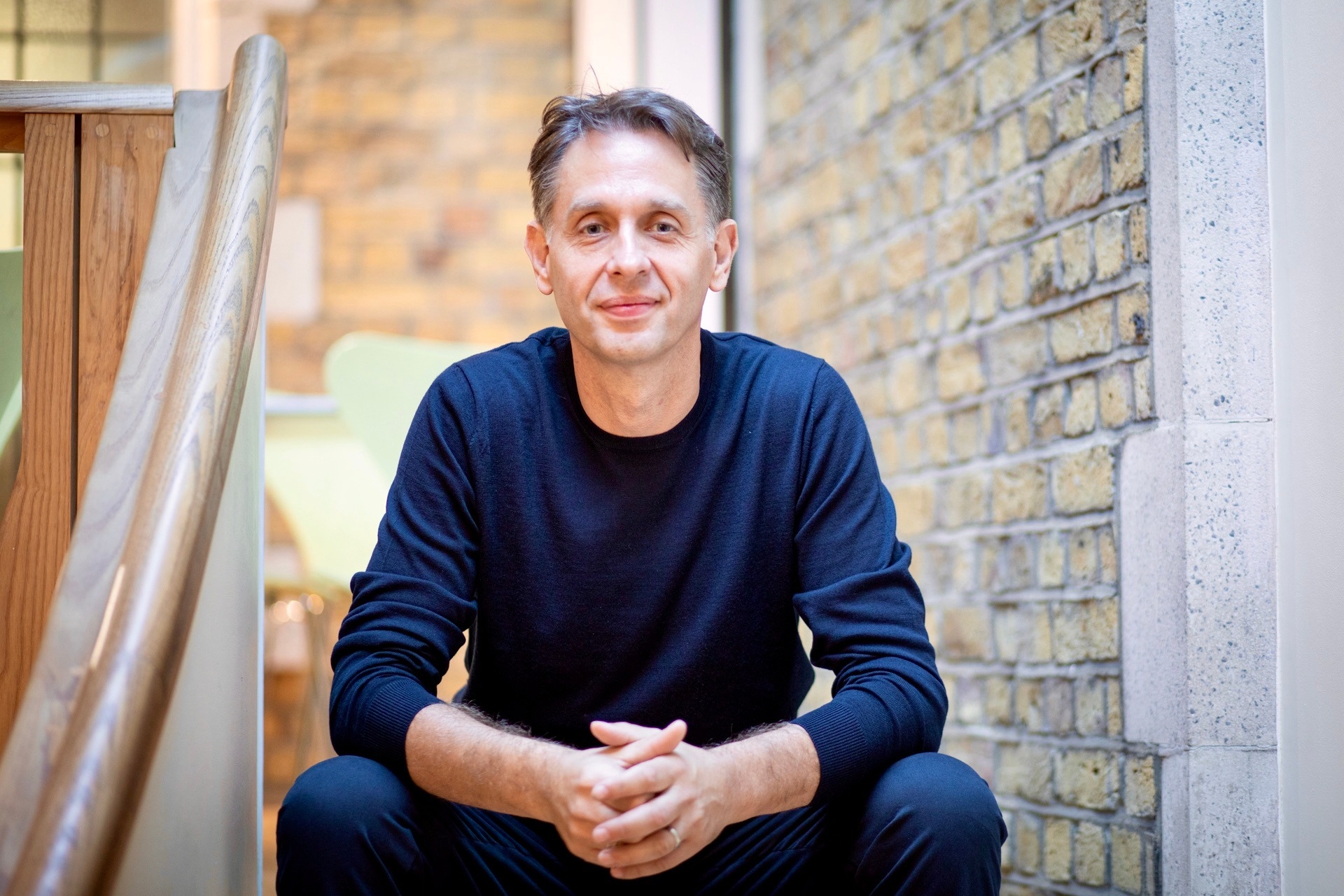
Best Selling Author
Marcus Fernandez has been at the forefront of homeopathic education for over three decades. As Principal of The Centre for Homeopathic Education (CHE), he’s trained thousands of practitioners through a curriculum that balances classical knowledge with modern application. His work is rooted in a belief that natural medicine should be practical, empowering, and accessible - not mystified or gatekept.
His latest book 'Homeopathy at Home' reflects that ethos. Designed to be used, not shelved, it offers simple, step-by-step guidance for everyday ailments using natural remedies. Its success, reaching #1 in Amazon’s holistic medicine category, reflects a rising demand for family-focused, self-directed wellness. Marcus also created an AI-powered virtual assistant that lets people ask home prescribing questions 24/7 - a project born from his desire to make quality natural health advice as available as online misinformation.
While his formal background is in homeopathy, Marcus speaks just as comfortably about men’s health, slow living, and holistic longevity. He co-hosts Beyond the Shed, a raw and reflective podcast spotlighting unfiltered conversations about men’s emotional health — part of a wider mission to create space for honesty, healing, and ownership in the way we care for ourselves and each other.
Whether he’s teaching herbal remedies in a London classroom or exploring health span strategies on a podcast, Marcus brings curiosity, compassion, and depth to every conversation. His message is clear: the body already knows how to heal — we ju… Read More