How Running Can Help You Overcome Depression, with Dr. J.M. Thompson

Have you ever felt trapped in the darkness of depression, unable to escape the torture of your own mind? Many individuals struggle with mental health challenges, seeking relief from the overwhelming emotions and thoughts that consume them. This...

 Apple Podcasts

 YouTube

 Spotify

 Goodpods

 Overcast

 RSS Feed
Have you ever felt trapped in the darkness of depression, unable to escape the torture of your own mind?
Many individuals struggle with mental health challenges, seeking relief from the overwhelming emotions and thoughts that consume them. This episode offers a powerful perspective on how engaging in physical activities like running can pave the way towards healing and recovery.
In this episode we'll share the healing potential of exercise, particularly endurance activities that induce a flow state.
Listen to this captivating episode to uncover the life-changing story of how one man's intuitive decision to run saved him from the depths of depression and suicidal thoughts.
Bulleted List of 10 Topics Discussed
- Battling severe depression and the road to recovery
- The transformative power of running and endurance activities
- Finding solace and connection through shared experiences
- Overcoming stigma and giving voice to the unspeakable
- The role of nature and immersion in the present moment
- Building resilience and tolerating difficulty
- Developing a consistent exercise habit and listening to your body
- The importance of self-compassion and acknowledging personal pain
- Cultivating hope and faith in the human capacity for healing
- Seeking support and resources during times of crisis
Note: This episode was originally published February 8th, 2022.
----
GUEST WEBSITE:
https://runningisakindofdreaming.com/
----
MORE FROM THE FIT MESS:
Connect with us on Threads, Twitter, Instagram, Facebook, and Tiktok
Subscribe to The Fit Mess on Youtube
Join our community in the Fit Mess Facebook group
----
LINKS TO OUR PARTNERS:
-
Explore the many benefits of cold therapy for your body with Nurecover
-
Muse's Brain Sensing Headbands Improve Your Meditation Practice.
-
Get a Free One Year Supply of AG1 Vitamin D3+K2, 5 Travel Packs
-
You Need a Budget helps you quickly get out of debt, and save money faster!
-
Use Vibrant Blue Oils to improve the flow of energy through your body.
0:00 following years of depression, ineffective medication, and therapy that went nowhere. J Thompson feared he was falling into inescapable darkness. He decided that death was his only exit route from the torture of his mind. After surviving a suicide attempt, Thompson got a sudden urge to run during an exercise break at the hospital where he was admitted. In this episode, he shares how that run led him on a path that literally saved his life and is now helping others find their way out of the darkness. This is the Fit Mess, conversations with world -class experts in the fields of mental, physical, and emotional health. In this episode... What running and other endurance activities can provide is a very real embodied kind of template for knowing that it's possible, rather than run away from difficult experience, to turn towards difficulty and learn to tolerate it.
0:55 Now here are your hosts, Zach and Jeremy. Welcome to the Fit Mess, sponsored by Athletic Greens. Thanks for listening while you're doing whatever it is you're doing right now. I'm Zach. He's Jeremy. We've been through all kinds of struggles and ended up stronger because of them. And we want to help you do the same. If you're sick of your own shit and you're ready to make a change, you're in the right place. Today, we're sharing the incredible story of a man who listened to his intuition and it literally saved his life. Our guest is Dr. J Thompson, author of Running is a Kind of Dreaming. His path to better health started the way it does for many of us, running. Your started that way, right, Zach? It did start that way.
1:35 My motivation was slightly different. Where I was working, they decided to sponsor everyone running this 5k race one afternoon. And all I saw on the email that came out was you get to leave work early. That's all I saw. And I was like, I am in, I get to take a day off. I don't have to work that day. I didn't even realize what I needed to do. And at this point I was. still smoking and just in really bad shape, like close to 300 pounds. And I signed up for it and then quickly realized, shit. Now you got to run. I got it. I got to do this thing. And I remember that night I went to the Y and they had an indoor track and it was, I think it was nine laps for a mile because it was such a short track.
2:19 And I got like halfway around the first lap and was like, what the fuck did I just do? But then I, I did the lap. I did another lap and I did another lap and I did another lap. And it was just in my head. I was like, I got to run this thing. I got to run this 5k. And in the process I quit smoking. And then all of a sudden I was, you know, I wasn't running like eight minute miles at the time, but I could do a mile and then two and then three. And I ended up doing the race. And then it was like, like we said on a couple of episodes ago, it was only six months later that I got for Christmas. I got the water. the water belt belt, the water belt for runners.
2:59 And it was like, wait a minute. I'm a runner now. Yeah, this is weird. And I actually felt really good. Like mentally so many things had shifted and allowed me to grow in like so many other parts of my life because I was moving my body. You're started with running and has now turned into all of the other things you're doing crossfit and all the other thousand biohacking things we've talked about on this show. I'm in a similar place where. you know, I moved a few months ago and in doing so started doing a lot of walking. And then my body was saying walking is not enough. Why don't you try running? And so I started running and I noticed how how good I felt afterward.
3:39 And then what was interesting is, you know, I battle depression, we talked about that on the show a lot. And I would feel it starting to sort of flare up and become this this thing that just needed to move. And I decided one day to just try and run through it, just put on some shoes, go outside and just try and run, just try and move that energy. And it totally worked. I just went for like a 20 minute run, just burned all of that energy out and felt better. And I repeated that again and again. And after a few weeks, I was noticing that when I could feel it coming on, that just by finding another use for that energy, I was able to sort of keep it at bay.
4:21 Now it doesn't work every time. There are plenty of times when I go and run and I'm like, well, now I'm exhausted and I feel like shit. That sounds like most days for me. Yeah. But now I know I've got in my back pocket another tool that when I feel it coming on, it's at least one way I can sort of battle back the mental demons that are screaming so loudly. Yeah. It really, you know, I guess it shouldn't surprise me anymore, but it still does surprise me how, you know, on the rare occasion when I do stop moving, for like a week, whether it's an injury or just something comes up where I don't get to the gym or I don't just move my body in the bare minimum that it needs, how quickly that darkness can come back and just suffocate me.
5:10 And again, I don't know why, but it always surprises me when I stop moving my body, like how quickly the demons come in for sure. What also surprises me, Is when I eat like crap and I don't feed my body the nutrients that it needs, how quickly those same demons can come up. So I love taking athletic greens every single day, just to make sure that those demons don't attack me. I started taking athletic greens because I really needed to have a supplement that tasted great, gave me all the things that I needed. And I didn't want to have to take 10 pills a day or spend all of my time cooking all the meals. I try and get my nutrients from food, but let's face it, we don't. get everything we need every day from food.
5:52 So, athetic greens was a great solution for me. It tastes great, gives me everything I need for more energy, better gut health, optimized immune system. It has less than a gram of sugar, and there's no nasty chemicals or artificial anything, and it actually does taste good. And for what you get, it's less than $3 a day. And right now is the time to incorporate better health, and athetic greens is a perfect start. To make it easy, Athletic Greens is going to give you a free one -year supply of immune -supporting vitamin D and five free travel packs with your first purchase. All you have to do is visit athleticgreens .com slash fit mess. Again, that's athleticgreens .com slash fit mess to take ownership over your health and pick up the ultimate daily nutritional insurance.
6:34 That link will be on the show notes and it's plastered all over our website at thefitmass .com. So we've shared how we've used running or just moving our bodies in ways to help battle not only physical fitness challenges, but mental challenges as well. That's why I was excited to read the book, Running is a Kind of Dreaming. It is written by Dr. J Thompson. In it, he shares just a remarkable story about his own battle with depression and a suicide attempt. And I recently got to talk to him about his story and the moment he heard something from inside him telling him to run before it's too late. This is back in February of 2005. So after in the wake of untreated child trauma and many years of cyclical depression, which really kind of unraveled in my late twenties, early thirties.
7:22 I became suicidal. I attempted suicide. I was hospitalized in San Francisco in a, a lob psychiatric unit. One day the staff took myself and my fellow patients up to the rooftop basketball court for some exercise. I knew that a few short minutes I was going to be back down below, essentially incarcerated for my own safety. When this impulse sees me to move my body to run. And I did, that's what I did. I started to sprint back and forth on the basketball court. And after many, many months of being really horrifically immobilized by very severe depression, I'd felt some sort of.
8:08 spark of aliveness in that moment. Of course, it was a long path towards recovery from there, but it did, you know, some sort of, it was some sort of glimmer of light in the midst of what seems sort of inescapable darkness at that point. So where, let's talk a little bit about the origin of that darkness. Tell me, tell me where the sort of the root of that depression came from. Well, sure. So I grew up in a family affected by severe mental illness. So my mother caught with bipolar disorder and periods of psychosis. My father with severe depression that happened really at the same time in my teens, which as you might imagine was confusing to say the least for a 14 year old in England at that time.
8:53 No one talked about mental health or depression. I was really on my own with incomprehensible experiences. also incomprehensible, very difficult feelings on the inside that I cut with for years by essentially trying to ignore those feelings or self medicating them through drugs and alcohol. Yeah. It turns out that if you try and run away from, from difficult feelings or traumatic memories, you know, that works as they say it until it doesn't work. And at some point I sort of had nowhere left to run and I was stuck with really intolerable feelings. Hence the kind of. process that wound me up in the hospital and the recovery process that slowly began from there.
9:36 So I'm curious about that recovery process up until running. I understand medication, a bunch of things were tried to combat it and those didn't work so well. That was my experience. And I want to be clear that psychotherapy, of course, it can be helpful. Psychiatric medication can be helpful. I'm a clinical psychologist now. I'm a psychotherapist. And there's certain kinds of therapy that have been developed, especially recently for traumatic experience that really can be helpful. My experience at the time, that was all those years ago, was that whatever I was getting was not really getting to the kind of emotional core of the experiences I'd endured as a child and young person running.
10:17 I stumbled upon and what that provided, looking back, the book goes into the story, it's a kind of narrative, it's pretty much a narrative driven book. what running provided me was a way of kind of bypassing the thinking mind and getting into my body and accessing psychological states and emotional states that helped me kind of really reorganize myself emotionally and ultimately come to terms with the traumatic experiences that I had grown up with when I was younger. I had something similar. My... sort of wellness journey, if you will, started on a bike, I was trying to treat some knee issues I had, I got on a bike and was pedaling just to try and deal with my knees.
11:03 And I found that sort of just need to be in the moment to survive, really drove me into meditation, it drove me to a much deeper association with physical fitness and or physical exercise, and emotional health. What is it about running or biking? What is it about these sort of endurance performance, athletics that does unlock that in our brains and help us treat those illnesses. Well, I think it's working on a number of levels. So I think the experience of depression, trauma, anxiety, it's, it has many levels to this, but one, one core aspect is it's quite challenging to stay in the here and now the mind tends to either be preoccupied with feelings or memories from something that happened before.
11:54 or thoughts or anticipation is about the, the something dreadful on the horizon. When you're running or biking or swimming or climbing or dancing or whatever the medium is, yoga, meditation, it's a sensory way of coming into right now. So that's one piece. Another piece of this, which is important, I would want listeners, viewers to know is the experience of trauma or depression is of a kind of loss of predictability and experience, right? It's a feeling of kind of losing control of your moods and your kind of sense of where you are in the world. What, especially experiences like running provide is a way of, of kind of creating a sort of predictability and experience, right?
12:41 It's very simple on one level, right? Left, right, left, right, left. On the other hand, at the same time, you are creating new connections internally. within parts of the brain that support mood and memory in a positive way. You're also, it's important to people coping with depression where the tendency can be to isolate and kind of feel paralyzed. You're doing the opposite of that. You're getting outside, you're moving forward. And that literal forward movement can end up being a sort of impetus for forward movement in a broader sense. Forward movement in your actual life, not just on the trail or track.
13:22 part of my runs lately, I've noticed midway through before the sort of runners high kicks in or whatever, there is this message, I guess sense of this is hard, and I'm getting through it. And just sort of the practice of doing that, I'm able to then attach to depression, that's also hard. And if I can get through this, I can get through that. Is there sort of an element of that? Or am I making that up? Well, I think that what running and other endurance activities can provide, is a very real embodied kind of template for knowing that it's possible rather than run away from difficult experience to turn towards difficulty and learn to tolerate it.
14:06 Certainly that would also be the through line with meditation. The point of meditation is to allow what emerges in consciousness without either attaching to it too much. or wishing it to go away, right? Being with experience. Certainly, there's a through line that the one exercise running other forms of exercise could provide. And I talk about my experience in the book is a way of turning towards difficulty and knowing that it's survivable. In your case, it seems like there was almost an outside voice or something encouraging you to run. For other people, maybe it's CrossFit, lifting heavy things, whatever.
14:47 Does the method of exercise matter? Does it matter if you're just lifting heavy things in the gym versus going for longer runs or whatever it is? Or does it, is it really just the exertion and moving that energy? Certainly all forms of exercise can be beneficial in many ways. My sense is there is something specific about kinds of exercise that induce something like a flow state. So it's not only the aerobic activation and the endorphins, it's a state of mind, hence the title running as a kind of dreaming where you went to essentially a kind of waking dream. So there's something about the rhythmic predictable motion of left, right, left, right, and the sense of sort of hypnotic merger with the activity, but also the experience of moving ultimately what can feel like an almost effortless state.
15:41 in the natural world. There is something about that that is unique. So runners will adense by with that, swimmers, climbers, skiers, snowboarders, there's something there that across those activities of a kind of waking dream state that can be kind of profoundly healing, I think. I was going to ask you about that. Does it matter if I'm on a treadmill or if I'm on a trail or a road? Does it make a difference? I think it does make a difference. I have certainly done workouts on treadmills and of course, from a pure fitness point of view, that can be great. You can put it up to six minute mile and do a good workout. And if that's, if that, if your goal is in that very sort of narrowly circumscribed sense of getting fit, so to speak, then the treadmill is, could be awesome.
16:31 If what you're looking at is more emotional, spiritual, existential. I do sense that there is something about being out in nature in a forest trail. Of course, we all have different levels of access to green spaces based on where we live and how safe that feels to you based on your kind of social location and so forth. But to the extent it's possible, if you could be out in nature and have that experience of moving through a natural physical environment, there's an actual, there's an added dimensions about beyond just the physicality of running itself, I think. Aside from the sort of healing part of this journey for you, the pain of being in a suicidal depressive state, you reveal that in the book.
17:17 How hard was that to put into words? Because I know that I've been with my wife for 20 years and I don't know that I have yet articulated what it means to be in that state. How challenging was it to find the words to put on paper for that? Well, it does take a while. This book was around 20 years, ultimately, in Genesis. And it's precisely because of the issue you raised that the experience of the descent into suicidal depression and emergence from it really does push the mind to places that are sort of outside of concepts or language that we have. And, you know, it took me a really long time, hundreds and hundreds and hundreds of drafts to find language for an experience that is sort of really at the limits of language.
18:07 I ultimately did want to do that though, because my sense is that, of course there's openness, more openness now around mental health. There's still, my sense is a great deal of silence around, suicidality, suicide itself in particular, partly because of stigma. But I think also because of the issue race, that it's really hard to know how to even put that experience into words. My hope is by doing this for readers, there'll be a sense in kind of going with this journey in me of going into the abyss of depression and out the other side of a sense, hopefully of some kind of solace or connection and knowing that if you're going through something now, you know, someone who's going through something now, you know, others have been in this place.
18:52 There is in fact a way. of navigating this sort of hell -like mental terrain that is, from which there is a pathway towards a recovery and wellbeing. The trauma that you talk about, and I was, and I'm correct me if I'm wrong. I understand that you're currently working with veterans. You're right. Trauma is a tricky thing for me because I grew up with sort of typical garden variety alcoholism in the family trauma as a kid. And, and it, I have pretty serious issues with depression. my of my own, just from that. And so I always feel guilty when I'm trying to give someone advice about their trauma, when it's much more severe, when it's PTSD, some sort of abuse.
19:33 How are there levels? Does it matter the the trauma in terms of the result of depression? Yes and no. I mean, what I would always say to people who I'm working with in therapy, when precisely this point is made, some sort of comparison is, you know, there's a saying in the AA and 12 step world, compare and despair, right? If you, and the analogy I often will invoke in describing what I mean here is if you break your leg and that's pretty painful and you end up in hospital next to someone who has two broken legs. If you look across and say, I have no right to be in pain because look at that guy. That will be a sort of, that comparison wouldn't serve you.
20:16 However, if you look across to the person with two broken legs, And it's the sort of seed of compassion. And now like, you know what, suffering is a sort of universal human frailty and it's the seed of sort of compassion and connection. Then you can look across at others, but I would always discourage people from saying that your pain is less significant because you didn't serve on the front line in Iraq or whatever, pick your kind of whatever your idea of the prototypical trauma is, your experience, your experience and it's worthy of. of being cared for and attended to just as much as anyone else is. There's a lot of great messages that I think anyone can pull from your book, but whether I'm someone battling depression or mental illness of some sort, or I know someone who is, what do you hope that people, when they are done with the book that they've taken from that experience?
21:08 My aim is to install hope, ultimately. What compelled me to write this is, as you kind of alluded to, it's not straightforward to... talk about these issues was a long time in the making. My sense is by giving voice to experiences that were unspeakable and deeply horrific as I went through them and recovered from them, that for the reader embarking on this journey of following the story as I evoke it from the inside, there will be a feeling of hope and solace in knowing that Even the worst experiences that are possible, there is some kind of pathway from those experiences towards wellbeing.
21:56 And ultimately, I really do have faith in the fundamental human capacity to recover even from our deepest wounds. And that's really what I want, what my heart's desire is for folks reading this book to take away from him. If someone is hearing this or they've read your book and they want to start running and they want to take on some sort of an endurance thing to battle their mental illness, how do you start this without hurting yourself, without biting off more than you can chew? What's a simple way to pick up this practice? Well, I'd say that even a little bit goes a long way. And I would encourage newcomers to running to think less about duration and more about consistency, about building.
22:43 a habit. So if you're just starting and you have no background in this at all, if you, if you can get out for 20 minutes, three times a week and really listen to your body and trust your own judgment and know that the capacity to get stronger, you know, builds it's, this is not overnight. This is months and years of gradually developing the physical and mental capacity to go longer and further. And listen to your body, learn to take care of yourself, know that you are ultimately an expert on yourself. And listen to your body's signals and try to become a skilled and attentive reader to what you're hearing.
23:29 And how much are you running now? Because I'm at about the 20 minutes, three times a week or so. You're running a lot more than that now. Well, You know, I have done these very long events, including the main experience described in the book, which is running 205 miles nonstop around Lake Tahoe over 96 hours. I haven't done that kind of run for a little while. It's not been many events over the course of the pandemic. A couple of weeks ago, I was back in Tahoe doing a 30 mile run in the Marins and it was awesome. That's incredible. I hoped one day to reach that point. And I guess sort of just last point. as much as you've done this and from as dark a place you started, how healed are you?
24:10 Have you beaten it or is it still a daily battle? No, I mean, in order to have gotten to the point where I felt like I could write this book, I had to have focused for quite a long time on recovery and healing. So the experiences described in the book are primarily things I went through as a teenager and then... The suicidal crisis I went through was really 2005 to 2006. So the subsequent 15 years focused on sobriety, recovery, therapy, a lot of running. I trained, I started training as a psychologist, a complete training. And it was only after all of that, that I sort of allowed myself to look back again and then think that there would be value for others in hearing my story and knowing the recovery is possible.
25:01 So of course, you know, there are ups and downs in life, but I'm very fortunate and grateful to say now that I've been in long -term remission from serious depression for about 13 years now. That's incredible. Thank you so much for your time and for your story and for your advice and wisdom. Where can we learn more about you in the book? So the book website is www .runningisacountofdreaming .com. At that website, there's stuff more about the book, a little bit about me. There are links to buy the book at the various retail options. And there's also a list of resources for anyone in crisis right now, either themselves or for, if you'll try to think about resources for a friend or a loved one, there's a list of national helplines with the 1 -800 numbers and websites.
25:56 If you need support, those organizations are there. to help you if you need them and they're available 24 seven right now. That was Dr. J Thompson, author of Running is a Kind of Dreaming. You can find all those links in the show notes for this episode at thefitmass .com. A lot of great takeaways for you in that interview, starting with just listening to your own intuition, listening to that voice that calls you to action, that calls you to do something and to then actually do it. That is the key part of all of this. Whatever podcast you're listening to, book you're reading, The key is to actually take action on whatever the thing is. I love the portrayal that he gave there of how relative pain is.
26:37 You can have a broken leg and if the person next to you has two broken legs, you can still be in pain. That's okay. It's all right to acknowledge it and to care for it. Yep. But the statistical probability of being in that position is kind of unlikely. Kind of unlikely, but just as a helpful way to think of it. No, I know it's a really good image. When you're feeling guilty about, my pain's not as bad as Hank over there. Well, it's okay. You can still acknowledge your pain. It's fine. Yeah, you're absolutely right. I do acknowledge my pain every single day. At the gym, I cut my leg like four times on one of the exercise bikes because we had to get on and off, on and off, on and off. And afterwards I noticed that I'd cut, I have four cuts on my legs and I sent a text to the coach and said, I cut my leg four times on that.
27:21 fucking bike today, but I woke up this morning. So it's a great day. Very nice. And good for you for taking action, actually doing something. And I hope that this story has inspired you to do something, whether it's going to a therapist, starting running, whatever it is, but the inspiration isn't enough. The story isn't enough. You have to act. You have to actually do something in order to grow and overcome the things that are holding you back. And don't let the conversation about managing your mental health end there. Join us in our Facebook group where you and fellow FitMess listeners can find support, take part in monthly challenges, and create accountability to reach your goals. That link is also at our website, thefitmess .com, where we will be back next week with a brand new episode.
28:05 Thanks for listening. See you, everyone. Ever tried reading while jogging, cooking, or even juggling flaming torches? Yeah, doesn't end well. But with Audiobooks .com, you can conquer books without the circus act.
28:48 Dive into over 450 ,000 titles, including more than 10 ,000 free ones. Get hooked on a bestseller. Find your next obsession. Or finally read that classic you've been avoiding since high school. And here's the inside scoop. Sign up today for a free 30 -day trial and snag your first three audiobooks on the house. Sign up for your free trial at audiobooks .com slash podcast free today. That's audiobooks .com slash podcast F R E E.
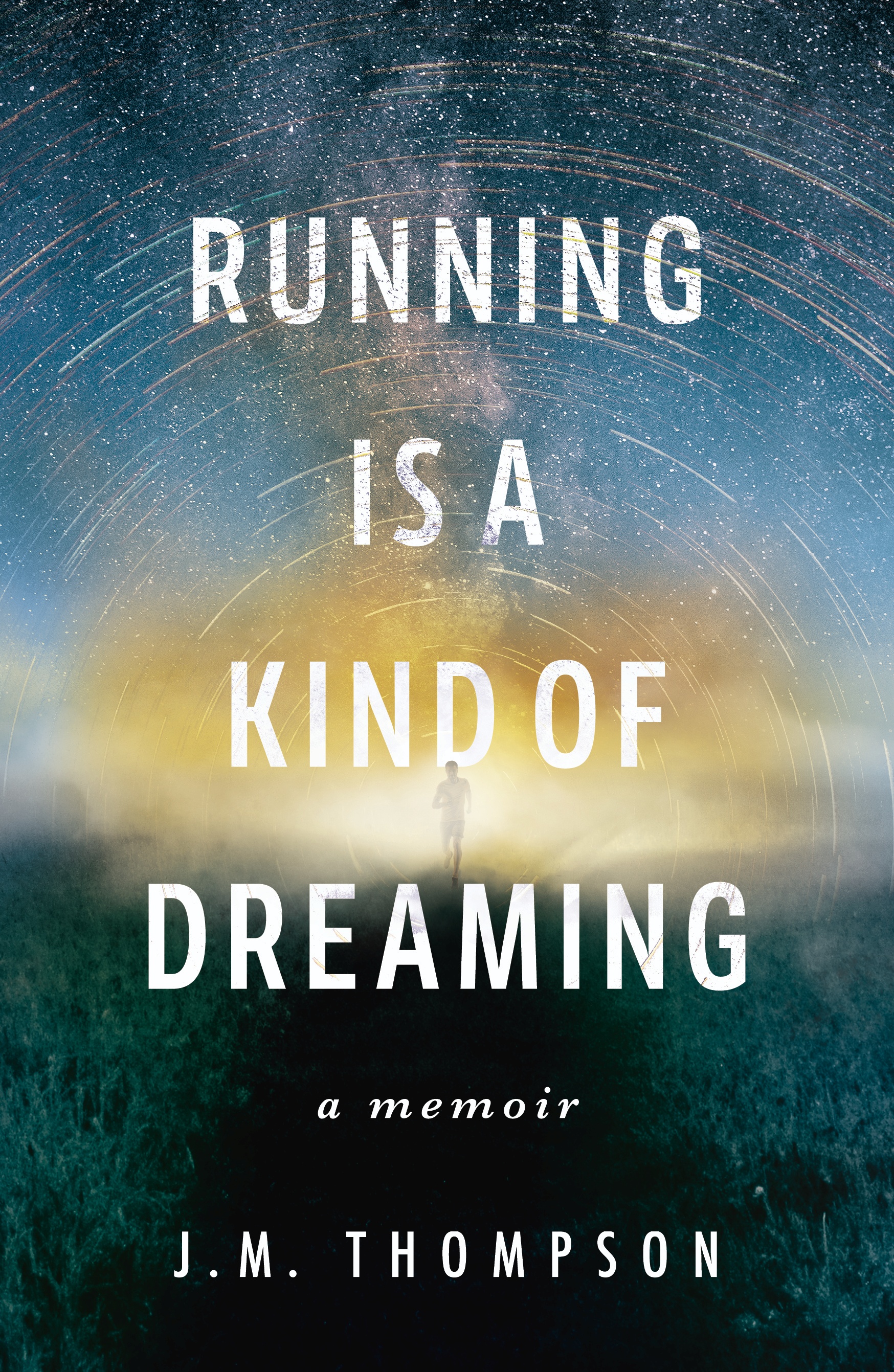
Author of RUNNING IS A KIND OF DREAMING
J.M. Thompson was born in England. He holds a BA in English literature from Oxford University and a doctorate in clinical psychology. He completed his psychology training at the University of California, San Francisco, where he conducted research on the brain mechanisms of meditation and the physiology of trauma. He is also an ordained Zen practitioner and certified yoga teacher. He has finished over 40 ultramarathons, and multiple solo adventure runs in the Sierra Nevada, the Grand Canyon, and Death Valley. Thompson currently serves as a staff psychologist at the United States Department of Veterans Affairs. He lives in San Francisco with his wife and two children