How to Overcome Stigma and Get Help for Depression

Have you ever wondered how it feels to flip a switch and instantly cure severe depression? Depression affects millions, often silently destroying lives due to stigma and misunderstanding. In this episode, discover a groundbreaking treatment that...

 Apple Podcasts

 YouTube

 Spotify

 Goodpods

 Overcast

 RSS Feed
Have you ever wondered how it feels to flip a switch and instantly cure severe depression?
Depression affects millions, often silently destroying lives due to stigma and misunderstanding.
In this episode, discover a groundbreaking treatment that offers hope, learn why societal attitudes toward mental illness are deadly, and gain practical insights on supporting those struggling with depression.
Listen now to hear Jon Nelson's incredible journey from suicidal despair to remission through deep brain stimulation, and learn how you can help save lives by changing your perspective on mental illness.
Topics Discussed:
- The stigma and misunderstanding surrounding mental illness
- Deep Brain Stimulation (DBS) as a treatment for depression
- The physical and emotional toll of living with depression
- Societal norms that prevent men from seeking help
- Various treatments Jon tried before DBS
- The immediate impact of DBS on Jon's depression
- The concept of "abolition" in depression
- The need for increased funding and research in mental health
- Jon's advocacy work and "Pulverize the Stigma" initiative
Chapters
00:00 Introduction and Life After Deep Brain Stimulation
05:01 The Experience of Living with Depression
09:25 The Societal Stigma of Mental Illness
13:01 The Roadblocks for Men Seeking Help
15:46 The Journey of Treatment and the Impact of Deep Brain Stimulation
22:20 The Fear of Recurrence and the Constant Battle
25:17 Accessibility and Affordability of Mental Illness Treatment
29:08 Advancements in Neurotechnology and the Future of Mental Health
31:08 Pulverize the Stigma: Jon Nelson's Advocacy Movement
----
GUEST WEBSITE:
https://pulverizethestigma.com/
Follow Jon Nelson: https://www.linkedin.com/in/jon-nelson-95749837/
----
MORE FROM THE FIT MESS:
Connect with us on Threads, Twitter, Instagram, Facebook, and Tiktok
Subscribe to The Fit Mess on Youtube
Join our community in the Fit Mess Facebook group
----
LINKS TO OUR PARTNERS:
-
Explore the many benefits of cold therapy for your body with Nurecover
-
Muse's Brain Sensing Headbands Improve Your Meditation Practice.
-
Get a Free One Year Supply of AG1 Vitamin D3+K2, 5 Travel Packs
-
You Need a Budget helps you quickly get out of debt, and save money faster!
0:00 Ever wondered how it would feel to flip a switch and instantly cure severe depression? that affects millions, often silently destroying lives due to stigma and misunderstanding. Today, you'll learn more about a groundbreaking treatment that offers hope. why societal attitudes toward mental illness are deadly, and gain practical insights on supporting those struggling with depression. Keep listening to hear John Nelson's incredible journey from suicidal despair to remission through deep brain stimulation and learn how you can help save lives by changing your own perspective on mental illness.
0:53 Hi, thanks so much for being there. As you just heard in the intro, depression is something I've lived with most of my life. My guest today can say the same thing. For years, John Nelson battled serious mental illness and depressive disorder, trying every treatment he could find, none of which offered significant relief. than 20 year career in biopharmaceutical communications, John found himself struggling with the very conditions he was working so hard to address. But a couple of years ago, John took a bold step that would change his life. He underwent a clinical trial for deep brain stimulation, a procedure that brought him to a place of remission. This surgery not only improved John's personal life, but also ignited a passionate mission. John has shifted his focus to what he calls pulverizing the stigma surrounding mental illness.
1:38 Today, John's going to share his experiences and his insights into mental health treatment and research and his vision for a world free. from the stigma of mental illness. What does life look like for you today? Are you are you well? Have you beaten your mental illness battles? So I had the surgery August 22nd, 22. So I'm coming up on my two year anniversary very shortly. And the moment I had the surgery, they turned on the device and I was instantaneously in remission of depression, instantaneously. So I went from the day before the surgery in the 10 years prior, pretty much every day wanting to die.
2:18 and feeling the physical exhaustion and debilitating aspects of this disease constantly. had blood literally circulating my body and in that blood circulating my body was essentially feelings of death constantly. And so I go from that to an instantaneous flip of the switch and I'm cured. And it still to this day blows me away. after going through every single gold standard treatment for this maniacal condition of major depressive disorder. And all I have is an electrical deficiency. That's it. I am 100 % on a bonus life. I have, I need constant electricity to survive.
3:01 100%, that's my medicine. I am proof that this is a brain disease and I am proof that the societal stigma of mental illness is completely moronic, completely deadly. And if that doesn't change, there's going to continue to be millions of people who die because of the absurdity and ignorance of society. So I understand you were diagnosed in 2010, is that right? Around then? then. We had just moved back from San Francisco. I had two kids and we made the move back to the East Coast and I just started getting low. know, low -ness being, you know, my confidence was going a little bit.
3:45 My self -esteem was definitely going. I didn't want to be in pictures. And then that started the sleeping, you know, the sleeping, the naps two or three times a day. that progressed into a phenomenal day being for me at the end, you know, only sleeping 16 hours and only having two naps, you know, before the end of the day. So that was probably my primary symptom initially. And then massive self -medicating, you know, I one of the challenges when you feel like dying every single day and you're also that's being exacerbated by society, putting judgment and shame and ostracizing on you. You know self -medicating is an easy very very simple thing to do because you don't feel like dying for a hot second and the current treatments don't didn't work and so you know that that progresses then the suicidal ideation then the multiple treatment facilities and you know every single medical intervention you can get and You know and then ultimately to be lucky enough to be saved by a clinical trial is still mesmerizing to me.
4:48 I feel like the most fortunate, unfortunate person ever because I was to be able to do this. And the advancements of technology hopefully will be able to bring this to the masses sooner than later. So yeah, let's talk about that. I also, I want to know more about the technology behind this, because it is fascinating, but I also want people to understand what it was. I mean, you've described just deep sleep, suicidal ideation, all those things, but like, was that constant? Was that your soundtrack? Was that just the way you always lived? Or were you able to find some moments of light that sort of hid the darkness for a while? I'm the exact person that people do not think suffers from mental illness.
5:30 was extremely extroverted. I'm the middle child. I'm extremely sensitive. I was succeeding very well professionally. I ended up at the peak of my illness. was proactively being promoted to president of my ad agency. So I was standard the exact opposite of what people anticipate or assume that mental illness looks like. That's one of the scariest parts about Society is understanding that this could be absolutely anybody I needed to provide for my family and so that's that's what kind of kept me going and then the other thing for it too in regards to that was I was confident in my ability to deliver at work and so when you feel Horrible all the time, but you know, you're good at something like that was a relief for me That was like a relief factor and you know, have this extremely vivid memory in my mind, which was You know, in advertising, it's all pitching.
6:25 You pitch, you pitch, you win a base of business and you're psyched and then you manage that business. And so we want a big piece of business. And as the head of the agency, you typically get up, you pop a bottle of champagne and you toast everybody. Way to go. Kick ass guys. We did it. Right. And, know, I'm the guy doing that. And then I'm getting in my car and I'm driving home and I'm literally analyzing every single tree that I see on my ride home to slam my car into it. Like which one could I slam my car into to die the quickest? Which one could I do it where it looks like I actually swerved to hit a deer, to not hit a deer and I died? How can I do this where it's an accident so that my family gets life insurance and my kids never, daddy died of an accident and my wife, you know, and I don't have to struggle anymore, right?
7:07 Like I'm out of this misery. And so I was consumed with that. I was consumed with the euphoria of how do I die? How do I die? But how do I die and also be able to take care of my family? And so one of the things that I've noticed while I've been talking about this is people that have died by suicide, I am not better than any of them at all. Like they're the strongest people that I've ever met in my life or ever known. I just happened to be, if 10 is death, I was at a 9 .9. I had one tiny connection that was still holding me to this worth, which was my kids going back to school. after my funeral and being ostracized and the stigma that I felt for years being traced onto them.
7:49 I still had that one tiny connection which kept me here. And so the aspects of what was it like, I I was consumed every single day with constant suicidal ideation, so much so that I could tell you, I thought to the point of, I wanna go to the state next door. I want to do it in a place where medical, emergency folks can find me because they're used to dealing with death more than a normal person. I don't want to traumatize somebody else. I don't want to be in a scenario where my kids can go by and my family has to go by and revisit it. Every single aspect that you could imagine, I thought through to the, mean, in like a humanity way, right?
8:31 Like I was that euphoric to die. And that's what the disease does. And so that's the thing that people don't understand. When I hear people say, they're the cowardly act, or, you know, I can't believe they did that to their family. In its most severe form, serious mental illness is a terminal illness. It's that straightforward. So when you know somebody who gets ALS, it's awful, right? You feel fricking horrible for them. Pancreatic cancer, worst thing in the entire world, right? Awful. It's the same exact thing with serious mental illness at its most severe level. The entire goal of this disease is to murder you. The entire goal of ALS is to murder you.
9:12 It's the exact same thing, except society doesn't understand it. Society doesn't accept it. Society doesn't understand the science behind cancer, majority of it, but they know when somebody tells you they have cancer that it sucks and that they want to give you a hug and they want to take care of your ass, right? That's what society does and that's exactly what they should do. The problem is is they don't accept mental illness and so that's why everybody dies. You mentioned the, know, when people call the, the successful suicide an act of cowardice. I almost think it's the opposite because there have been times, you know, many as someone who's lived with depression my whole life where fear of not being successful is the only thing that stopped me.
9:52 Like I, there's multiple times when I've thought the worst case scenario, if I pulled this off or if I attempt this is that I will not be successful and end up worse, you know, physically, mentally, I will do more damage. and have to live with that in addition to this pain. Like that fear is, that's the cowardice, you know, that I think that people ignore. They're not aware of how much people have to play this out in their heads over and over again. But that fear has saved my life on multiple occasions. I so value hearing that because it's such an amazing perspective to think about and to analyze because I look at it as, and I try to tell people, it's the same thing of you have a kid whose dad died of pancreatic cancer and everybody is sad for him and everybody is sad for the family and there's 5K runs and they're bringing meals over forever, right?
10:52 And it's just the exact opposite. It's the exact opposite with mental illness. know, the fact of, you know, imagine somebody sitting on top of a person getting chemotherapy all decrepit and them just talking shit behind them being like, what the fuck do they have to be sick for? Snap out of it. Like, what are you doing? Like, dude, just pull up your bootstraps, right? Like, make it happen. That would be, you would be the worst person in the entire planet, right? That's what we get every day. That's point of entry. That's absurd. And so when you sit there and you think about, you have this massive public health crisis directly in front of all of our faces, massive.
11:34 They couldn't have a bigger public health crisis. have average person waits 10 years with depression to get treatment because of the stigma, right? 10 years. So 10 years society is making everybody suffer. And then you think of Number one death for gentlemen, for men under 50, suicide. Number one reason for suicide, depression. Number one global reason for disability, depression. This is the most simplistic issue that is out there. And you do not need billions of dollars from consultants to fix this problem. You don't. All you need is two, absolutely two things, which is be empathetic if somebody tells you they're suffering.
12:14 treat it like you would with every other disease that's out there that you feel bad for. And you just hug them and you say, you're sorry. I'm so sorry you're going through this. And then guess what? The second shocking thing that you have to do is just be kind, right? Don't ask people what you can do. Bring them over a fricking meal. Like what would you do if somebody has cancer? They're lined up out the fricking wazoo to bring you meals and to drive your ass to chemo and to make things happen. Do one tenth of that for mental illness. and you will save millions of lives. No joke. And so, show empathy, be kind. That's it. And we've saved millions of lives. I get asked this all the time. I'm curious what your answer is.
12:55 What is it that prevents guys, from getting help? What is it about the stigma? What is the roadblock for us? what society has created on what a man should be, which is macho, which is tough, which is not talking about your feelings. It's moronic. It's the same, it's just the societal norm. You know, there's societal norms that it's okay, I mean, as an analogy of like the stupidity of certain societal norms. It's okay to go get completely hammered all day long at a sporting event and come home completely schnockered and sleep your face off and be hung over the whole day.
13:37 Like that's normal, but it's not normal for the two of us to sit on your back porch and smoke a joint, right? Like, what are we talking about? Like how is this our world? That doesn't make any sense, right? But that's what we've been taught is what's wrong and what's right. It's the same shit here. It's the same exact thing. Like the fact that The fact that we as a sex of being men have to act that way in order to fit into societal norm, it's stupid. It's wrong, and that's another perfect reason on why people die, 100%. And I can already see the comments on the social media clip of this where it's like, come on, bro, man up. It's inevitable. It always happens when I post these things.
14:18 What's your problem, bro? Well, here's my answer to every single one of those people. And first off, come on and debate my ass. Like, come on with you and I and let's have a conversation. And my exact answer to those people who say that is you are 100 percent accomplice to murder. You are the reason why everybody dies because of your small minded brain. 100 percent. You are absolutely factually incorrect and you are responsible for killing people. That's the reality and prove me wrong. There's no other way to prove me wrong. I'm 100 % accurate with that. And so the problem with people is they don't like to hear reality. I'm completely fine with telling you exactly reality.
15:03 I in general, as a human being, I'm an extremely nice person. I'm a kind person. I'm a middle child. I literally, like I said, I'm literally driven by kindness. I also can't stand stupidity. And I enjoy tremendously telling people when they're stupid, because that will make them not like me, but that will also make them think differently. And that will hopefully make them change their perspectives. And that will hopefully make them not be ignorant enough to kill people. Absolutely. You have tried a number of things before eventually landing on deep brain stimulation to win this battle. Tell me a little bit about those those attempts. What what didn't work, what the results were and how this ultimately literally flipped the switch that turned things around.
15:47 Thank you. So over 10 different medications, you start with all your standard antidepressants to go. You boost with some other aspects. Let's boost the antidepressant. Nothing worked. Nothing. I went to two residential treatment facilities for 30 days. I went to three partial hospitalization plans. I went to three intensive outpatient programs. I went to, I did Transcranial magnetic stimulation, which is kind of a new advancement to try to treat depression. That's 36 separate times. I had to go to a psychiatrist's office, sit in a chair for 45 minutes, and our amazing healthcare system that we had wouldn't cover it. I had to hope they would cover it, so I had to put $495 every single time on my credit card, and hopefully I'd hope that I get reimbursed on the back end.
16:34 That's pretty hard to medically get yourself healed when you're completely worried about financially stressing your family out. That's the reality of mental illness in the greatest country in America, in the world. And then I did 11 different sessions of electroconvulsive therapy, which is an ECT, which is also known as shock therapy. So not only am I and millions of other people diagnosed with this horrific disease that we didn't ask for and were labeled and shamed, I now am doing a therapy that's the gold standard treatment for major depressive disorder, electroconvulsive therapy. And you can't get a more stigmatized therapy than that. I certainly am not having people lined up out the door trying to take me down to ECT.
17:17 It's the exact opposite. People are like, my God, they're crazy, right? That's what we get. That's what kills people. And the fact that I have the opportunity to go and do this surgery, I get asked a lot, were you scared that you're getting brain surgery? I couldn't have given a shit. It was like I was literally walking into my PCP's office for a physical. because the worst thing that could happen to me is I died, which was awesome. I wanted to die. And so I was like, this is great. know, was like, first off, it's not going to work. Second off, if I die, hell yeah. Now my family gets life insurance, right? My, my, it's everything that I wanted. You know, my kids are, everybody feels bad for my kids.
17:57 They don't label and blame them. Same thing with my wife. And, you know, so I, I, so I do this surgery and I come out on the other end and I'm totally fine. And I didn't expect it. And to be fine so quickly, I was blown away. And so I still live, I'm two years, August 22nd, I still live absolutely in fear that it's gonna stop working. And in my clinical trial, six months in, they turned it off for a week. And that's just part of the clinical trial protocol. And five days in, after not having the constant electrical pulses to my brain, I was completely ravaged by the disease, 100 % ravaged. And so it didn't mess with my mind, but my entire physicalness of my body and my death circulating through me was immediately back.
18:40 And so I freak. I freak out that, gosh, if this doesn't work, I won't be able to survive. so when I think about, let me give you an example of the severity of these conditions that the stupidity of society judges and labels us for. So I have four people that I've met now with the same exact procedure I did. So this is a rare disease of rare disease communities. I mean, there's less than a hundred in the United States, if not less than that, who've also had the same procedure I did. And I said to them the other day, I started a support group for us because that's the only way you can get things done in mental illness is to do shit yourself. And so I start the support group and I say to everybody on our last call, I said, I feel really bad.
19:21 know, like I'm in remission. I'm not sick. And I'm so focused on the fact that if this comes back, I won't be able to survive. And my kids will be old enough by that point that they'll understand I fought as hard as I could and I had to peace out, right? I couldn't do it. And every single one of them looked at me and said, I couldn't live either. I 100 % agree with you. That's what this is like. And so, you know, when I'm sitting there and so it is amazing to feel like this, but there's constant fear at the same time. And so that also is probably another reason why I'm so fired up is, you know, I don't know how long I have. I hope I have a long time. I hope I have forever, but you know, I'm going to make the most of it while I can.
20:02 And, know, something that happened to me after this surgery that proves the pre and post of it and the physicalness of it is I did some stuff before and after, like podcast type stuff. My voice is different. My voice is back to normal. My face doesn't droop. My skin complexion is different. I had a tattoo that I put on a huge tree being out in nature, released symptoms of depression. I did that when I was getting ECT. I didn't feel it. It was four days that they took to put it on. I didn't feel it. I was like, whatever. It wasn't pleasant. It wasn't unpleasant. I went back after the surgery. had to them stop multiple times because I could feel again. I could actually literally feel physical pain because the pain was just ravaged me in every other way, right?
20:44 I'm six weeks after the surgery. Every day I wake up, I'm like, dude, this is whack. Like how do I not feel horrible? And I woke up one day and I woke up and I was sad. And I completely plummeted. I was immediately overeating. I was immediately oversleeping. I was lying. know, had my wife was like, hey, we gotta go to our son's school thing. I was like, I can't go, I have a conflict, right? Immediately, I'm back into the behavior. And I call my clinical trial team and I'm like, did you guys turn this off? Like, what's going on? Like, I don't feel well. And what they told me was a very eye -opening thing for me to try to understand and explain to society, which is all you're dealing with is the normal human emotion of sadness.
21:26 You're going to have sadness, anger, happiness for the rest of your life. And that's the cycle of life is they come in your body and they leave your body. And that was a big epiphany for me because I was like, okay, so for the majority of America and the majority of the world that doesn't understand this, this is the simplest way to think about it. Every single person in this planet has been sad. Everybody, right? That happens. Maybe you wake up sad and then in afternoon you're not, right? Maybe you're sad for a couple of days. But on a zero to 10 scale, 10 being the most severe, I'd say a normal sadness is about a three, right? And then maybe in the afternoon you go out, you do a walk with your kids, you're back and you're in a good spot and it's gone. So the disease of depression is anywhere between a five and a 10, 10 being death, and it never leaves your body, ever.
22:11 Doesn't leave. That's what it's like to live with this condition. So you add that on, plus the stupidity of society judging you, people die. My experience, not anywhere near as severe as yours, it certainly is the kind of thing that would come in waves. I could sort of function, but I was always either somewhere between just kind of meh and just like in a dark room, don't bother me. There's no point in me breathing. Don't even come in and exchange thoughts. So that would come and go. And throughout my life, That fear of is it going to hit tomorrow? Is it going to hit today? Held me back from trying to put myself out there, go for this job, go for that promotion, because I always thought, what if I can't perform?
22:53 What if I what if that hits me one day? Terrified. I'm literally now in the longest stretch of my life without a major depressive major depressive episode. been about eight months and it's been just pure lifestyle change. Like I connected with the coach that like just helped me make some changes. And it's incredible how we you have a little more space between it. How you like you said, you can you can recognize the normal human emotions like things will happen that will that would have normally triggered a depressive episode. And now I can identify them as, that's something that should make me sad. That's something that should make me angry. And because I have a thing to attach it to, I'm able to sort of battle it.
23:34 I have some tools to move the energy to manage it a little bit more effectively. But like you said, the fear is still there of like, how long am I going to be strong enough to put up this fight before it eventually just wins? Because it always fucking wins. Yeah, that's the entire goal. And first off, I'm so excited to hear that. That's amazing to not have it for eight months. And I completely understand the fear. I please, that's one of my favorite parts about all this is if it comes back for you or any of your listeners, reach out to me. I talk to people all the time just because I can relate and I understand it and I get it. And I'm so incredibly sorry that you know what it feels like. And it's horrific.
24:17 So I mean, that's another constant theme. There's so many themes. The themes that I know that are just so straightforward are the fear of it coming and the fear of the recurrence. And so I did used to have, like you said, it was just, it would hit, right? It hit every couple months and I'd be okay -ish and then it would hit, right? And I would be real low. It just turned into being just pretty much constant. Like that would be the kind of how the evolution of this happened. But you know, the constant themes are the terrifying feeling of the future. What does it hold? Everybody that I know that's been hospitalized is completely traumatized from that experience.
24:58 That is an absolute consistent feeling. And the insurance process and the ability to kind of navigate this in a normal way is just not possible. in mental illness and you know, it's it's just it's just it's stupid no other way to put it So the deep brain stimulation that you experienced, I assume you highly recommend it, five stars. Is this pretty readily available to folks? I did insurance cover it? Like, how accessible is this for somebody who is in that desperate state? I'm alive, the only reason I'm alive is the National Institute of Health Brain Initiative, which is a federal government, provides amazing clinical research grants to brilliant freaks in this area that want to try to save people's lives.
25:48 And they provided funding to Mount Sinai Hospital in New York City. The lead investigator of this trial is Dr. Helen Mayberg. She's, in my opinion, top neurologist in the world, especially in mental illness. She spent 30 years literally trying to solve this problem. And she, in my opinion, based off my experience, has solved it. And so the simplistic aspect of what has done for me is, you know, I had the constant feeling of dying, of death, of the disease. And so if 10 is the most severe, you know, the electrical pulses in that portion of the brain neutralize it.
26:28 So now my depression is neutralized. And the other part of the brain is the motivation portion of the brain, which, as you know, you can't do anything, right? So that's at a one. And so that stimulation there neutralizes that. This is something that I learned through this process, too. I'm literally in my operating gown at 530 in the morning on August 22nd, 2022. Dr. Mayberg's in there and they told me, like, she's gonna come in and give you a pumped up speech. I'm like, sweet, let's go and see what she's gotta say. And we're talking and I just looked at her and I was like, doc, like, I can't do anything. Like, I can't even walk my dog to my stop sign in front of my house. Like, she just looked at me and she goes, there's a medical reason for that. It's called abolition.
27:09 And I'm like, what are you talking about? I'm like, I've done this, I've gone through this for 10 years and not a single person has told me about that. Not a single therapist, not a single doctor. She's like, no, the medical rationale and reason why you're doing that is abolition, and abolition is the ability not to do daily routine activities. That's why I couldn't brush my teeth. That's why I couldn't shower. And so I'm like, another just massive fail of our system. So if the entire goal of this disease is to crush your soul and to make you feel so useless that you're gonna die, like one of the main reasons that that is is, Dude, I knew that I'm supposed to do yoga and meditation. I knew that I'm supposed to diet and exercise.
27:49 I couldn't do shit. And so, because I can't do those things, I feel worse about myself. I drink too, and then I'll drink, then you do something to hide it. And your entire unit is looking at you like, why can't you just do something different? Like, why can't you do something healthy? And so, that to me is a massive miss. And so, I go on every single message board I can or anybody I talk to. that's in this space and I'm like, dude, abolition, abolition, understand that that is why your behavior is how it is. This is not you making poor decisions. This is the disease again, hiding in its maniacal self and looking down at you and laughing that you are making yourself feel worse.
28:32 That's what's going to try and happen and do. And so, my tangent there is for a reason is to say, I don't have any of that now. And I love telling people, this is not you. I love educating caregivers to say, this is not them. This is the disease, right? Because they don't get it. They don't understand. They're so confused. Like this person I love so much is acting so differently. That's just a symptom. You can't see it, but it's just a symptom of this disease. And so my device is actually entering clinical trials in about a month or two. Abbott is the company that's going to be taking my device through clinical trials. I would guess it's, I don't know exactly, but two or three years from formally getting an approval could be less than that.
29:14 But ideally, they will see very positive results in a formal clinical trial. And this is something that could be FDA approved for the future for hopefully a successful take on severe depression. And then there's freaks, there's other freaks that are doing advancements in neurotechnology. One of those companies that I help with is a company called Motif Neurotech. And so I help them put together a list of a group of patients with lived experience and we talk to them about our experiences, how we can help guide the development of the product. And this is gonna be the future of technology. My simplified version of how I explain it is, I have the iPhone one in my head, which is great and it works awesome.
29:59 These guys are creating the iPhone 15. I mean, they're creating something that's much more minimally invasive. It's much simpler to do. It's much more cost effective. Hopefully we can get this thing through trials and sees benefits and it goes forward. So the future is there for mental illness. just need, we need more, we need more and more research. need more and more. We need more and more investment. We need more and more tech. I had the ability to speak on Congress at a congressional briefing in April. And the reason I was doing that was they got their funding cut for the NIH Brain Initiative by Congress by $400 million, which is 40 % of their budget. And so they couldn't do new clinical research.
30:39 And so they could only extend current programs that they had done. And so my entire goal there and the entire goal of that was you can't do this again. Like you can't. It absolutely can never happen again. Like if we want to save lives, You need to continue to advance science and you need to continue to advance science so that a pharma company will sponsor this. A med device company will take it over, sponsor it and take it through the clinical trial process to get things FDA approved. And hopefully we'll see a lot more of that uptake in the near future. Yeah, hopefully. In the minute or so that we have left, you're working hard to help break the stigma. You've already offered our listeners to be a point of contact when the darkness hits. What is the best way to find you and to follow your work and to support what you're doing?
31:21 so as a post advertising guy, I'm launching this at the wrong time because it's not ready yet, but I'll show you to show you what I'm going to be doing. this right here is a website that I'm creating and a movement that I'm creating, which is pulverize the stigma. So when I speak, I say pulverize the stigma is one of my main things. So I'm creating right now a it's kind of like my own advocacy initiative, my own advocacy movement. It's a digital print footprint for me. So people to find me. It will be pulverized the stigma .com. It's in development. I would guess within a month I'll have it formally done. And I have some dope ass swag that I'm going to be able to get put on that site.
32:04 And I'm not making a single dime off of any of this. Every single thing that's purchased from there is going directly to not -for -profits and supporting mental illness. And all I want people to do is to wear it loud and proud and give a middle finger to the stupid people in America. Amazing. We will have the link to that when it's ready at our website, thepitmast .com. And for now, we'll have links to your social media accounts so folks can follow you there. John, incredible story. I'm so glad that you have made your way out of the dark and found the light and that you're out there doing the work you're doing because it's important. And it means a lot to me and I know to a lot of guys that are going through the same stuff. You're the best. can't tell you how much I appreciate the opportunity to do this, the phenomenal platform.
32:47 And I can't wait for you to show me the cool hikes out there in British Columbia someday. wait, man. That'll be fun. All Alright, my thanks to John Nelson. You can find links to follow him and his important work at our website, thefitmass .com. that's where we'll be back next week with another episode. Until then, please share this episode with anyone who you believe needs to hear it to help them with their mental health struggles. Thanks for listening.
Lived-experience expert
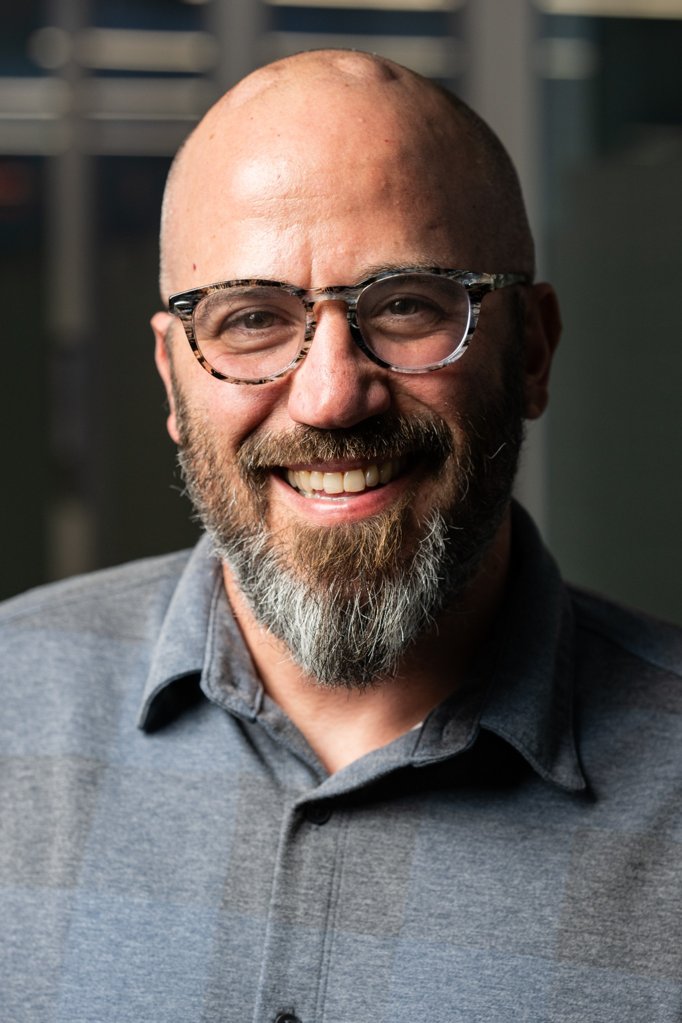
Jon Nelson is a lived-experience expert in mental health. A healthcare communications executive in the biopharmaceutical space for 20+ years, Jon is a tireless advocate and voice for those who, like him, suffer from mental illness. Jon works very closely with the bio pharma industry, serving as a strategic advisor for several nonprofits including One Mind, Mental Health Collaborative and Motif Neurotech. Jon has appeared on podcasts like Out of Patients and Stimulating Brains. He's also a voice for mental health at national forums including a recent NIH congressional briefing on a 10-year brain research initiative, where he seeks to further educate people about potential lifesaving mental illness treatments.