How to Test if Health Trends Actually Work for You
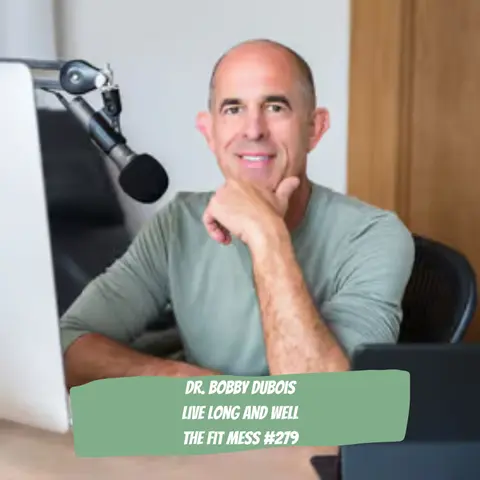
Why does some health advice works great for others but fails miserably for you? In this conversation with Dr. Bobby Dubois, we dive into the science of personalized health and why the one-size-fits-all approach often leads to frustration and failure....

 Apple Podcasts

 YouTube

 Spotify

 Goodpods

 Overcast

 RSS Feed
Why does some health advice works great for others but fails miserably for you?
In this conversation with Dr. Bobby Dubois, host of the Live Long and Well podcast, we dive into the science of personalized health and why the one-size-fits-all approach often leads to frustration and failure. Whether you're struggling with building healthy habits or tired of wasting money on trendy supplements that don't work, this episode reveals how to conduct your own health experiments and discover what truly works for YOUR body.
You'll learn the truth about cold plunging, sauna benefits, and supplement myths, plus discover your unique "health type" that could be the key to finally making lasting changes.
Don't miss Dr. Bobby's practical framework for testing health interventions that could revolutionize your wellness journey.
Topics Discussed:
- The N of 1 approach to personalized health
- Five different health types and how to identify yours
- Scientific evidence behind cold plunging and sauna use
- Truth about supplements and common health myths
- Sleep optimization strategies
- Combining health practices efficiently
- Understanding placebo and nocebo effects
- Evidence-based approach to wellness
- Personal health experimentation methods
- Importance of measuring results quantitatively
----
GUEST WEBSITE:
https://drbobbylivelongandwell.com/
Live Long and Well with Dr. Bobby Podcast
----
MORE FROM THE FIT MESS:
Connect with us on Threads, Twitter, Instagram, Facebook, and Tiktok
Subscribe to The Fit Mess on Youtube
Join our community in the Fit Mess Facebook group
----
LINKS TO OUR PARTNERS:
-
Explore the many benefits of cold therapy for your body with Nurecover
-
Muse's Brain Sensing Headbands Improve Your Meditation Practice.
-
Get a Free One Year Supply of AG1 Vitamin D3+K2, 5 Travel Packs
-
You Need a Budget helps you quickly get out of debt, and save money faster!
0:00 Well, here we are. It's a new year and you have probably started the 400 things you're trying to change all at once to finally get your life together, to finally get things right, finally start taking better care of yourself, only to realize probably in a few weeks that most of those you're going to stop doing because you're burned out. And probably a lot of them were bad advice to begin Because there's no shortage of complete bullshit when it comes to how to take better care of your health, whether it's your mental health, your physical health, whatever it is you're trying to take care of. that's why today I've invited Dr. Bobby Du Bois from the live long and well with Dr. Bobby podcast to join us to talk about a lot of the myths that people are believing and trying to implement in their lives that are ultimately not going to pay off in the way they hope they are.
0:43 As both a physician and an endurance athlete, he brings a unique perspective on how to test and validate health practices using simple, scientific methods that anyone can follow, even a dummy like me. So when we're done here, hopefully you will have learned how to stop wasting your time and your money on trends that don't work for your body to health that actually delivers results. Plus we get to geek out a little bit on cold plunging, which is one of my favorite things to do. And we'll find out how to make sure you're doing it safely and most effectively if it's something you're interested in trying. But our conversation begins with the overwhelming amount of information that exists and the struggle to take that information from just being information to being something you implement to actually improve your health.
1:24 So coming up, my conversation with Dr. Bobby Du Bois. there is absolutely no shortage of information. There's plenty of information for anyone with any condition to to go and try to figure out what may be holding them back from losing weight, getting healthier. dealing with depression, dealing with anxiety, but actually taking those steps, especially if you do live with any of those mental health conditions, can be a massive obstacle.
2:09 and I've had plenty of doctor friends who have told me like, you can write the prescription, but getting the person to actually take the pill, good luck. So I'm curious what you've seen in your practice and in your work with people that helps them bridge that gap between the information and the action they need to take to get healthier. It's a great question. guess I would divide it into two pieces. The first is there's an overwhelming amount of information out there. The problem is a lot of it is conflicting and you will get differing views from differing people. did a podcast not long ago about eight glasses of water a day, know, urban myths or good idea.
2:52 And I try to basically go into the scientific literature and says, you know, what does this tell us? Does it make sense? Does it not? Sneak preview. You don't need to drink eight glasses of water a day. Your brain and your kidneys will tell you when you're thirsty. Just listen to them. But I delve into things like sleep. What have we known from scientific studies that actually improve sleep? And there are 12. things you can try, each of which are based in randomized control trials or good studies. know, sauna, people love to talk about sauna, but what's the evidence? Well, the evidence is pretty darn good that it reduces your risk of heart attack, reduces your overall mortality, and importantly reduces your risk of cognitive decline.
3:42 And so in my podcast, I really try to wrestle with these issues and then figure out What does this, what's the essence of it? I just finished a podcast on alcohol and it was alcohol, none or some. That is the question. Everybody talks about alcohol and says, yeah, you better not have four glasses a night every night of the week. But that's not the question for most people. Most people is, well, what's the harm of having one glass a day or maybe two glasses a day. And again, there's evidence on this. And that's what I try to distill and share. So that's the first part of the question, which is what is, what does the information tell us?
4:24 And that's no easy step. did a podcast on health headlines, confusing or harmful. How do you look beneath the headlines? Okay. So now we've sort of got our, you know, our, our direction. This is what we should do. Now that you ask the question, how do you get people to do it or continue it or follow it? So I did not invent this concept, but I think I've been the one probably most recently to popularize it. They're called N of one trials. So if folks know when you do a study, say a new drug, or you say, well, your high blood pressure is bad, cut out salt in your diet.
5:07 Well, the reality is the studies give you the average. On average, if you cut out salt in your diet, your blood pressure might drop three points. But the reality is three quarters of people are sensitive to salt. So it makes a difference for them, but 25%, it doesn't matter how much salt you have, it won't budge your blood pressure. And I'm one of those. And this is true for every other study. And I mentioned the 12 sleep approaches. So the end of one study is a systematic way to test things in you. It's what people love personalized medicine. Yeah. if your blood pressure is on the higher side and your doctor says, oh, you should cut out salt.
5:51 What you need to do is measure your blood pressure, get a home monitor, 80 bucks, a hundred bucks, measure it every day for a week, maybe a couple of times a day. Now you got a baseline. Now cut out salt in your diet. Do that for a few weeks. Measure again and then go back to your doctor and say, you know, I am sensitive to salt. My blood pressure went up or went down or no, I'm not. Similarly with sleep, studies show if you lower the temperature in your bedroom, probably below 70, it improves your quality and quantity of sleep. But that's not true for everybody. So again, do a baseline sleep assessment.
6:32 I wear an aura ring, you can do a Fitbit, you can do your Apple watch, or you can just write down how many hours of sleep did I get and how awful did I feel in the morning. Then try for a week. Mm-hmm. in your room, measure it again. And if you're not convinced, raise the temperature back up, see what happens, lower the temperature back down, see what happens. It's a scientific way of figuring out what works for you. And you you mentioned depression. It's been shown that meditation can be helpful. Saunas can be helpful. Cold plunge raises the dopamine levels, but that's on average. We don't know if it's true for you.
7:14 Hmm. do your baseline, you try some intervention like the cold plunge, see how you feel. That's the technique and I think that goes from the science of what works to how do I make it work for me? I'm going to pick your brain more on the cold plunging because I love it. I do it all the time. I'm a big advocate for it, but I'm curious about this. The biohackers are hearing what you're saying and going, yes, amen. Preach brother track it, measure it, adapt, go. The average person, me, you know, sometimes now most of the time, many years ago goes, cool, great idea. Does it once maybe twice, maybe for a couple of days forgets.
7:58 There's no immediate. gratification. It gets hard to keep up. The kids are loud, works hard, life gets in the way, you know, all the excuses. And and we stop tracking and we forget about it. And two months later we hear on a podcast, oh, yeah, I started doing that. I know I should do that again. And we don't do it. So how do we stick with it? That's I mean, that's the thing with all this stuff. We can talk about exercise and diet and all this stuff all day long. But getting past that initial adoption phase of this is something I do now. That's the big barrier. How do you stick with it? Well, that's the crux of the issue. I think one of the reasons that these sort of guidances fall apart is they sound like one size fits all.
8:42 Everybody needs, you know, seven to eight hours sleep. Everybody should do a sauna three times a week. Everybody should do this type of exercise for this period of time. And the reality is that we're all different. And as you said, there are some people that are dialed in and will just try every new thing, measure it on their Fitbit and, and move forward. So I've developed a quiz called the health type quiz. And if you just go to my website, Dr. Bobby live long and well, the quiz will pop up. It's free. takes three minutes and it will then categorize you into one of five types or archetypes.
9:22 And then you'll get a series of reports that will talk about you and hopefully language that really works. And I've had about a thousand people do the quiz. And so I have a pretty good sense of where folks land. Each one of the five are different and how each one of those individuals acquires health knowledge, makes decisions about health, what motivates them and how they deal with setbacks and health triggers like an injury or an illness are completely different. So your person that's dialed in is called a holistic health hacker. And it is what it sounds like they you know, they're on top of everything.
10:02 A very different type is the purposeful path planner. This is somebody who can drown in the information. Dr. Bobby says do this Dr. John says that my chiropractor says this, I'm drowning, I don't know what to believe. Now, if you hand them a Fitbit, they'll be like, that's not what I need. Cool watch, What they need isn't more information. They need a distillation of the information and clear guidance because once they figured out the path, they do pretty well. The single minded achievers, a third type, and they're the type that is zoned in on one thing.
10:47 I meditate every day. Great. That's wonderful. But their eyes are not open to, the benefits of sauna, the benefits of a nutrition that might be a little bit different, the importance of social relationships and longevity and wellness and cognitive decline. So they need kind of a broadening. So each one of these has a different approach. The hopeful health seeker is somebody who's failed a lot. You know, Dr. Bobby, I've tried to lose weight for 20 years. I've tried every diet. I'm just demoralized. You know, Dr. Bobby, I've been having headaches and I've, you know, tried everything and I can't seem to deal with it.
11:32 These are not individuals who are a Fitbit or a clear, whatever is going to work for them. They need encouragement. They need early wins. All right. Go for a two minute walk. All right. Can you do that? Yeah. I did the two minute walk. All right. Well, next time try three minutes and we'll stick with that for a couple of weeks. They need early wins. So Part of the reason this all fails and the timing of our podcast couldn't be better because of new year's resolutions is that they have to be tailored to you. Not only your health type, what succeeded in the past, what failed in the past, where are you with your screening tests that should be done or the illnesses that you have and the six pillars.
12:18 So taking stock of that and being mindful of your health type, I think people can be more successful than maybe they think they can. Well, and does seem like, I mean, it's painfully obvious to me now, but some of the advice that we give and hear a lot from guests is start with what you enjoy. And if it is walking, if you enjoy walking your dog, go walk your dog, right? You don't have to go to the gym and bench 280, bro. Like you can, you can start with what works for you. What makes you feel good? What lights you up and gets you, gets you excited to put the shoes on because I've seen it over and over again. I've done it over and over again. I promised myself I'm going to do something and then I don't because it sucks and it's hard and it's not fun.
13:03 you know, when I started going to the gym and, you know, would go a few times a week and after a couple of months, I'm not really seeing anything different. I'm not really feeling anything different, except it's a giant time suck and it's pain in my ass. I'm going to give up, but I've found ways now to stay motivated and to learn to really love it to where now I can go for a few months and start to see, okay. It's starting to work. I'm starting to see the benefit. And that's what I mean. that maybe that's I missed which category category I fall into. But to me, I'm the guy that needs the win. I need to hear somebody say, are you losing weight? What's going on with what are you doing over there? It seems like like those are the things I'm like, it's working. Aha. It's not just a story. telling myself that I need to do this.
13:44 There actually is some benefit and it's starting to pay off. Well, Jeremy, you should take the quiz and then we should have a private discussion about, know, what does this mean in terms of moving forward? You know, I had just heard this quote, the heaviest weight in the gym is the front door. The hard part is just getting there and getting started. The other thing is that, you know, if you plot out all the things that I and other scientific oriented people say you should do. how many hours a week you should exercise, how many hours a week you should meditate, how many hours a week. There's not enough hours in a week. I love those memes that are always like the CEO morning and it's like a 14 hour day before you get to work if you did all the things you're supposed to do for five minutes a day.
14:29 Now there is a kind of a hack that you could try. So for sleep, getting a sunlight early in the morning resets your biologic clock helps you with sleep. Going for a walk is good for all sorts of different reasons. So I like to combine the things so it doesn't take all that much time. Grab a friend, go for a walk early in the morning, sip your coffee. You've got three of the pillars done. before you get back for breakfast. And so they don't have to be separate. They can all be done together. And it really, really can make a huge difference. One of the things you talked about that I'm a huge advocate of is cold plunging.
15:11 I love it. let's talk myths and facts. How good is it for me to be spending all that time in the cold water? So how long do you spend in the cold water? My weekly group plunge with my friends is we do 20 minutes and then during the week I'll do anywhere from three to five to 10, sort of depending on how patient I am on my back porch by myself in my little tub. Wonderful. And how cold is the lake? Right now it's seven Celsius. So what is the 40 mid 40s, low 40s. you are, you're quite a hearty person to be able to do that. So, exposure to heat and cold is one of the six pillars.
15:52 And if folks want to listen to the episode, you can learn about all the evidence that supports it. Obviously cold plunge and sauna has been around for, you know, thousands of years. So there's nothing new, but just because it's been around for thousands of years, doesn't mean it actually work. So one of the arguments about the science in these areas. Well, sauna and cold plunge is the only people that do it have time and have money. And therefore the fact that they do better may or may not be a reflection on what they're doing. It may just be, they have more money and more time to be able to do this. So there's been some very creative studies in the sauna world.
16:33 As you may know, Finland loves saunas. And there's basically one sauna for every two people. And so it's not a function of money. Every apartment has them, you just sign up and you do them. And so there you can actually do studies and look at people who don't do the sauna, who do it once a week, twice a week, three times a week, so on and so forth. And you see what's called the dose response relationship, meaning the more you do, the better you, you are on. I'll tell you what some of the endpoints are and the longer you're in. 10 minutes is okay, but 15 minutes is better. 20 is even better. Not necessarily beyond that, but 20 minutes, three times a week is probably the sweet spot.
17:14 And it's been shown again to reduce mortality and reduce the risk of cognitive decline. Okay, so there's pretty darn good data on sauna. And I can talk about that with folks and feel confident that it's a real deal. Cold plunge again, rolling in the snow, going into lake. There's nothing new there. It's been around for a long time. What is new is the scientific studies. Does it make a difference? And you know, I, I try to call it as I see it. have no long-term studies on the benefit of cold plunge. What we do have our short-term studies where they measure dopamine levels, which is sort of the happy hormone in your brain and your dopamine levels, your noradrenaline levels go up threefold, fourfold, fivefold when you do a cold plunge.
18:08 So it is absolutely changing chemistry. Now, and anybody who's done cold plunge knows that you feel almost giddy and alive for not just 10 minutes when you're done, but for hours afterwards. So we know there's kind of immediate and, and, and multi-hour benefit, what we don't know is whether that leads to reductions in overall blood pressure or heart attack rates or, or whatever. I do know, because there's some people who say, I do a cold plunge right before bed. That when Gail, my wife and I have tried that we can't get to sleep. We're so wide awake that doesn't work.
18:50 So morning cold plunge, sauna before bed and sauna before bed or a hot shower for board before bed really makes a difference. in improving sleep quality. Absolutely, both how fast you go to sleep, the REM and deep sleep quotient, and how many hours you sleep. And people think it's counterintuitive because earlier I said a cold bedroom is really good. And you would think, well, wait a second, Dr. Bobby, I'm going in the sauna, I'm getting hot, and now you tell me I need a cold bedroom. Actually, what happens when you get out of a sauna, is your blood vessels are all dilated. You look like a lobster.
19:32 And so what happens is, although when you walk out of the sauna, you may feel hot. Within five minutes, you actually feel chilled because you've radiated all the heat out of you. And so now your core body temperature is actually falling. And that's perfect for going to sleep. In the few minutes we have left, we've talked cold punching, good, sauna, good. What are some of the biggest myths that you see that just drive you crazy every time they pop up on your Instagram real weird? like, this is not science. This is not a thing people should be doing. Yes, I'm glad you asked. For those of you who are not watching the video, I have no hair or just about no hair.
20:12 It's because I pulled it all out dealing with people who kind of have found religion with one thing or another. know, the latest is hydrogen water bottles or red light therapy that cures, you you name it. But I would say the biggest one I worry about are supplements. Hmm. almost every podcast in the health arena is paid for by supplements and the scientific evidence on nutrition and supplements really aren't good. there are very, very, very few supplements that have been shown to work.
20:52 Probably the only one that has really shown benefit is just a simple, dumb, boring multivitamin. And it's shown some decreases in the risk of, of cancer. Now, I'm not saying if you are constipated, you shouldn't have a supplement to make that easier. I'm talking about the focus on, I must take vitamin D and calcium and omega threes. When the scientific studies have been looked at, what's called a meta analysis, where you basically take all the studies and summarize them statistically on a particular topic, know, vitamin D and calcium is actually something that can hurt you, not help you.
21:33 Now we all need some vitamin D. If you live in a cave, that's not so good. But if you're out in the sun a little bit, whatever, know, eating various foods have vitamin D. If you actually have too much vitamin D and calcium, it can cause potentially calcification in your heart. So people get these calcium heart scans. so vitamin D, which is a very common supplement people talk about, it's like, well, if I don't have any, that's a problem. If I have too much, well, that could be a problem. By and large, people don't need it. The omega-3s that people swear by, again, if you look at the randomized trials, and there's been many, many, many of them, they don't reduce your risk of heart attack, and they really don't seem to make much of a difference.
22:18 So people spend real money, and then you've got the branded green stuff that people spend a lot of money on, and all of this really hasn't been studied to show that it makes a difference. Interesting. On the vitamin D one, I'm curious, just to make this about me for a minute. I live in the Pacific Northwest where the sun comes up every once in a while. whenever I've had my blood tested and I request a vitamin D test to see if it is, it always tends to be on the high side of low. So I do take a vitamin D supplement because my numbers show that I'm low. Doctors I talk to, they're not worried. But since it hovers around low, I take one. Am I making a mistake?
23:00 Well, I'm not a doctor for you and I'm not a doctor for your listeners. I think I would listen to your doctor. He's not worried or she's not worried. You know, taking small doses. I mean, again, a multivitamin is going to have vitamin D in it. So, you know, that's probably enough. But just people should understand that for a lot of the stuff that there is both a potential benefit, a potential harm, and then just wasting money. You know, for most people, magnesium isn't necessary. I live in really hot weather in the summer in Texas and I sweat like the Dickens. When I get muscle cramps, I'll try magnesium and it seems to help.
23:46 Then when I'm not sweating so much in the winter, I may not take it. Again, we're back to the end of one study. Try and see if it makes a difference. The real problem and why I pull my hair out is I'm okay with people saying, you know, I tried magnesium because I got cramps in my leg at night and Dr. Bobby, worked or Dr. Bobby, didn't work. Fine. Yeah. It's a short-term test. You'll figure it out. The problem with a lot of this stuff is that people say, trust me, you need to take this for the next 30 years at this cost per year. and I know it will help you. The problem is there's nothing to measure to say it is helping you.
24:27 And that's why we really need studies to support what we do and what we don't do. Well, that's why I think supplements are particularly tricky because I think most of them, when you take them, unless it is like you, like your example of like leg cramps, you take them and it, they go away. It helps your general multivitamin, whatever brand you're either spending too much or not enough money on, you're going to take it. You're probably not going to notice a difference in a few days. Like it's the kind of thing where you probably have to take it for a while, stop taking it and then realize, now I feel like crap again. Right. Exactly. There's the end of one approach. So again, listen to your body, try it out for a while and see what happens when you stop. and isn't just listen to your body, try to be quantitative about it.
25:11 So if you have a Fitbit and you're measuring sleep, then look at your sleep numbers. If you have anxiety, there are anxiety questionnaires on the web that are like six, eight, 10 questions. Do the questionnaire, get a score, then test, and then redo your questionnaire. You know, sleep is bad. There's the also Pittsburgh sleep questionnaire, very easy to find questionnaires. It's a way just to quantify it because if you leave it to your subjective assessment, now we're down the rabbit hole of placebo effect, which is going to be a podcast that I do in a couple of weeks.
25:54 let me ask you about that. I we've just got a minute or two left, but I mean, is there anything to that? If something makes me feel better, even if scientifically it's not doing anything, is there value in it? I like feeling better. And if whatever it is you do, you know, wearing a purple hat, you know, makes you happy all day long. Well, great. I think where a placebo can be a problem is if it's in lieu of something that we really know works. So you're probably too young to remember back in the day there was Leia Trill, which was the extract of apricot pits. And people were flying to Mexico to get this cancer cure.
26:37 And they said, I feel better. The problem is they did it in lieu of the standard therapy. So that's where you can get into trouble. Now, the funny thing is placebo sometimes works. Even when you tell people it's a placebo. and there's also the opposite. called the nocebo effect. People who have high cholesterol take statins and people who take statins are like, I get this muscle weakness. And so I have to stop my statins. It's a common sort of side effect issue. And it's real for some people. If you give people a placebo pill and say, know, one of the potential side effects is muscle soreness and weakness.
27:20 You'd be amazed how many people will say, yeah, doctor, you gave me that pill and yeah, I'm feeling this muscle soreness all the time. So it's a real deal. it's something to pay attention to and be aware of. And the end of one trial will help you to disentangle. it real or is it just placebo? speaks to the power of your mind though to convince yourself how you feel. So amazing. Great stuff. One of the questionnaires you mentioned is yours, the quiz. Tell me where we can find out more about you, the podcast, and take the quiz. so my podcast is called, live long and well with Dr. Bobby. If you just type in Dr. Bobby, you'll find me in on Apple or Spotify or wherever else.
28:04 my website is Dr. Bobby DR not D O C T. So Dr. Bobby B O B B Y live long and well.com. And that's where you can find the quiz. If you want to, or direct interaction or coaching with me, you can find it there and. I'm just passionate about helping people figure out what could and should and might work for them. We can find all that in the show notes for this episode as well. Dr. Bobby, thanks so much for your time today. This was a lot of fun. Likewise, thank you for having me. Hey, hang out a minute. All right, my thanks to Dr. Bobby Du Bois. He is the host of the Live Long and Well podcast. You can find links to his show in the show description for this episode at thefitmass.com.
28:46 But that's gonna do it for this episode. Thanks so much for listening. If you found any value in it, please do share this with somebody who you think could also benefit from it. You can do that with the links again at our website, thefitmass.com. And that's where we'll be back in just a few days with another episode. We'll see you soon.
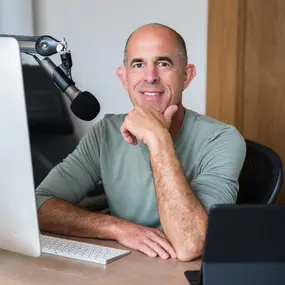
MD, Ph.D., Podcast Host, and Entrepreneur
Dr. Bobby Dubois, a highly regarded Harvard, Johns Hopkins, and Harbor-UCLA trained physician and scientist with 25+ years of industry experience, recognizes the overwhelming misconceptions surrounding wellness. Dr. Bobby now hosts the Live Long & Well Podcast where he debunking common health myths while simultaneously
Providing practical and sustainable ways to improve your health.