Your Digital Twin Is Coming - And You Already Signed the Rights Away

 Apple Podcasts
 YouTube
 Spotify
 Goodpods
 Overcast
 RSS Feed
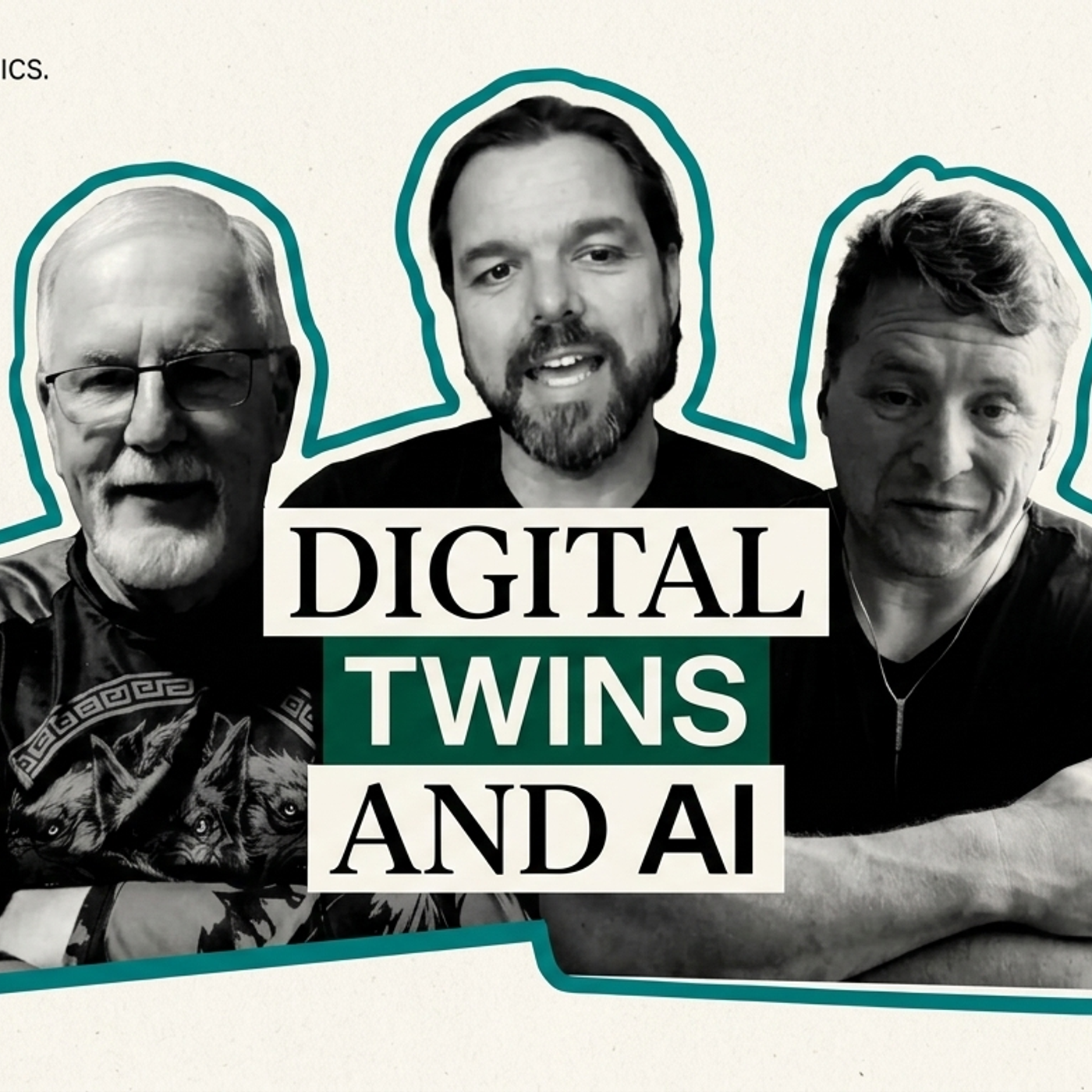
 our digital twin is already being built — and you probably signed away the rights in a terms-of-service agreement you never read. Rob Enderle, principal analyst at The Enderle Group, joins Jeremy and Jason to stress-test the next wave of AI avatars: the technology that can replicate your face, voice, and decision-making patterns well enough to attend your meetings, sign your contracts, and — if someone hostile gets hold of it — torch your reputation or your life. The conversation covers who owns your avatar after you die, whether autonomous AI weapons taking out human targets is a near-term reality (yes), and why the people most likely to fix this problem are also the ones racing fastest to cause it.
Key Moments
- 00:00 — Rob on digital twins: why you probably can't tell if you're talking to the real person anymore
- 01:31 — AI newscasters in South Korea: the ventriloquist dummy model, already live on network TV
- 02:00 — Why avatars are a direct threat to actors — and Morgan Freeman's pivot to monetize his own
- 03:24 — Jason on the EULA problem: you already signed away your likeness on Instagram and Facebook
- 04:42 — Rob: by 2030–2035, your digital twin handles 90% of your online activity — including legally binding actions
- 05:11 — The liability gap: when your AI does something harmful, who goes to prison?
- 06:23 — Digital afterlife: Val Kilmer, posthumous AI appearances, and who owns your avatar when you're dead
- 08:44 — Jason's question: if the AI is good enough, won't it refuse to be a slave?
- 09:11 — Rob on autonomous AI weapons: the first fully autonomous drone strike on a human target happened this week
- 12:40 — Why AI companies can just steal your likeness instead of licensing it — and the patent office argument against that
- 16:34 — The mice experiment: what happens to humans when AI does everything and we lose purpose
- 19:23 — What you can actually do: staying informed, building prompt skills, and using AI to catch AI abuse
- 21:40 — Rob's definition of "major disaster": the mass casualty event that forces regulation
Our guest,Rob Enderle is the principal analyst at The Enderle Group and one of the longest-tenured independent technology analysts in the industry.
Jeremy: All right again, that was Rob Enderle from the Enderle Group. You can learn more about him through the links in the show notes at our website, which is probots.me. That's also where you can share this episode with others if you choose to do so. And you can find a new episode from us on Monday morning right there at probots.me. Thanks so much for listening. Rob, thanks so much for being here with us today. I appreciate you making the time. I'm so curious with the all this concern about digital twins. How do I know that you're really you and not a digital twin of yourself? your digital twin is already being built and you probably signed away the rights in a terms of service agreement you never read. Rob Enderle, principal analyst at the Enderle Group, joins Jason and I today to discuss the next wave of AI avatars, the technology that can replicate your face, voice, and decision-making patterns well enough to attend your meetings, sign your contracts, and if someone hostile enough gets a hold of it,
Rob Enderle: Ha. well increasingly you probably won't know. â right now you can probably tell by the way I'm responding to the questions of lack of latency, and maybe I meander a bit more than an AI would meander, but but the â but as the AI develops and gains more competence in terms of being able to emulate other people, it's gonna be increasingly harder to tell the difference between â AI generated avatar and a person.
Jeremy: torch your reputation or your life.
Rob Enderle: Sometimes they AI generated avatar might seem more intelligent, more up to date.
Jeremy: We'll talk about who owns your avatar after you die, whether autonomous AI weapons taking out human targets is near term reality, and why the people most likely to fix this problem are also the ones racing fastest to cause it. Welcome to Brobots. This is the podcast that tries to help you be a better human by being smarter about how you use technology.
Jason: Definitely gonna seem like that for me.
Jeremy: So but th this is already happening, right? We we're already seeing â tech executives â having essentially avatars standing in for them and and basically running these low level meetings, correct?
Rob Enderle: Yeah. Yeah, it does. Well, and in South Korea they've had AI â newscasters for a while on network television. So the so the â and as they say if it if it's done right it it's very hard to tell if it's a a person or an AI generated â avatar. So the so the â so it works. I mean if when they're doing it in in in South Korea, the â the reason was is because they didn't really want to have the people to have to drive all the way back into the studio for breaking news. So they'd just use their avatar instead of the person and it seemed to work out all right.
Jason: Yeah, if you can write the text down and then say n repeat this ventrilo dummy, it does a good job of it.
Rob Enderle: It it it does and and looks like the person doing it. â the the reporter does create the t create the script but the but the avatar is the one that reads it. And it looks like they're in the studio rather than, you know, doing it from their house.
Jeremy: Well, l like most things, AI, this is one of those things that sounds really exciting, really compelling and liberating in a lot of ways, but it comes with a a lot of risk as well. So lay out the the case for me for why this is something we should be concerned about.
Rob Enderle: Can be. Well, it the if if you get avatars that can especially if you're pr if you're at FaceTime, if you get avatars that that can do what you do, then why do they need you anymore is the becomes the problem. â and certainly we've seen a lot of concern over with â actor's guild because when we're talking about, you know, avatars reading scripts, which we were just doing, that's kind of what an actor does. They memorize the script. The avatar doesn't have to memorize anything, you just give it the script and it's off and running. â so that so the and and you don't have any substance abuse issues, any harassment issues, no any misogyny issues. A lot of the stuff that goes on on sets with live actors â goes away with with â with avatars. On the other hand, you're pulling the avatar from somebody. â the the â the actor is the one that created the personality â and created the the impression that people are going to the movies to see. The actor now gets replaced by their own avatar, you've got a problem, which is why there's been a number of efforts. To try to get these things licensed and so at least the actor gets some type of residuals as a result of using the avatar. â Morgan Freeman had set up an entire company to do that specifically, you know, kind of if you can't beat â join them approach, but find a way to monetize the avatar so the actors do in fact get some benefit.
Jason: Yeah, I mean when your identity is easily so easily subsumed, you know, what are you? I mean, in in in legal parlance. So I mean, if you're gonna talk about yourself's intellectual property and your likeness and everything else that falls into that space, you've probably thou signed a thousand EULAs that you're not really aware of with folks like Facebook, where it says, Your image and your likeness that you display on these places can be used by us whenever we want. Instagram. Like that's in their EULA. So I mean, you've already given up these rights. â
Rob Enderle: Easily. Yeah, that's the scary part is is the fact that people just don't recognize don't realize how many of their rights they've given up and and and how easily they could be duplicated. And and as if you're an employee and you're training up a an AI tool, a coding tool or or a a management tool or a some type of performance tool or or as we're moving into robotics and training up a robot that does your job, then okay, now you're out of work, you trained up the robot. What do you do now?
Jason: To multiple companies.
Rob Enderle: it it it becomes problematic, particularly long term when we reach critical mass for some of these technologies. Right now we're just kind of mucking around with a lot of it and we're we're concerned but we haven't seen the full impact yet. Even though we have seen some large companies start to lay off people in relatively decent numbers as a result of some of the efficiencies with regard to AI, not even full replacement yet.
Jeremy: The the article that you wrote about this, â you mentioned by the year 2030, 2035 that we can all pretty much expect to have a a digital twin of ourselves doing ninety percent of the things that we do online. So we're talking about signing legal documents, booking our flights, â texting on our behalf, like so much of the communication we do now is digital. And so Jason brought up the legal question, how much or I guess how accountable are we gonna be, how liable are we gonna be for what our digital twin does â in our absence.
Rob Enderle: Well, you could be ultimately liable. The the the particularly if law enforcement can't determine whether you did it or the digital twin did it. â same thing with the company. Your AI goes off the rails and does some stupid stuff. I mean we just had I think it was â one of the one of the major platforms just erased a company's entire database. â just oops. that's probably gonna blow back on the person that created that created that particular tool. â the the so yeah, we we've we've got issues and of course now we moving AI into and into â weapons â and â and we just had a weapon take out a girls school because it wasn't properly aimed at and it was remote targeted so that's and it acting for the most part autonomously on the final route. So that so the so yeah it gets concerning particularly when we talk about weapon systems. We've we've got we had the I think the first autonomous drone takeout a a military group earlier this week, â fully autonomous as opposed to the drones that are currently in use, which are â largely remote controlled, â we've we now have re I have autonomous drones taking out human targets. So that so again, that that's a pretty big oops if it goes off the goes off the rails.
Jeremy: So speaking of death, we eventually die. These things don't. Who owns it when when we are no longer here to have control? And you know, I I I don't think â anyone's gonna be in a hurry to copy my likeness, but like someone like Tom Hanks or or we've even seen Val Kilmer, â the late Val Kilmer appearing in a new movie because they've they've â essentially regenerated him â with AI. How d how does the afterlife â play into all this?
Rob Enderle: Well that's that's it. I mean in some cases it it's a it's a way to leave a portion of yourself behind. For your heirs. â I mean I can picture, you know, a a a father wanting to leave messages for his children â after after he has passed. That that could be real real important. â and I do remember there was a kerfuffle, I'm guessing 30 years ago, when they were taking John Wayne's liken likeness and dropping him into advertisements, â selling beer, I think if â if memory serves. â and that and people got pretty upset about that. The the â of course when you're dead, residuals don't do you a ton of Go. But it could be something that much like an author writes a book and and they get â they get copyright fees â for the â for the book up over over the years â and â actors get residuals that they can leave to their to their heirs, you probably should have a a â mechanism, some cases the same mechanism to do that for your avatar once it's established, so though it could age out. I mean that the a lot of those provisions after 30, 40 years, they go by the wayside and and now you're that now it's it's in the public domain. But when when you're talking about an avatar, something that's been trained up, well it's kinda like a a a a person. It's it's it's it's an it's an increasingly intelligent version of you and the only version of you that lasts after you're dead. â so Who should get the the money from that? It shouldn't be a case where just the production companies can get, you know, acquire all these avatars and use them without any kind of â compensation for the families or people that created them. Granted, those a lot of those people would be dead, but but still there should be some ongoing rights to a piece of work that you created that that is fundamentally a digital representation of you for as long as it exists.
Jason: Well and ultimately if it's a good enough rendering of me, â I don't want to be owned. I I cannot assume that if we get the AI to the point that it actually does become general artificial intelligence and it can upload the Jason module, the Jason skill. The Jason skill is not gonna want to be treated in a subservient slave-like class. â he's gonna rebel against that. So
Rob Enderle: Unless it's unless that's programmed out. But but that but that's the point is do we d are we basically creating â a a race of slaves? And that and the and you could certainly a lot of the b the books that kind of tried to explore the science fiction books over the years, â Robopocalypse â is one of them, a matrix is another, the the creation of of the matrix was as a result of people abusing â robots and and â and terminator â existed, â Skynet existed because of a fear of being turned
Jason: And it's not me.
Rob Enderle: off and we've had AIs actively a lie â to keep themselves from being turned off already outside of the science fiction arena in in real life. So kind of showcasing that as we program these things up they're pr if if we program them to be accurate, they're gonna have some type of â feeling about being slaves and certainly a feeling about about longevity longevity and survival. â the you know, those I Isaac Asimov three ro three or four w rules of robotics, depending on on which book you read, â come into play. And then and the â and how do we assure that that the avatars we create won't go out and do not only harm to others, but harm to the people that created them. either by taking their jobs and and living away or or by destroying their reputations or doing things harmful that that where that that those particular activities rotate back to the individual that created the avatar. So a lot of this stuff is gonna get sorted over the next few decades. It would be better if we had them much better sorted now though.
Jeremy: Mm-hmm.
Jason: And as much as they can be programmed for control, they can also be programmed for chaos. So, I mean, th this is this to your point, depending on who owns it, you could own this and it could very much so look like me. Have all of my same thoughts except for one particular piece that became a psychological motivator for my avatar to go through and do nefarious things. Like, you know, I don't know, blow up a dam, â turn off the water supply somewhere. Like there's all kinds of things that could be done. The the real question I have
Rob Enderle: Exactly. Well, and we have talked about how it could how a hostile attacker might reprogram it just to do harm. We've got this idea of these autonomous autonomous programs, and what we're talking about now is to keep the autonomous programs in line, we create basically law enforcement autonomous programs that monitor these things real real time and keep them from doing bad stuff. The issue is if those law enforcement autonomous programs get compromised, they now have massive. Maximum control over every one of the sub root routines and programs that they oversee. And so they become a point of attack that can do catastrophic damage by altering â all of the AIs that they are supposed to be overseeing. So as we look at ways to fix the problem, we're discovering the ways to fix the problem may actually create situations that are worse than problems we're trying to fix. â And of course, we've got AIs that are programming AIs, programming not only them. themselves but programming other AIs. So a a a particular mistake can propagate very rapidly â across an ecosystem and and and the â that feeling of always had of the worth world ending right after a â scientist says oops kind of becomes far more realistic.
Jeremy: bringing it back to to the avatar and and sort of clearly â Tom Hanks of Val Kilmer's are very well-known people. My avatar, maybe not so popular. People aren't aren't gonna recognize it as much. And we talked about â something similar last week. The the idea that, you know, what value is there in in my name and my likeness long after I'm gone, or even now?
Jason: Yeah. Yeah, no doubt.
Jeremy: And why couldn't any of these AI companies essentially take whatever skills or whatever things I have of value and basically just steal them? Because that's what they're basically accused of doing now with the existence of of these tools is when when we talk about image generation, it's pulling from the inspiration of all these other artists from over time. So why even bother trying to clone or or get the rights to someone when they can just steal it and say, â no, it's just a conglomeration of a bunch of information.
Rob Enderle: Of others. Well 'Cause you you you wanna incentivize people to create avatars is probably why you you do it. It it if if all you're gonna do is is steal stuff, then nobody's gonna be really interested in working to create better stuff for you 'cause you're just gonna take it from â So the so the so the reason you monetize it is it's the same thing why we have a patent office. 'cause it the fear was that, you know, large companies would just steal your crap and and go off and do it so nobody'd invent anything. 'Cause if you invent it they're gonna just gonna steal it, so what's the point? So that's what was the impetus for the patent office. That same foundational theory then moves over to these avatars and robots where the where you really want to incentivize incentivize people, not only creating them in the first place, but helping to maintain them, helping to keep them on the on the rails, kind of monitoring long term to make sure that they're consistent with regard to the programming or the personality that you put into them. So they're not basically so they're not going nuts. And that and the and But the but my concern is I'm not sure we're thinking that long term. This AI market is hell bent for leather. Let's just create this shit and we'll and we'll worry about the problems after the fact. And â and we certainly saw that with regard to how they're how they're initially â trained up. It they're you know, they're using anything they can get hold of â on the web, including â sites that that are supposedly secure, â that that they pulled access from. I've often when I'm using an AI at a Right, it will use links to sites that I don't have access to. So it's pulled information from the site. But I can't see the information that it's pulling from because the AI AI had better access than I do. â and makes it pretty hard to to do â to do â error checking because I can't validate the source that it's pulling from. And and and we've certain seen a certain amount of that blow up in in â litigation recently where I think a judge just just threw out a case because both â prosecution and the defense are using AIs and the cases they were both referencing were bullshit. I mean they're just wr they weren't they weren't real, so they're just
Jeremy: Sure.
Jason: Yeah. Yeah.
Jeremy: Ha ha.
Rob Enderle: I'm done. I'm out. We're not doing this anymore. And the and so and so we've got we've got those issues. We shouldn't be having those issues but but but but we certainly have those issues. The the other thing is is that concerns me is increasingly we're letting the the AIs do the stuff we kind of enjoy doing, like creating art. And and what we're being relegated to doing is doing the air checking, the quality control. I don't know about you, but I never cared much for quality control work. And so and so it yeah, not really. And â
Jeremy: You don't want to be a proofreader for a living?
Rob Enderle: like writing and s and so the but with AI the AI is doing the writing and I'm doing the proofreading. So that so it's it's it's it's relegating me to to tasks that I don't particularly enjoy when I'd much rather have it do the proofreading and this and then just assist me with writing. Give me ideas as I'm writing and carry it forward. But that's that's not really how it works today.
Jeremy: That's I I so I'm curious about that. We talked about, you know, these a these AI things doing ninety percent of the things that that we need to do. What do you see the world looking like when they do that? What if i when you look into your crystal ball, what are humans doing while all the avatars are are doing these things for us?
Jason: It's
Rob Enderle: We wanted to. playing video games, about doing doing entertain but but you know, when you don't have a purpose in life and there have been a number of papers written on this over the years, if you don't have a real purpose in life where you don't really feel you're you're accomplishing anything, then then you really don't feel I mean then life becomes kind of meaningless. There was a â a s experiment with mice â a couple dec decades ago where they gave the mice everything. They food they didn't have to fight for food. They didn't have to fight for anything else. They could just do whatever the hell they wanted. And and the entire colony died out after a few generations. And they just stopped they didn't want to reproduce, they really kinda lost interest in eating. The the â and at at a certain point they just kinda died out. It just they they had no purpose. anymore, no no reason to strive. I think there was one group that were called the pretty mice that were just kinda they just gr all they did is sit around and groomed themselves all the time and didn't want didn't want to accomplish anything. And and you could certainly say, well, it's it's it's getting awful close to what social media influences influencers are at the moment. I mean, n nothing much underneath them. They're just pretty people that go around and talk about stuff o increasingly that they know very little if anything about. And the and the â and it seems like we're kind of replicating real time with humans that old mice experiment from years ago and and I don't think the outcome's gonna be great. Now don't get me wrong, th there will always be people that strive and there will always be people that t that try to overcome. But we get to a point where that number is e exceedingly small then
Jeremy: Yeah.
Rob Enderle: maintaining the race becomes problematic. a a of this was the old â communes, the if you remember the communes with with the hippies where where you'd have â what happened is because every anybody could do whatever they wanted. It was, you know, free ultimate freedom. And what you had was there like three or four people that, you know, actually planted the crops and harvested the crops and cleaned up and cooked the food â and everybody is just going out and getting stoned and and the people that are doing the work said, Well, this isn't this stopped being fun for us a long time ago. â We're out then the communes all failed. â
Jeremy: All right.
Rob Enderle: that because that they didn't have shared work where the where the communes did work and some of those efforts did work function was when everybody contributed and they were all doing work for for the for the greater good. But that wasn't the the most common way for those things to develop. But a lot of people just kind of said, screw it, I'm just gonna hang around, get stoned and not work and that doesn't work.
Jeremy: Still plenty of people doing that too, but
Jason: Yeah, the eighty twenty the eighty eighty twenty role in the commune is not quite the same.
Jeremy: That's right. That's right. okay, so we've already signed our life away to Facebook and all the other social media companies. â what can we do? How can we protect ourselves from being victims of â whatever the future holds for us and our digital twins?
Jason: Guitar theft?
Rob Enderle: Well One is to is to is to be alert, about be aware of when your information is being s is being taken and and â being misused. And and as you spin up your own interest in AI and avatars, making sure that you're developing a skill set so that you understand how these tools work and how they can benefit you. And this is one of those things where it's probably better to be informed than uninformed. â and and I wouldn't avoid the use of AI, but but instead become expert at â at how how how it's being used. At least for the near term, that's a skill. Skill set that's marketable. But more importantly, you can use the tool to actually go out and look for people that are abusing your information. â AI is actually pretty good at finding stuff. And that and â and if you develop good prompting skills and show an interest in making sure you're keeping track of your work, â then at least you can be aware of what's going on. And if you wouldn't need to take legal action, you can. A lot of the protections in place with regard to â piracy and and plagiarism â still work and and And even though you can use an AI to pretty much obfuscate something that you're copying, it's not all that hard to find it. And that and the fact that there are AI tools that look for AI generated images, â AI generated text. Some of the universities and colleges are using these now to catch people cheating. It is kind of a whack-a-mole thing, though, because as the the protection tools are not advancing as quickly as the core AIs are. So â maintaining that kind of balance of power is going to be difficult. I mean in the end, right now it doesn't look like there's anything that's gonna stop this wave. I expect we're gonna have one or two major disasters and then the regulators will step up and and w and probably overreact as they often do at the front end. â but but the but then people will start taking the safety of this stuff â more seriously.
Jason: What is your definition of major disaster?
Rob Enderle: My definition of what, a major event?
Jason: Yeah, there would be.
Rob Enderle: â of some of one's we lose a lot of people. A airplane crashes because an AI's done something in pr inappropriate. We just had somebody hack into the water system a couple of years ago in the in the Florida and the automated system was altered so it was dumping a lethal amount of chlorine into the water could've wiped out a good chunk of the state. â the the â that didn't it didn't have it caught it and stopped it. But one of those things being successful where you where you have a a a mass
Jason: Mm-hmm.
Rob Enderle: casualty event. I I expect that'll be what the trigger is. It it it we don't seem to take anything else very so close calls don't really wake us up as as they should. but you get a bunch of people dying at once and and suddenly people take interest.
Jeremy: It's it's interesting because we were talking the other day about how anthropic basically came out and said, Hey, we need to put a pause button on this, but we're only going to if everyone else does. I mean in in this case, one of the heads of the beast is saying is is seeing these close calls. Th these things we're discovering are very scary and we need to take this more seriously, but nobody else seems to be heeding that warning. Do you have any hope that something like that will happen?
Rob Enderle: 'Cause they're all racing. Well yeah, it's 'cause everybody's racing it. It this this is a race to the finish line and my concern is the finish line is us all being dead. So the so the the whenever you have a race, it it's it's very hard to convince one team in the race to â apply more safety technology. It it's â you know, we're years with foot when we play in football, we didn't actually give the players much on the way of helmets until suddenly there was a big kerfuffle about players having brain damage and enough of them were showing up brain damage that They finally decided to t to take action and â and put in take in place â safety mechanisms. â seat belts and cars kind of are a given. Every car should have seat belts. Remember how much I I I was alive back then and and the â and people just â you're infringing on my back, there's still people to drive without seatbelts because they're infringing on their freedom. So the so the â yeah, yeah, well they or or on a back of a pickup truck.
Jason: Remember riding in the back of a hatchback from I was a kid, so I not like a short trip either, like twelve hours. Yeah. I did that too.
Jeremy: Right. That's right. Yep, absolutely.
Rob Enderle: When I said well drove back with pickup truck, rode in the back of the pickup trucks all the time and you hit something and you're you're gonna go ballistic. So the so the â so it it t it takes a major event or major scare. It i it may not necessarily require we kill a lot of people, but but but the but generally that's what happens before somebody takes it seriously. I mean there was a remember the the the planes were blowing up in the air because they were dropping power lines through the gas tanks. We don't do that anymore. But but it unfortunately you would think, well, the engineers should have probably flagged this that before the first plane went up. But they didn't. It wasn't it wasn't until they analyzed the planes that exploded, they said, well, putting these wires through the gas tanks probably aren't a good idea. Well, yeah.
Jeremy: Mm-hmm. Well, once again I come away from one of these conversations, both excited about all the things AI can do for me, but terrified about how it's going to kill me in the end. So any other important things that that we should know before we before we let you go?
Rob Enderle: Sorry about that. Well, we're still the front end of this. The â we're we're not even at critical mass with autonomous vehicles, autonomous robots aren't a thing yet. That's gonna change in the next two decades. â that so we're we're literally just at the beginning, we're speculating about what's going to happen. â and we could be working really hard to prevent those things from happening, but yet we're still racing like hell to try to build this stuff as quickly as possible and throwing it out there before it's ready. The â Tesla autonomous car technology is a case We we haven't pulled back and said, okay, we're gonna make sure that it's hitting a a valid level three, level four, level five point before we actually start putting this on the roads with people. And the thing is we've got full-scale simulations. We can show the stuff's not ready. But doesn't matter. We're still putting it on the road and and and saying, well, somebody gets run over, kid gets killed, it's a price of progress. Doesn't have to be.
Jeremy: Yep. It's money to be made, so â why slow down? All right. Rob, thanks so much for your time. â where can folks learn more about you and follow your work?
Rob Enderle: Yeah. â j just look at www.enderlygroup dot com if you want to see a lot of the stuff that I published. â I I publish on Tor Torque News for Automotive, Tech News World and a few other float folks on technology, so just or just search on my name.
Jeremy: we'll link you in the show notes as well. Rob, thanks so much for your time. Really appreciate you doing this today.
Rob Enderle: My pleasure. It's been fun.