How to Break Free from Phone Addiction

Are you constantly glued to your phone, missing out on life's precious moments? Many of us struggle with an unhealthy relationship with our devices, leading to increased anxiety, depression, and decreased productivity. In this episode we're joined by...

 Apple Podcasts

 YouTube

 Spotify

 Goodpods

 Overcast

 RSS Feed
Are you constantly glued to your phone, missing out on life's precious moments?
Many of us struggle with an unhealthy relationship with our devices, leading to increased anxiety, depression, and decreased productivity. In this episode we're joined by Jennie Ketcham Crooks, licensed clinical social worker, anxiety specialist, and author of 'LOOK UP: The 30-Day Path to Digital Minimalism and Real-Life Maximalism.'
This eye-opening episode dives deep into the world of phone addiction and offers practical strategies to regain control.
You'll learn how to identify your unhealthy phone habits, implement mindfulness techniques to break the cycle, and create a healthier relationship with technology.
By the end of this episode, you'll have the tools to reclaim your time, boost your mental health, and live more intentionally in the present moment. Don't miss out on this game-changing conversation – hit play now and start your journey towards a more balanced digital life!
Topics discussed:
- Phone addiction and its impact on mental health
- Mindfulness techniques for healthier phone use
- The role of self-compassion in breaking addictive cycles
- Parenting strategies for managing kids' phone use
- The psychology behind our need for constant connection
- Practical interventions for reducing phone dependency
- The importance of intentional and flexible phone use
- The connection between phone habits and other addictive behaviors
- The impact of early smartphone use on mental health
- Strategies for modeling healthy phone use for children
----
GUEST WEBSITE:
https://westcoastanxiety.com/jennie-ketcham-crooks-licsw/
LOOK UP: The 30-Day Path to Digital Minimalism and Real-Life Maximalism
----
MORE FROM THE FIT MESS:
Connect with us on Threads, Twitter, Instagram, Facebook, and Tiktok
Subscribe to The Fit Mess on Youtube
Join our community in the Fit Mess Facebook group
----
LINKS TO OUR PARTNERS:
-
Explore the many benefits of cold therapy for your body with Nurecover
-
Muse's Brain Sensing Headbands Improve Your Meditation Practice.
-
Get a Free One Year Supply of AG1 Vitamin D3+K2, 5 Travel Packs
-
You Need a Budget helps you quickly get out of debt, and save money faster!
0:03 And if you're like most people, the answer is too much. we're discussing digital addiction with Jenny Ketchum Crooks. worker, anxiety specialist, and author of Look 30 -day path to digital minimalism and real -life maximalism. explore how our digital habits impact mental health and relationships and learn practical strategies to break free from the endless scroll. Jenny will share insights from her 30 -day challenge tips for creating a healthier relationship with technology. So if you're struggling with screen time, this episode is packed with valuable insights. Let's dive in.
1:01 I'll start with a confession. I'm sure I have an unhealthy relationship with my phone. I know you at least at one point did have an unhealthy relationship with your phone. Maybe you still do. Maybe it's just not as bad. Talk to me about your relationship with your phone and how you got into all this. I mean, look, like I am a human. I have a relationship with my phone and the health of that relationship really waxes and wanes given any particular day. I also have a two year old and so the more active that she is, the more unhealthy my phone relationship seems to be. It's just such a nice place to avoid my life. It's a wonderful escape and it's also a wonderful place to feel like I'm a really good parent as I like buy a bunch of shit I don't need on Target.
1:43 And so... Yeah, so current phone use is probably somewhere around two hours a day if we're just looking for the objective metrics. Yeah, don't know whether that's healthy or not. I'd have to do the lookup challenge again, right? And so how did we get here? Just real quick, I missed my daughter's first steps because I was looking up content about Snooki from Jersey Shore. Because obviously it was important, and that's what I had to attend to in that moment. So. So but as a therapist at the at the time, were you a therapist when when that happened? Yeah, so I was a therapist at the time. And I realized that I had missed this really important moment.
2:26 And other people were there that saw it, which was even more shame showed up. Like, my god, all these people saw me missing this moment because I'm looking up shit about Snooki. So I was a therapist at the time. And I thought, there's got to be someone in the field, some clinical person who has designed some clinical strategy. I'm very solutions oriented. There has to be a problem solved for this. Somebody has to tell me what to do. And it can't be as simple as put down your phone, because that just doesn't fucking work. Just do it. Yeah, just go. So I want something that is evidence -based and like grounded in the scientific theories that I'm familiar with and that I use with my clients.
3:13 Couldn't find it and thought, well, maybe I'll just make something. And so I want to get into what the something is, but talk to me about the results. Like, let's kind of give the before and after picture of this. Once you've implemented it, how has it helped you? How has it helped your clients? Yeah, so implementing this helped me personally because I have this huge improvement in my awareness around my phone use behaviors, which is actually the first step towards changing behavior. Right? Like you have to be aware that you're doing the thing and also aware of what's driving you into that thing. Right? Like, are you going towards something that you really care about or are you moving away from something that is yucky?
3:57 Right, like an ick. And so once you have that sort of insight, it allows you to better tune your behavior. Right. So I realize when I'm in my phone putting, like I mentioned, putting stuff in my target, in my target card, that's usually because I feel like I have fucked up as a parent. Like that is my quick go to. Right. It's such an easy one. I'm like, I'm just going to buy her so many leggings that she will never be able to say that I was a shitty parent. right. I'm gonna cry. So many frozen teethers that this two -year -old never loses her cactus again. I'll give you credit because at least you're using that time to do something for your kid. I typically will just dive into doom scrolling or whatever turns my brain off and makes me forget the pain for five minutes or, you know, an hour and a half, whatever amount of time happens to pass.
4:45 no different though. It is no different, right? Because I don't actually buy them. I just, I load up the cart and I'm like, whoa, that was close. I was almost, and then I walk away from the cart. Because I'm like, my God, Jenny, like we don't, we have a lot of cactus teathers. Like we have a lot of cactus coolers in this house, right? And they're just under chairs and they're like in places, right? Like I don't, I know she has enough leggings. yeah, of course. right? And I do the inventory, right? But it's such a mindless automatic habit just to go in and Pottery Barn Kids is the same thing.
5:25 I have a lot of furniture in there, which they have furniture. Like we're not sleeping on mattresses in the floor in my house, right? Like I don't need any, I don't need any more storage. I don't need any more beds, right? But like things just get in like maybe. one more melamine Grinch plate will make me a good parent, you know? It's like, no, we're going to let that go, right? So I don't think that the behavior, topographically, it looks different. But functionally, it's doing the same thing. It's avoidance, right? It's me getting away from some thing that I don't want to feel right now in this moment in my body. It's funny, while I was preparing to talk to you today, I was thinking about my use of it in that way and using it as an escape and how basically I've done this my entire life, but you know, there used to not be phones.
6:13 That wasn't really a thing. So it used to be TV and it used to be video games. And now, you know, and sometimes it's food. And for a long time, it was, you know, however many beers it took to make the pain go away. But now it is very much that same behavior shifts to the phone. Is that pretty common? Is it just sort of an addictive thing that we have? Or is there something unique about the phone that makes us more drawn to it for an escape mechanism? Yeah, it's a great question. And I think you linking that behavior as the undercurrent in all of those different situations, all of those different contexts, it's so insightful. It is 100 % the same motivation. We're trying to get away from this thing that's uncomfortable. The phone specifically is set up like a slot machine.
6:58 And so for those of us who have addictive personalities or who have human brains that are prone to biases and cognitive slips where we get in to open an email, but suddenly we're on Instagram, like looking at reels, right? Like it's going to pull us in for a longer amount of time than we actually want to be in, right? So you don't necessarily have to have an addictive personality in order to get sucked into it. It is designed to suck you in. I mean, think about like what's on your home screen right now. My home screen right now, you know, it's the stock Apple screen. no, actually on my phone. It's a picture of Darth Vader and my complicated relationship with both sides of Anakin Skywalker and Darth Vader.
7:45 Literally my favorite answer that has ever been populated. Right? I love it. I love it. What do you feel when you look at that? I feel the pull between the light and the dark. I mean, I've fought depression my entire life. I am right now in the longest stretch without it that I've ever experienced in my entire life. And I have an awareness to some stuff I'm dealing with right now, honestly, that normally I think I would have hung the depression hat on and said, I'm depressed again. Here it is. But because I've been so healthy for so long, I can look at it and go, no. A really terrible thing just happened. You're really sad and disappointed and angry and upset about and there's a lot of overwhelm which leads to that just turn off mode.
8:30 So like I'm just kind of numb a lot. And if I'm not that I'm sad and disappointed. And so the so I relate a lot to you know what we've if you're a Star Wars nerd forgive me if you're not but like the Anakin Skywalker we see in the Clone Wars is the hero. He's the good guy. He's always fighting the bad guys and winning. The one we see later is the villain who gave into the darkness. I was that guy for a long time and I'm trying to be the young hero. Only now I'm old and so it's harder. So I'm kind of doing it backwards. But so that's that's it just brings me to my awareness of that dynamic within myself. So beautiful. And there's so much in there that I'm like, God, I really like, I wanna like eat that with you, right?
9:19 I just love it. You know, one, just focus on the thing that's right in front of you, Jenny. It feels good to look at your phone screen. It's a touch point, right? It's like, like right now I have, what do I have? I have, this is my daughter. Let's see. That's one of them. And I could look at that all day. There's another one, there's another one, there's another. And then I would just sit here and tap, like tap, tap. there's both of them. There's the family. All right, aren't they beautiful? We set up our screens with these beautiful appetitive things, right?
10:01 Because it's designed to be that. Even the stock footage, that Apple globe. It's so stunning, right? Like it's so visually appetitive. Give me more, right? And so then we come back to it. We come back to it because we want another bite. We want more berries. Evolutionarily, we are designed to go out and get more berries because they're delicious, right? And they're delicious so that we go get more of them, right? It's this sort of like beautiful relationship. And if we don't know that that's pulling us in, we're way more likely to just sort of like do the mindless tap and then end up someplace where. We don't necessarily want to be. I do want to touch really quick on this depression thing.
10:42 If you're up to it. So depression is a relapsing disorder, right? It comes up in our life over and over again. I think there's data that says that after we have our first depressive episode, we're 50 % more likely to have a second. After you have a second episode, you are like. 90, 80 or 90 % more likely to have a third. And then after the third, it's like, you're fucked. Like this is going, you live there, this is it, this is, you know. And I think what you said about recognizing that there's a thing that happened, right? And it is an event with sadness and with some thoughts and with these sort of like old reminders of this person that you used to be, right?
11:30 your ability to see that out here instead of like have it be like right in front of your face, right? To like see the world through this, my God, this is the event that happened, right? Like this is the whole world, right? Like what I see you doing is going like, yeah, like this event happened and fuck, it really fucking hurt. It really hurt. That is such a skillful way to move through your life, right? And. It is one of the reasons, like, these glasses are so sticky, right? And so just what you're doing with this really challenging event is the same with the phone, right?
12:12 Like once you have that awareness, like, when I feel sad, also thoughts about what a piece of shit I am, how hard my life is, how everything is coming to an end, how nothing really matters, that also just sort of comes part and parcel with depression. It's the depression on it's an unhappy package. It's an unhappy meal, right? And like, you can't get the unhappy meal without the like, angry cognitive french fries that like hate yourself. And without the very sad, sad apples, right? Like it all comes packaged together. And so I just, I want to applaud how you are like witnessing and receiving this.
12:55 event in your life and like just allowing it to be, don't have to fight against it. And it's just such a skillful way to move through difficult times. It's interesting. It's come after a lot of implementing different tools and strategies to land here. But one of them was I spent nine months in a pretty intensive program, not nine full months, but nine Saturdays over nine months in the pretty intensive program. Kind of inadvertently eradicating the negative voices from my head. Like I literally don't the soundtrack used to be you suck. You're not good enough successes for other people. You know, happiness is for other people. You're supposed to live alone in the dark and you know, you have no value to offer the world.
13:36 That was the soundtrack all day, every day. It's all it's all I knew. It's all I knew. And so my interactions with other people were very much like, I hope they don't see this. I hope they don't see this. I hope they don't see this. And any word that came out, I don't even know what it was because it was not what I was thinking. But I mean, I specifically remember the last time I thought to myself, you idiot and literally caught in the middle of it. Like, no, you just were rushed and now you're in this bad spot because you made a mistake in a rushed panic out the door. And like literally since then, the voice is gone. So it's allowed this sort of space to be able to look at things and apply what we talk about on this show a lot. The idea of just being curious about why you do the things you do. When you go to the pantry because you know something tasty in there sounds good.
14:20 Are you really hungry or are you avoiding something? Are you sad? Are you upset or what? Like if you can just be curious about why do I feel? Why am I doing like that? Curiosity has just been such an empower such a powerful tool for for me and for Zach, my co host to. To sort of undo a lot of the stuff that we learned as a kid as coping mechanisms. And this is the first time that I think in my life that I've been able to look at the feelings that feel like this and not just go, it's depression, and just go, wait, no, it's something else. Yeah, what a beautiful gift to get to not just be free of that voice. Because it sounds like that thought is still inside you, right? It's just sort of like this errant thought that bubbled up that was like, you idiot, right?
15:02 It sounds like you responded to it very differently than you normally do. You didn't put the glasses on and be like, this is now the world. I'm the idiot. This is colored by that idiot lens. You sort of like, you're like, yeah. No, we don't necessarily buy. that narrative anymore. This is just a really hard thing. And it sounds like you gave yourself a lot of grace. And being able to respond kindly to ourselves in moments of suffering, self -compassion is a critical component of our mental health. And when we can't respond with that sort of kindness in the present moment, we are just, hello, depression.
15:45 Come on in. Hello, anxiety. Come on in. I am prone to perfectionism in really functional ways, but also in really dysfunctional ways, right? If I can just make every part of my life amazing and perfect and be the perfect parent and the perfect spouse and the perfect wife and still a total sex icon, but don't be too sexy, right? Because you're a fucking therapist, you know? Kids, all Goldilocks all the time, right? It gets really hard to exist. Yeah. Yeah. I can see those rules and be like, man, that's a really tight, tight rope to try and walk across a big grand canyon.
16:32 Maybe we could just, I don't know, take a break a little bit. Maybe you can just, I don't know, be a mediocre parent today. Right. Just keep them alive, you know, like, let's just let's keep them alive today. And that sort of kindness is just transformative for us. yeah, like the comfort of that space like that I was oddly more comfortable in in the pain and the darkness than you know, then so this is all still relatively new to me. But we're talking about phones and your book and stuff. So I want to try and get back to that's what we're doing here. So I think we I hope that that sort of tangent can sort of highlight the escape that we all do, right, whether it is anxiety, depression.
17:19 bad day, like whatever, we all use the device for that thing to some degree, I would imagine. Except for the, except for like the four healthy people in the world that can somehow like put it down appropriately. That right? That's what I say. That's what I say. I'm sorry, don't really fuck you, please mind the... They'll never be my client, fuck them. Alright, you've come up with a formula. What's the form of the curriculum? What is the thing? What do we call it in professional terms? So I can sound like I know what I'm saying. gosh, what is the formula? So the formula for like, for the book, you mean? for a relatively healthy relationship with my phone.
18:03 Mmm, yeah. Intentional, right? Here's the recipe. You want to be mindful when you're using it, right? So active, open, aware, non -judgmental, right? You want to be intentional. You're choosing how you use your phone. And you also, I mean, I think if you do those two things, if you're mindful and you're intentional about it, then... a lot of the ways in which the phone sucks you in are going to get short -circuited. Yeah, so on the intention thing, there's a phrase that I hear everyone use. I just need to. it's compelling, isn't it?
18:43 just need to text this person. I just need to post this. I just need to put this on Snapchat. I just need to update my face. I just need to. We have convinced ourselves that whatever crap we need to put out into the world for four people to read needs to happen right now. So with intention, I think people would say, but I need it for work. I need to post the latest podcast clip that I have. I need to send this Slack message. I mean, unless you're like a doctor or in charge of some sort of a rocket launch or something, You probably don't need to do it right now. So do you see that a lot with your clients where it's like, but I just need to. Yeah, this sense of urgency. And the phone really lends itself to that.
19:26 And the structures that we've created both in the phone and in our interpersonal relationships reinforce that. Like the read receipt. Somebody can see the second that I read it. Like, god, yeah, we're turning that off. I think that phrase, I need to. It's such compelling content in our heads. I call my mind Brenda. She's a sort of unhelpful secretary. She does her best, but she often misfiles things or doesn't file them at all and just stands in my head and waves them at me. And she is fairly certain that I need to do a lot of shit.
20:08 think you should fire her. I think you could find somebody better. luck, I can't, she's it, right? Like she's in there, I can't get her. She's got tenure, I used to drink a lot of Jack Daniels to try and quiet her, right? But then I would do things like, well no, I do need one more line of cocaine, that'll definitely help, right? Like it's the same, that same, like, I need, like, if there's this sense of urgency that you're feeling about using your phone, See if you can be curious about that. I actually, in the book, have I called it a Quizlet. I was thinking of a little pink pig with a curly tail.
20:50 It's totally not a clinical thing. But the Quizlet helps you determine whether you are on call, which is what you're talking about specifically with physicians. Some of I work with a lot of people in tech who are on call, right? And if something breaks, then the expectation is literally that they deal with it that second. So it helps you determine if you're on call, if your smartphone dependent, which isn't talking. Dependence and abuse in the chemical world are very different than dependence and abuse in the smartphone world. Dependence in the smartphone world is like, is this your only access to internet?
21:30 Is this your only access to a phone? These very utilitarian devices. And then addiction, actual addiction. And if you have this sense of urgency about responding, that's worth being curious about, because that leans more into the addiction side of the world. It also might mean that you're really socially anxious. What are they going to think of me if I don't respond in that act? precise moment, this really heavy fear of judgment or of letting people down. Maybe there's some depression wrapped into that, those thoughts that I'm going to let down my friends, my family, maybe that comes up.
22:14 So yeah, I think if you feel really pulled and you have that thought, like I need to do this right now, that's worth seeing and noticing and being curious about. and maybe even experimenting with, right? Like what happens if you don't? What if you don't? Yeah. I love that tactic for so many. What if I just stopped doing this thing? What would like the world's depending on me doing this? What if right now you don't? Let's just see what happens. Wouldn't that be weird? So clearly plenty of adults have these problems. My daughter has had a phone for a couple of months.
22:55 We had a situation where she could have used it for good. Instead, she used it for evil. How? I love her already. Yes. So, first of all, 13 a little early, but for her, it's been a huge game changer in terms of social connection. She's been able to actually make friends in real life through the device. So I love social media and phones for using them as a tool to connect in real life. Other than that, they kind of don't really serve a lot of good from from my point of view. So how do we teach our kids? to find that line between using it as a tool and using it as an addictive pacifier.
23:38 Yeah, yeah. One, we have to model it. We have to model the behavior because they're learning how to use it from us. Right? Like my two -year -old. And they can't see what we're doing in there. So it's tricky. Right? But my two -year -old has already identified that my smartphone is a very important thing to me. So if I don't have it in my hands, she will seek it out. And she will bring it to me, which I'm like, fuck, Jenny. Like, fuck. Yep. Mm hmm. doing the best that you can, you know? And I think if we can model the kind of relationship that we want our kids to have with it, then they start to learn.
24:22 In the same way that we model like financial health and like how to spend money in a way that like aligns with our family values. In the same way that we model how to exercise. In the same way that we model. how to teach or how to treat our partners, right? And so with kids, I think you can give yourself a little bit of grace. There was a study out by Global Minds Project that shows. So we have now officially the first group of adults who've had access to smartphones through the entirety of their lives, right? I know, right?
25:02 Like, it's wild. And so what the data shows is that the younger your kid is when you give them a smartphone, the more mental health issues that they have as an adult. And one of the really alarming things was they have higher thoughts of suicidal ideation, higher incidence of body dysmorphia. Men are more prone to aggression, right? And so the study actually tracked kids getting smartphones as young as six years old, which... is just to say, Jeremy, like 13, you're doing fucking great, brother. Like, you did good, you held off a long time. had to fight and fight and fight.
25:42 We wanted to do 14. We wanted to do high school, but there's a lot of stuff at play that made us cave. And for the most part, it was going well until recently. Well, I mean like... It's a learning opportunity. I don't think that there is a human in this world who has managed their finances perfectly from the get -go. And our jobs as parents are to be their little prefrontal cortex, because their little prefrontal cortex is just mush and isn't developed yet. And so what a brilliant opportunity for you now as a parent to get to show up in her life and be like, yeah, you kind of shit the bed with this.
26:23 think those are the exact words I used. you really shit the bed with this. Like, we gave you this really nice thing and you kind of shit the bed with it. And like, and to get to model how to be really kind and firm, right? Like that thing that like, I don't think I necessarily got that as a kid. And so, I mean, a lot of my Perfections of Them shows up there, right? Where it's like, get it right, never make a mistake. It's like, Simmer, like Brenda, like, please just like, just, I got it, babe. Like, we're gonna. We're just going to fuck up a little bit. We might shit the bed. Like, we've got plastic sheets. It's OK. Like, we can come back from this. You know? And so for like your kiddo, like, great, she shit the bed.
27:06 How are we going to move forward together and prevent bedshitting? So let's talk a little bit about sort of the the simple one two threes. I have a problem I can't put my phone down for whatever reason either either. It's I have to I'm on call I'm addicted whatever it might be What are some of the ways I start to put the damn thing down and reengage with real life? Beautiful. So the book actually lays out 30 different days of different interventions, right? And they build on themselves, on each other, and help you behave more flexibly with your phone. So what you're really talking about is like flexibly behaving with your phone.
27:46 Like how do I be flexible with this shiny, beautiful rectangle in my hand, right? And one of the early interventions that I love is, I call it a five. a round robin, right? It's a five senses round robin where every time before you open up your phone, take 30 seconds and pay attention to each one of your senses. So 30 seconds attending to sound, 30 seconds attending to sensation in your body, 30 seconds attending to smell, right? Like each of the five sensations and just go through each one and then go into your phone. It's this anchoring moment, right? Like, What is happening right now in this world?
28:30 And really, what am I choosing to go in there and do? So then that small moment provides you with a little bit of space to make a choice about how you move forward. And all of this is really about you getting to find that space so that you get to make that choice. Like, how am I going to use the phone right now? And if you don't have time, to do a little three minute meditation before you get into your phone, before you have to do something else. You actually don't have time to get in your phone at all. Don't fucking open your phone. Just do something else. So it's a good measure.
29:11 I have a lot of my clients who are like, I don't have time to meditate 20 minutes in the morning. And I'm like, babe, then you're going to need to meditate 40 minutes, if that's true. You're going to need even more. So it's the same here. not just the phone like that. That applies to like any decision you're about to make or any action you're about to take. Like we are constantly just in my head. I see people do this and I live there sometimes myself just swinging vine to vine. Just grab the next one. Swing to the next. Grab the next one. Swing. We never just get off the damn tree and look around to see that we're in a beautiful forest. And then like, or even just like swing on that same vine, just a couple swings, right? Like, what a gift to get to pause.
29:53 You're so right. We are moving so fast, so fast. And like, this thing is going to be over, right? Like, I know you can't see it because I just got my Botox done. It looks pretty good, right? But like, the rental unit is getting older. And like, I see it more in my kids, right? Because they're growing faster and like, and I also see my face all the time, so I sort of habituate to that. But like, this ride is going to come to an end, right? And do I want to spend the whole thing chasing and running and like catching up? Like, can I just sit for like one minute and just be here?
30:37 Yeah, absolutely. We're going to sit. We're going to be. What's maybe two more things that we can do when we're done doing nothing for three minutes? So two more things you can do when you're done doing nothing. A fun intervention. My husband was like, I fucking hate this, Jenny, but all right. So it's called point and call. So one of the interventions that I introduced, it's called point and call. And what it is is it's a Japanese OSHA safety standard that the train conductors use. Right? And so they actually narrate all of their behavior as they're doing it.
31:18 So just for a single day, experiment with this. Narrate everything you do in your phone. Jenny's picking up the phone. Jenny is flipping the phone over. Jenny's waiting. Jenny just got a. Email, Jenny's swiping up. Nope, that didn't work. OK, Jenny's clicking into Google right now. Jenny's scrolling through her insurance. Jenny is getting really annoyed at this whole process. Jenny's going to click out of that. There's not actually anything Jenny needs to be doing. Jenny's going to put the phone down and pay attention to right here. So it gives your brain a moment to recognize. It's this really intentional mindfulness practice for like, what am I doing right now?
31:59 What am I? intending to do with this thing, and am I actually staying on task? Right? And there's a good chance you'll just drive yourself nuts and close the phone, because it's pretty obnoxious, right? But if you have a task in there that you actually need to do and you don't want to make a mistake, it's actually a really helpful strategy to help you stay on task, because it's making your mind note and attend to the thing that you're doing without getting sucked into the beauty that is the shiny rectangle. Yeah. it's actually one of the things that keeps accidents in Japan train conductors' lives at an all -time low. Zero people hurt for many, many years.
32:39 They do great in terms of safety. And it's largely because of this. How many things do we do on autopilot every day while we're thinking about anywhere? Like how many car accidents would be avoided if we all just narrated our drive no matter where we're going? 100 % right like when I was driving to the office, I would it's a good 20 minute drive into downtown Seattle and I would get in my Yeah, I'm out in West Seattle. So I'm super I'm super close to so it was close when the bridge was open, but then it went down and then it turned into an island anyway, if you don't live here. But yeah, I would get in the car and I would turn on something and then suddenly I'm pulling into my and I'm like, holy cow.
33:22 Here we are. Okay, great, great news. Yeah, so again, that like mindfulness is a huge thing. Another intervention that I really love is, so just like I've named my mind Brenda, right? And that gives me a little bit of distance. It's like, yeah, like when I don't know that it's Brenda, I'm just looking at the world through the glasses, right? And then when I take them off, I'm like, Brenda, you sweet old girl. Like what? What have you been up to in there? You're making a lot of paperwork for us, aren't you? You touched a lot of files today, Brenda.
34:02 So another strategy that I introduce is to name your phone. So my phone's named Jolene after the Dolly Parton song. Please don't take my man, because she just takes my time. The intervention in Look Up, It's actually called Meet Sauron because my little sister named her phone Sauron after Lord of the Rings, this like ever present eye that is always looking for you and waiting and will suck you in the moment it can. So there's a bunch of little fun interventions woven all throughout the book and all of them help you improve your ability to attend to the moment flexibly.
34:52 help you clarify your values, what's really most important to you, and then help you be in that choice point where you get to decide, okay, I have a little bit of breathing room here. I'm still swinging on this vine. Where do I wanna go next? I love it. Where can I pick up my phone and look for the book and follow you on social media and all of that? love it. You can pick up your phone right now and order the book on Amazon. It's Look Up. You can follow me on social media at West Coast Anxiety. So that's on Instagram. Or you can follow my personal account. I don't know. I don't really do much there.
35:32 But I don't know. I talked to a brand manager. They're like, you should do something. And I'm like, fuck my life. All right. Like, what? do on my phone is come up with a whole separate brand and keep it updated. Yeah. you can follow me at, I think it's Jenny Ketchum or it might be becoming Jenny. Anyway, you'll find it. You'll find me. Yeah, exactly. Yeah. Awesome. Thank you so much for your time. This is a lot of fun. I really appreciate the time. And say hello to Seattle for me. Thanks, Jeremy, we miss you. Come on back anytime. My thanks to our guest, Jenny Ketchum Crooks. She's the author of Look Up. You can find links to her and that book in the show notes for this episode at thefitmess .com. And that's where we'll be back next week with a brand new episode.
36:14 Thanks so much for listening.
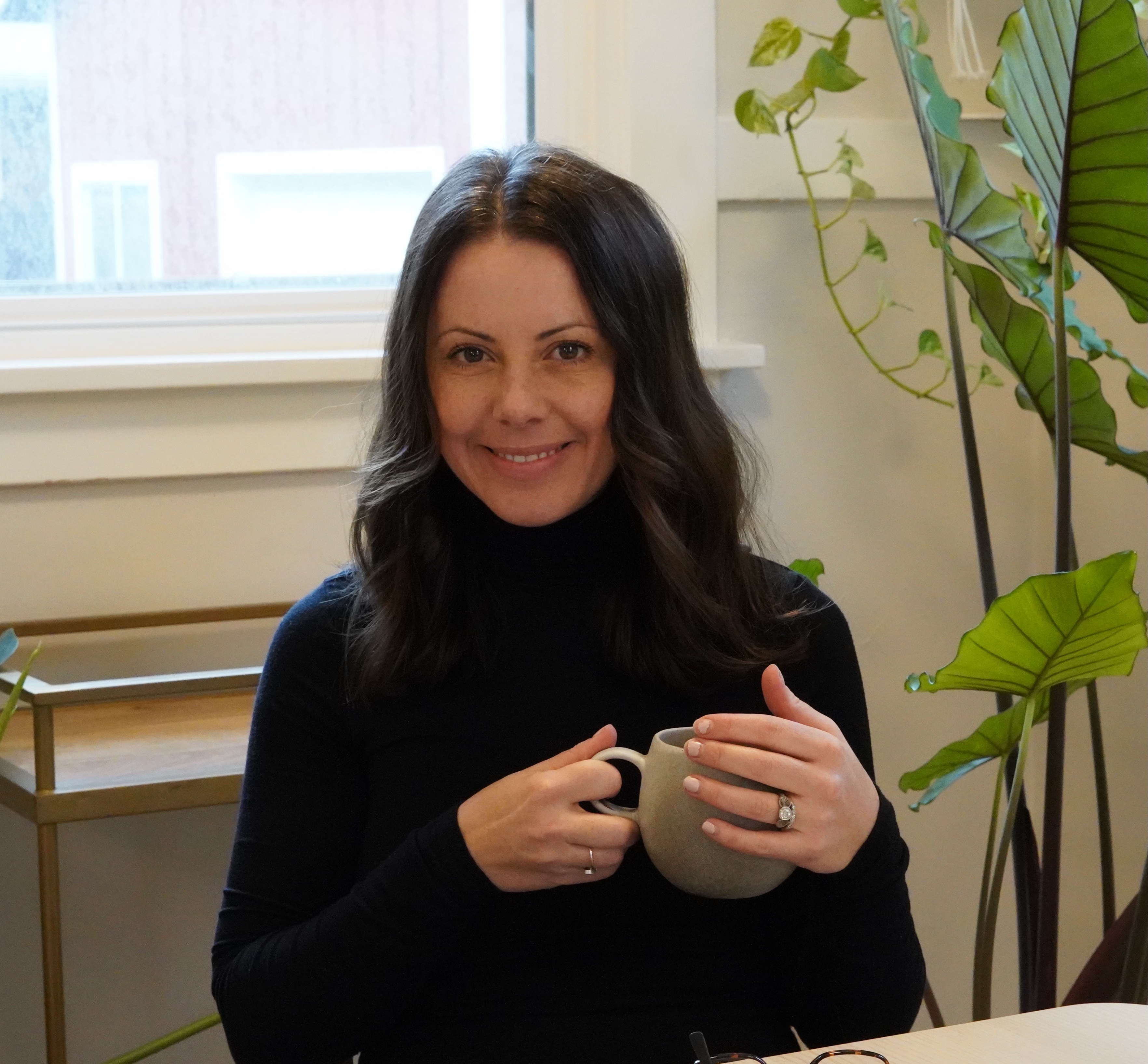
licensed clinical social worker, anxiety specialist and author
JENNIE KETCHAM CROOKS is the founder of the West Coast Anxiety Clinic, a clinical licensed social worker, and an anxiety and OCD specialist. Prior to starting the West Coast Anxiety Clinic, she was the Director of Clinical Education at Seattle Anxiety Specialists and before that, the lead medical social worker at the Polyclinic. Jennie has been involved in research at the University of Washington, a guest lecturer at Harvard University, and appeared on a number of popular television shows from Headline News and The View to Oprah.